G*Power Analysis
G*Power analysis helps nursing researchers determine the sample size, statistical power, detectable effect size, or significance criterion required for a…
Read More →

G*Power analysis helps nursing researchers determine the sample size, statistical power, detectable effect size, or significance criterion required for a…
Read More →Power analysis helps nursing researchers answer a practical question before collecting data: How much information does this study need to…
Read More →The phrase John Hattie effect size often appears beside charts that rank educational influences, yet readers may not know what…
Read More →Nursing students frequently report a t test and p value without explaining the magnitude of the observed difference. A statistically…
Read More →Nursing students frequently collect questionnaire responses using 4-point, 5-point, or 7-point options, yet the analysis often becomes confusing once data…
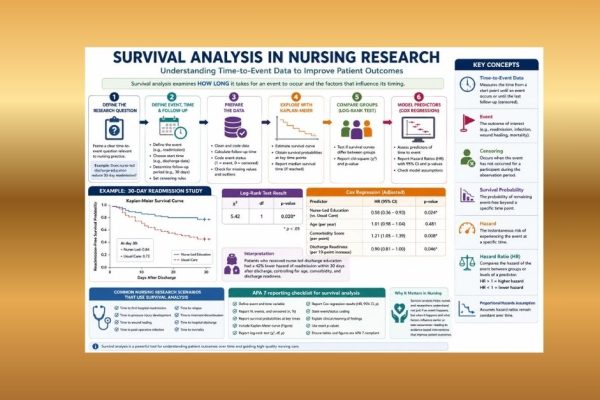
Read More →Many nursing students can explain a t-test, chi-square test, ANOVA, correlation, or regression model, but survival analysis becomes confusing because…
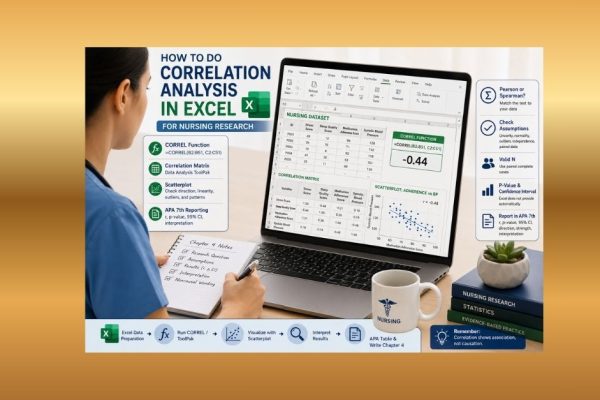
Read More →Introduction Many nursing students have their data in Excel and want to know whether two variables are related. You may…
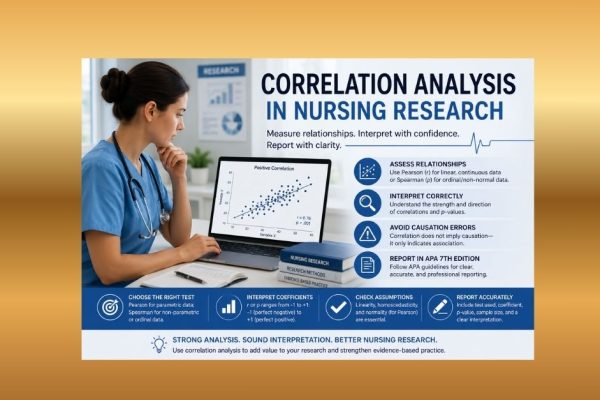
Read More →Introduction Many nursing students collect ordinal, ranked, skewed, Likert-scale, or non-normal data and then wonder whether Pearson correlation is still…
Read More →Introduction Many nursing students know they need to examine a relationship between two variables, but they are unsure whether Pearson…
Read More →Introduction Many nursing students collect quantitative data but still struggle to choose the correct statistical test. You may have stress…
Read More →Join thousands of nursing students who trust us with their academic success. Get matched with an expert writer today.