

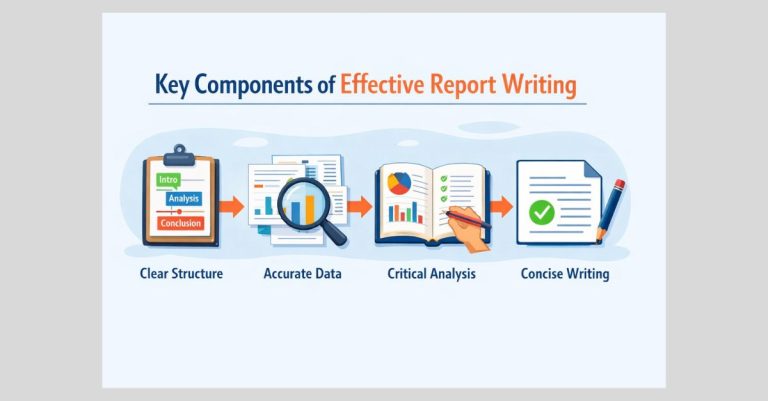
Report writing services help students and professionals prepare clearer, better-structured nursing, healthcare, public health, clinical, research, quality improvement, case-based, project, and professional reports. At NursingDissertationHelp.com, we support reports that need formal sections, evidence, findings, discussion, recommendations, tables, charts, figures, editing, formatting, referencing, and feedback-based revision.
You can upload your report instructions, rubric, topic, draft, data, findings, tables, charts, instructor feedback, supervisor comments, deadline, and formatting requirements. Our support is suitable for nursing students, healthcare students, public health students, health sciences students, allied health students, medical sciences students, DNP students, MSN students, PhD nursing students, academic researchers, and healthcare professionals who need structured report writing support.
Upload your report instructions or share your draft and rubric to request report writing support.
- Nursing, healthcare, public health, academic, and professional report support
- Structure, findings, discussion, recommendations, and conclusion guidance
- Tables, charts, figures, and data presentation support
- Editing, formatting, referencing, and feedback revision
- Confidential document handling
Upload your report instructions, rubric, draft, and deadline to request report writing support.
Quick Answer: What Do Report Writing Services Include?
- Report structure and section organization
- Nursing, healthcare, public health, academic, and professional report support
- Evidence, findings, discussion, and recommendation guidance
- Tables, charts, figures, and data presentation support
- Editing, proofreading, formatting, and referencing
- Feedback-based report revision
- Model-report support based on your instructions and rubric
Report Writing Services for Students and Professionals
Our report writing services support students and professionals who need help turning instructions, data, evidence, case details, project findings, or workplace information into a clear report format. Reports are often harder than standard essays because they require more than a general argument. A strong report usually needs headings, a defined purpose, a logical structure, evidence, findings, analysis, recommendations, and clean formatting.
We help with report writing for students in nursing, healthcare, public health, health sciences, allied health, and medical sciences. We also support professionals who need help improving workplace reports, audit reports, policy reports, quality improvement reports, or project reports.
The support is tailored to your report type, academic or professional level, rubric, template, audience, deadline, and required referencing style. For example, a nursing quality improvement report may need a clinical problem, background evidence, intervention logic, measurable outcomes, and recommendations. A public health report may need population data, risk factors, findings, implications, and policy or practice recommendations. A business or management report may need executive summary support, findings, options, and action-focused recommendations.
This page is specifically for structured report writing support. If your task is a broader essay or course assignment, our healthcare assignment help may fit better. And if your task is a nursing-specific care plan, reflection, or nursing theory assignment, you may need nursing assignment help. If your task is a research paper rather than a report, our nursing research paper help may be more relevant.
What Our Report Writing Support Covers
| Area of support | What it includes | Why it helps |
|---|---|---|
| Report instruction review | Reviewing the prompt, rubric, template, marking criteria, and deadline | Helps define the correct report scope before writing or editing begins |
| Report structure and outline | Creating or improving headings, sections, flow, and sequence | Makes the report easier to follow and align with marking criteria |
| Executive summary or abstract support | Helping summarize the purpose, approach, key findings, and recommendations | Gives the reader a clear overview before the full report |
| Introduction and background support | Clarifying the topic, context, purpose, audience, and report problem | Builds a focused foundation for the rest of the report |
| Methods or approach section support | Explaining how information, data, evidence, or case details were reviewed | Helps show how findings or recommendations were developed |
| Findings/results organization | Arranging findings, themes, outcomes, tables, or charts logically | Prevents the report from becoming scattered or descriptive |
| Discussion and analysis support | Connecting findings to evidence, practice, policy, theory, or project goals | Strengthens the analytical depth of the report |
| Conclusion and recommendation support | Writing clear conclusions and realistic recommendations | Helps the report end with practical, evidence-linked actions |
| Tables, charts, and figures | Supporting data presentation, figure titles, table formatting, and explanations | Makes complex findings easier to understand |
| Evidence and source integration | Integrating academic, clinical, policy, or professional sources | Helps support claims without overloading the report |
| Formatting and referencing | APA report formatting, headings, citations, references, spacing, and layout | Improves presentation and reduces avoidable formatting errors |
| Editing and proofreading | Improving grammar, clarity, flow, tone, consistency, and sentence structure | Makes the report more polished and professional |
| Feedback revision | Revising based on instructor, supervisor, or reviewer comments | Helps address the specific issues raised in feedback |
Types of Reports We Can Help With
| Report type | Typical focus | Support available |
|---|---|---|
| Nursing reports | Clinical issues, patient safety, care quality, evidence-based practice, nursing education, or leadership | Structure, evidence, findings, recommendations, editing, and APA formatting |
| Healthcare reports | Healthcare delivery, service improvement, policy, ethics, systems, or management | Organization, analysis, source integration, and professional tone |
| Public health reports | Population health, health promotion, epidemiology, risk factors, or interventions | Data presentation, findings, discussion, and recommendations |
| Clinical reports | Clinical scenarios, service outcomes, care processes, or clinical observations | Clear structure, evidence use, tables, and professional presentation |
| Research reports | Study background, methods, findings, discussion, and implications | Results organization, academic tone, references, and formatting |
| Quality improvement reports | Practice gaps, interventions, outcomes, audits, and improvement plans | Problem framing, results presentation, recommendation writing |
| Case-based reports | Patient, organization, project, or scenario-based analysis | Case organization, issue identification, discussion, and recommendations |
| Reflective reports | Professional learning, clinical experience, leadership, ethics, or practice reflection | Reflection structure, academic tone, and evidence integration |
| Evidence-based reports | Clinical questions, evidence appraisal, practice recommendations | Evidence organization, discussion, and practice-focused conclusions |
| Laboratory reports | Methods, results, tables, discussion, and interpretation where relevant | Structure, results clarity, figure/table support, and editing |
| Project reports | Project background, aims, implementation, findings, and outcomes | Executive summary, structure, findings, and recommendations |
| Policy reports | Policy issue, background, stakeholder concerns, options, and recommendations | Policy framing, evidence support, and action-focused recommendations |
| Audit reports | Standards, findings, gaps, compliance issues, and improvement actions | Findings organization, tables, recommendations, and conclusion support |
| Business or management reports | Healthcare management, operations, strategy, staffing, or service planning | Executive summary, analysis, options, and professional formatting |
| Data analysis reports | Findings, charts, tables, trends, interpretation, and implications | Data presentation, results wording, and recommendation support |
| Professional workplace reports | Workplace findings, project updates, reviews, service reports, or improvement reports | Clear layout, concise writing, editing, and presentation support |
Nursing, Healthcare, and Public Health Report Writing Support
Nursing, healthcare, and public health reports often require a practical balance between evidence, professional judgment, and structured presentation. We help users organize reports on topics such as quality improvement, patient safety, healthcare policy, health promotion, epidemiology, clinical issues, audit findings, evidence-based practice, leadership, service improvement, and healthcare management.
A nursing report may need to explain a clinical problem, connect it to evidence, discuss patient or service implications, and recommend realistic actions. A healthcare report may need to compare options, analyze system-level issues, or explain how a policy or intervention affects practice. A public health report may need to present population data, describe risk patterns, and recommend prevention or health promotion strategies.
Our role is to help you structure the report, organize the evidence, improve the findings and discussion, strengthen recommendations, and present the work clearly. This keeps the page focused on report writing support rather than general assignment writing.
Where available, upload your class readings, project brief, clinical scenario, policy documents, report template, data, tables, marking rubric, or supervisor comments. These materials help align the support with your actual requirements.
Research, Data, Tables, and Results Report Support
Some reports require data, findings, charts, tables, figures, or statistical outputs. In these cases, report writing support can help you present results clearly, explain trends, organize tables, write figure notes, and connect findings to recommendations.
We can help you improve the results section, findings section, discussion, executive summary, and recommendations. We can also help format tables and figures so they are easier to read and aligned with your report structure.
If your report already includes findings, we can help explain them in clearer academic or professional language. If you have charts, tables, software outputs, survey summaries, audit results, or project findings, upload them with your instructions. The support will be based on the information you provide.
We do not fabricate data, invent findings, or create false results. If you need complete support with data cleaning, analysis planning, statistical testing, qualitative coding, software outputs, or a full results chapter, our dissertation data analysis help may be more suitable than report presentation support alone.
Editing, Formatting, Referencing, and Feedback Revision
You may already have a draft but need help improving clarity, structure, tone, layout, citations, or alignment with feedback. Our report editing and proofreading support can help improve grammar, sentence flow, heading structure, paragraph order, transitions, academic tone, professional tone, and consistency.
We also support report formatting help, including APA report formatting when required. If your institution, workplace, instructor, or supervisor requires another format, share those rules before ordering. Formatting support may include title page layout, headings, subheadings, citation consistency, reference list checks, table formatting, figure captions, spacing, and appendix organization.
Feedback-based revision is also available. If your instructor, supervisor, or reviewer has already commented on your report, upload the feedback with your draft and original instructions. We can help identify what needs to change, reorganize weak sections, strengthen discussion, clarify findings, improve recommendations, and correct citation or formatting problems.
Ethical Report Writing Support
Our report writing support is designed for learning, planning, model-report support, structure guidance, editing, formatting, data presentation, and academic or professional writing improvement. Students and professionals should use the support responsibly and follow their school, workplace, instructor, supervisor, ethics, and academic integrity requirements.
The service does not encourage dishonest submission, fabricate sources, invent data, create false findings, misrepresent authorship, impersonate students, complete exams, bypass institutional rules, or guarantee grades. We also do not replace your responsibility to understand your assignment, follow your rubric, and comply with academic or workplace standards.
Model reports, outlines, edited drafts, and report guidance should help you understand structure, evidence use, findings presentation, analysis, and recommendation writing. The goal is to help you improve the quality, organization, and clarity of your report while respecting academic and professional integrity.
How Our Report Writing Services Work
| Step | What happens |
|---|---|
| 1. Upload your materials | Share your report instructions, rubric or template, topic, deadline, required structure, and draft if available. |
| 2. Requirements are reviewed | The report type, academic or professional level, word count, formatting style, sources, data, and deadline are checked. |
| 3. The right support is recommended | You receive guidance on whether you need structure support, model-report support, editing, formatting, data presentation, or feedback revision. |
| 4. Work begins based on the agreed scope | Support is provided according to your instructions, report requirements, uploaded materials, and agreed deadline. |
| 5. You review the support provided | You check the structure, content, formatting, comments, and any revised sections. |
| 6. Revision support is available | Revisions can be handled based on the original instructions and agreed scope. |
You can learn more about the process on our How It Works page, review general cost guidance on the Pricing page, or start your order by uploading your instructions.
Share your report instructions, draft, rubric, and deadline to request support.
What to Upload Before Ordering
Before ordering report writing help, upload as many of the following materials as possible:
- Report instructions
- Grading rubric or workplace template
- Topic or report title
- Required report structure
- Required word count or page count
- Academic or professional level
- Deadline
- Required readings or sources
- Data, findings, tables, charts, or outputs if applicable
- Case scenario or project brief if applicable
- Draft if available
- Instructor, supervisor, or reviewer feedback
- Preferred referencing style
- Sample report or template if provided
- Formatting rules
The more complete your materials are, the easier it is to provide report writing support that fits your actual requirements.
Report Writing Services vs Related Services
| Service | Best for | How it differs from report writing services |
|---|---|---|
| Report Writing Services | Structured reports with findings, analysis, recommendations, tables, figures, and formal sections | Focuses on report structure, findings, presentation, recommendations, editing, and formatting |
| Healthcare Assignment Help | Broader healthcare essays, policy papers, ethics tasks, and course assignments | Covers general healthcare coursework rather than formal report sections and findings |
| Nursing Assignment Help | Nursing care plans, reflections, theory tasks, clinical tasks, and nursing assignments | Focuses on nursing-specific coursework rather than report presentation and structure |
| Nursing Research Paper Help | PICOT papers, EBP papers, literature reviews, research critiques, and nursing research papers | Focuses on research papers rather than formal reports with findings and recommendations |
| Medical Research Paper Writing Service | Medical, biomedical, clinical, public health, and healthcare research papers | Focuses on research-paper writing rather than structured report support |
| Clinical Medical Writing Service | Clinical manuscripts, case reports, abstracts, posters, protocol-style documents, tables, and figures | More suitable for clinical or publication-style documents |
| Nursing Case Study Help | Case-based academic tasks, clinical scenarios, patient cases, and structured case analysis | Focuses on case analysis rather than all report types |
| Dissertation Data Analysis Help | Full quantitative, qualitative, or mixed-methods data analysis support | Focuses on complete data analysis workflows rather than report presentation alone |
You can also view our samples to understand the kind of academic support available across the site.
Pricing and What Affects the Cost
The cost of report writing services depends on the report length, deadline, academic or professional level, complexity, number of sources, formatting requirements, data presentation needs, tables, charts, figures, editing depth, and revision scope.
A short editing task may cost less than a complex report that includes findings, discussion, recommendations, APA formatting, tables, and figure explanations. Urgent report writing help may also cost more because of the shorter turnaround time.
To get a realistic quote, upload your instructions, rubric, deadline, draft, and any supporting files. You can review general information on the pricing page, but the most accurate cost depends on your specific report requirements.
Why Choose NursingDissertationHelp.com?
NursingDissertationHelp.com provides nursing, healthcare, academic, and professional report writing support for users who need structured, credible, and practical guidance. The service is built around your uploaded instructions, rubric, template, data, findings, draft, and deadline.
You can request help with report structure, findings, discussion, recommendations, tables, charts, figures, editing, proofreading, formatting, and referencing. Support is available for different academic and professional levels, including nursing, healthcare, public health, allied health, health sciences, medical sciences, MSN, DNP, and PhD nursing contexts.
The ordering process is clear, document handling is confidential, and revision support is based on the original instructions and agreed scope. The goal is to help you improve the quality, clarity, structure, and presentation of your report without making unsupported promises.
Common Report Writing Challenges We Help With
Many students and professionals request report writing support because their instructions are unclear, their findings are difficult to organize, or their report has too much description and not enough analysis. A report may have strong content but still lose clarity because the headings, tables, evidence, and recommendations do not connect well.
We help with weak report structure, missing executive summaries or abstracts, unclear introductions, disorganized findings, shallow discussion, unsupported recommendations, poor source integration, and inconsistent academic or professional tone.
We can also support reports with unclear tables, charts, or figures. A table should not simply appear in the report without explanation. A chart should connect to the findings. A recommendation should follow from the evidence and analysis rather than appear as a general opinion.
Formatting and citation problems are also common. APA formatting, reference consistency, heading levels, spacing, appendices, figure titles, and table notes can affect how professional the report looks. If you have instructor or supervisor feedback, we can help revise the report based on those comments.
Report Writing FAQs
What are report writing services?
Report writing services provide structured support with planning, organizing, writing guidance, model-report support, editing, formatting, referencing, data presentation, and feedback-based revision for academic or professional reports.
Who can use your report writing services?
Students and professionals in nursing, healthcare, public health, health sciences, allied health, medical sciences, MSN, DNP, PhD nursing, academic research, and healthcare workplaces can request support.
What types of reports can you help with?
We can help with nursing reports, healthcare reports, public health reports, clinical reports, research reports, quality improvement reports, case-based reports, reflective reports, evidence-based reports, project reports, policy reports, audit reports, business reports, data analysis reports, and professional workplace reports.
Can you help with nursing or healthcare reports?
Yes. Nursing report writing help and healthcare report writing help may include structure support, evidence organization, findings, discussion, recommendations, editing, proofreading, APA formatting, and feedback revision.
Can you help with tables, charts, and figures?
Yes. We can help organize tables, charts, and figures in reports, improve titles and notes, explain findings, and connect data presentation to the discussion and recommendations.
Can you edit my existing report?
Yes. You can upload your draft for report editing and proofreading. Support may include grammar, clarity, flow, structure, tone, formatting, citations, references, headings, tables, and figure presentation.
Can you revise a report based on instructor or supervisor feedback?
Yes. Upload the original instructions, your draft, the feedback, and any rubric or template. Revision support is based on the original requirements and agreed scope.
How much do report writing services cost?
The cost depends on length, deadline, level, complexity, sources, formatting, data presentation, tables, charts, figures, editing depth, and revision needs. Upload your materials for a quote.
Can I request urgent report writing help?
Yes, urgent support may be available depending on report length, complexity, and current workload. Share your deadline clearly when ordering.
How are report writing services different from assignment help?
Report writing services focus on structured reports with formal sections, findings, analysis, recommendations, tables, charts, figures, references, and formatting. Assignment help is broader and may include essays, short tasks, discussion posts, reflections, or general coursework.
Request Report Writing Support
If you need help with a nursing report, healthcare report, public health report, research report, quality improvement report, project report, case-based report, data analysis report, or professional workplace report, upload your instructions and supporting files.
You can share your rubric or template, topic, draft, data, findings, tables, charts, supervisor or instructor feedback, deadline, and formatting requirements. We can help with report structure, evidence organization, findings, discussion, recommendations, editing, proofreading, APA formatting, references, tables, figures, and revision support.
Start your order or review the pricing page before you request support. Request a Quote Now and share your report materials so the support can be matched to your instructions, deadline, and required scope.