

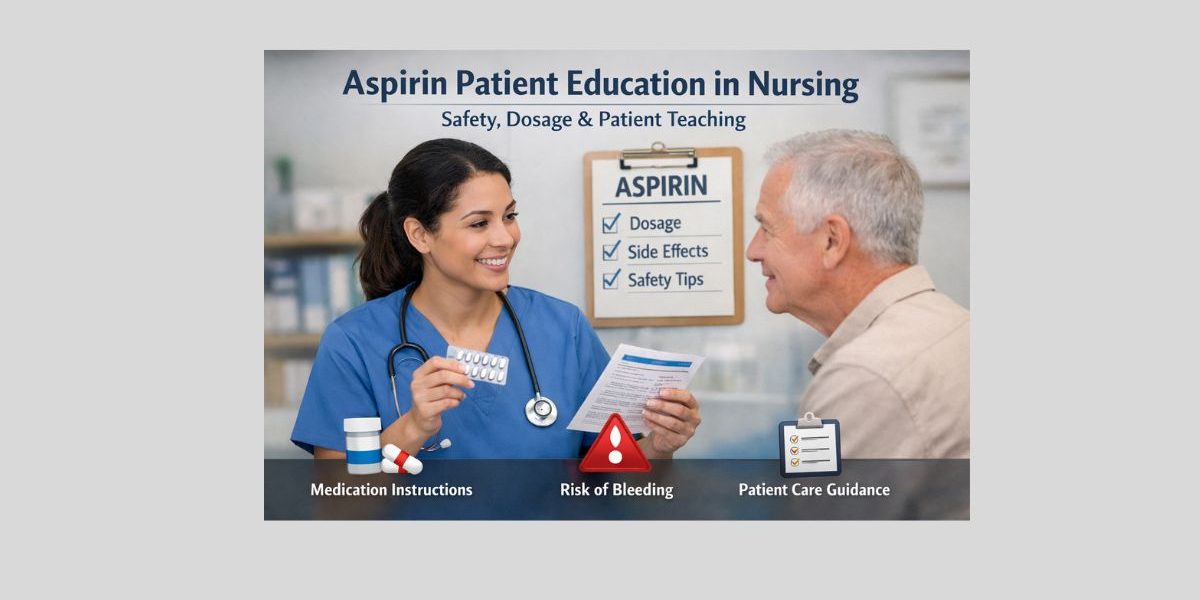
Aspirin Patient Education in Nursing: A Practical Guide
Introduction
Aspirin is one of the most commonly used medications in clinical practice, particularly in cardiovascular care. For nursing students, understanding how to educate patients about aspirin is essential for promoting safety, adherence, and positive health outcomes.
Aspirin patient education in nursing goes beyond simply telling patients when to take the medication. It involves explaining its purpose, proper dosage, potential side effects, and precautions in a way that patients can understand and follow.
This guide provides a clear, practical framework that nursing students can use in assignments, clinical placements, and real-world patient interactions.
Understanding Aspirin in Clinical Practice
Aspirin, also known as acetylsalicylic acid, is widely used for its:
- Antiplatelet effects (preventing blood clots)
- Anti-inflammatory properties
- Pain-relieving capabilities
In nursing practice, aspirin is most commonly prescribed for:
- Prevention of heart attacks
- Stroke prevention
- Management of cardiovascular disease
Mechanism of Action (Simplified)
Aspirin works by inhibiting platelet aggregation, reducing the risk of clot formation. This is why it is often prescribed for patients with cardiovascular conditions.
Understanding this mechanism helps nurses explain to patients why adherence is critical.
Importance of Patient Education in Nursing
Patient education is a core nursing responsibility. When it comes to aspirin, proper education can:
- Prevent medication errors
- Reduce risk of complications
- Improve adherence
- Enhance patient outcomes
Poor education may lead to:
- Incorrect dosage
- Increased risk of bleeding
- Drug interactions
Effective communication ensures patients understand both the benefits and risks.
Key Components of Aspirin Patient Education
1. Correct Dosage and Administration
Patients must understand:
- The prescribed dosage
- When to take the medication
- Whether to take it with food
Low-dose aspirin is commonly used for cardiovascular protection, while higher doses may be used for pain or inflammation.
Nurses should emphasize:
- Do not exceed prescribed dose
- Follow healthcare provider instructions strictly
2. Importance of Adherence
Patients should be taught:
- Take aspirin regularly as prescribed
- Do not stop without consulting a healthcare provider
Stopping aspirin suddenly can increase the risk of cardiovascular events.
Request a Quote
Need help structuring pharmacology or patient education assignments?
Request a quote now and get expert academic support tailored to your needs.
Get high-quality nursing content for your coursework and dissertations today.
3. Recognizing Side Effects
Patients should be informed about possible side effects, including:
- Gastrointestinal irritation
- Nausea
- Increased bleeding risk
More serious symptoms include:
- Blood in stool
- Unusual bruising
- Severe stomach pain
Patients must know when to seek medical attention.
4. Risk of Bleeding
Aspirin increases bleeding risk due to its antiplatelet effects.
Nurses should educate patients to:
- Avoid activities that increase injury risk
- Inform healthcare providers before surgery
- Report any unusual bleeding
5. Drug Interactions
Aspirin can interact with other medications such as:
- Anticoagulants
- NSAIDs
- Certain supplements
Patients should:
- Inform healthcare providers of all medications
- Avoid self-medicating
Patient-Centered Teaching Strategies
Effective education is not just about information—it is about communication.
Use Simple Language
Avoid medical jargon. Use clear, understandable terms when explaining:
- What aspirin does
- Why it is prescribed
- How to take it safely
Confirm Understanding
Use techniques such as:
- Teach-back method
- Asking patients to explain instructions
This ensures patients truly understand the information.
Tailor Education to the Patient
Consider:
- Age
- Education level
- Cultural background
Personalized education improves adherence and outcomes.
Aspirin in Cardiovascular Care
Aspirin plays a critical role in preventing cardiovascular events.
Nursing Implications
Nurses must:
- Monitor patient adherence
- Assess for side effects
- Provide ongoing education
Example in Practice
A patient with a history of heart disease may be prescribed low-dose aspirin daily. The nurse’s role is to ensure the patient understands:
- Why the medication is necessary
- How to take it correctly
- What signs of complications to watch for
Request a Quote
Struggling with nursing pharmacology, patient education, or clinical assignments?
Request a quote now and receive professional academic support.
Get clear, well-structured, and high-quality nursing content today.
Common Mistakes in Aspirin Patient Education
Many students and healthcare providers make avoidable errors.
1. Providing Too Much Information at Once
Patients may feel overwhelmed
2. Using Complex Medical Terms
Reduces understanding
3. Failing to Address Side Effects
Increases risk of complications
4. Not Confirming Patient Understanding
Leads to misuse of medication
Avoiding these mistakes improves patient safety and outcomes.
Nursing Implications for Academic Writing
For nursing students, this topic is highly relevant in:
- Pharmacology assignments
- Patient safety discussions
- Cardiovascular care research
- Dissertation chapters
How to Use This Topic Academically
You can include:
- Mechanism of action
- Patient education strategies
- Nursing responsibilities
- Clinical implications
This makes your work both theoretical and practical.
Best Practices for Aspirin Patient Education
To ensure effective education, nurses should:
- Provide clear instructions
- Reinforce key points
- Encourage questions
- Monitor patient response
Consistency and clarity are essential for safe medication use.
Request a Quote
Need expert help with nursing research, assignments, or dissertations?
Request a quote now and get personalized academic support.
Save time, reduce stress, and achieve better results in your nursing studies.
FAQ: Aspirin Patient Education in Nursing
1. Why is aspirin patient education important in nursing?
It helps prevent medication errors, reduces complications, and improves patient outcomes.
2. What should nurses teach patients about aspirin?
Nurses should explain dosage, purpose, side effects, and precautions.
3. What are the common side effects of aspirin?
Common side effects include stomach irritation, nausea, and increased bleeding risk.
4. Why does aspirin increase bleeding risk?
Aspirin inhibits platelet function, reducing the blood’s ability to clot.
5. Can patients stop taking aspirin on their own?
No, patients should consult a healthcare provider before stopping aspirin.
6. How can nurses ensure patients understand instructions?
By using simple language and confirming understanding through the teach-back method.
7. What are the key nursing responsibilities in aspirin administration?
Monitoring adherence, educating patients, and assessing for side effects.
Conclusion
Understanding aspirin patient education in nursing is essential for ensuring safe and effective patient care. Nurses play a critical role in guiding patients on how to use aspirin correctly, recognize side effects, and avoid complications.
For nursing students, mastering this topic not only improves academic performance but also prepares you for real-world clinical practice. By combining pharmacological knowledge with patient-centered communication, you can significantly enhance patient safety and outcomes.
