

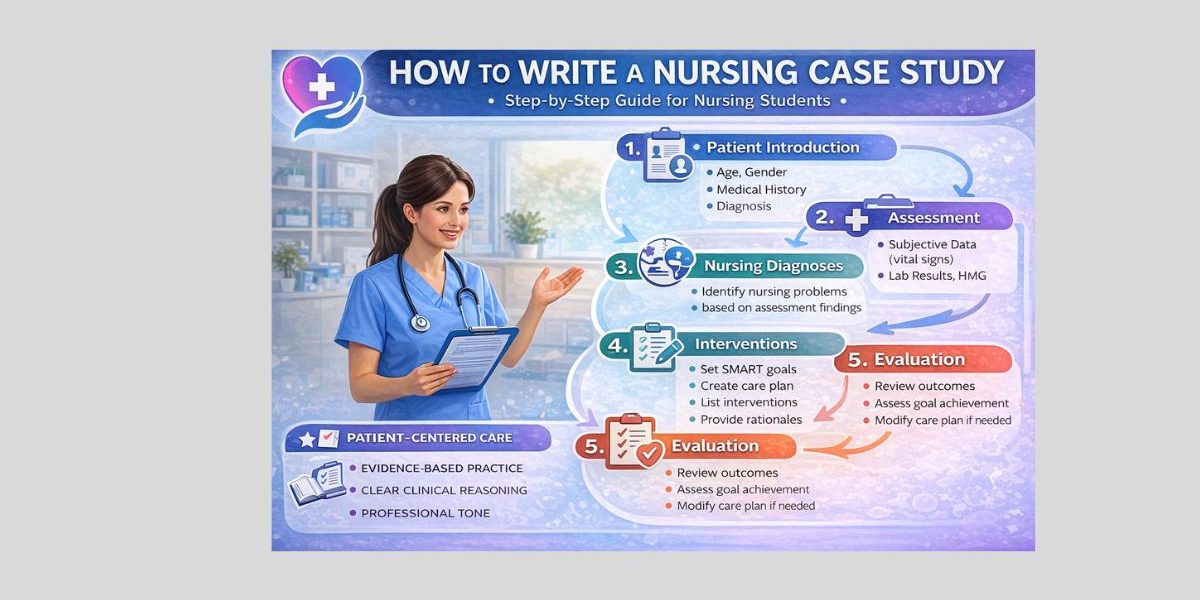
How to Write a Nursing Case Study: Step-by-Step Guide
How to Write a Nursing Case Study is a common challenge for nursing students. Many struggle with where to start, what information to include, and how to present patient data clearly and ethically. In this article, we identify the real problem students face – feeling overwhelmed by complex clinical details and strict formatting – and explain why you need this guide. By following our expert framework and tips, you’ll gain confidence writing case studies and learn to avoid common pitfalls[1][2].
Challenges Students Face When Writing Case Studies
Nursing case studies require synthesizing clinical data into a clear narrative. Students often face these challenges: missing key patient information, unclear clinical reasoning, and worries about violating confidentiality. Evidence shows there are no uniform guidelines for nursing case reports, so authors often omit important elements like patient timeline or follow-up[1]. For example, a 2024 analysis found average adherence to reporting standards, with worst gaps in timelines and outcomes[1]. This means many students lack a template and may leave out facts critical for grading.
Another challenge is structuring analysis. You need to form nursing diagnoses and care plans based on patient data, but doing so confidently takes practice. Students also worry about patient privacy. According to nursing ethics guidelines, nurses “must understand all privacy guidelines with regards to patient care and patient identifiers”[2]. This means any case study must anonymize data and respect confidentiality, adding another layer of complexity.
Finally, balancing depth with brevity is hard. Instructors expect thorough critical thinking without fluff. Research suggests students perform better with clear examples and guidance (see our Case Studies page for examples). Missing a key detail, like a patient’s perspective, can drop your score. A recent study noted that nursing case reports often skip the patient’s viewpoint and follow-up[1]. Avoid these pitfalls by following a structured approach – and if you need help, our ethical academic support can guide you (see our About Us page).
Why Writing a Nursing Case Study Properly Is Important
A well-written case study is more than an assignment – it demonstrates your clinical reasoning and communication skills. In nursing education, case studies simulate real patient scenarios and test your ability to apply theory to practice[1].
Solving a real-life problem: Good case studies show how you assess a patient’s data, arrive at diagnoses, and plan care. For example, if a patient has low blood pressure, you explain your nursing diagnoses (like Risk for Ineffective Tissue Perfusion) and next steps. This process aligns with the nursing process: assessment, diagnosis, planning, implementation, and evaluation. By learning how to write a nursing case study thoroughly, you practice each step of this critical workflow.
Developing clinical reasoning: Studies on case-based learning highlight improvements in knowledge and decision-making. For instance, “unfolding case studies” that evolve over time have been shown to boost students’ engagement and integration of complex information. This means that structuring your case with evolving clues (e.g., lab trends, new symptoms) trains you to think like a nurse.
Demonstrating professional writing: Writing a case study also tests your ability to maintain patient confidentiality and ethical standards. Citing StatPearls, nurses must follow privacy laws and the ANA Code of Ethics when discussing patients[2][3]. This ensures your report respects autonomy and truth. In short, a strong case study earns top grades and prepares you for real patient advocacy.
Benefits of Using Our Ethical Academic Support
Writing a high-scoring case study can be daunting. That’s where our service helps:
- Expert guidance with structure: We provide a clear template covering patient background, assessment, diagnoses, interventions, and evaluation. You get a roadmap to follow, so you won’t overlook elements like patient history or outcome measures.
- Research-backed insights: Our team refers to current standards and literature. For example, we emphasize including patient perspective and follow-up, which, as research notes, are often missing[1]. This level of detail boosts your credibility and grade.
- Teach-back and communication tips: We guide you on using teach-back to ensure patient education sections are clear. Teach-back is proven to improve understanding and retention of information, so including it in your care plan shows evidence-based thinking.
- Trust signals: We link you to relevant nursing resources. See our About Us page for our qualifications. Our Case Studies showcase samples we’ve helped improve. We offer transparent pricing on our pricing page and guarantee revisions under our refund policy, giving you confidence in our professionalism.
- Ethical support, not cheating: We coach you through each step (not do it for you). You remain the author. For example, we might provide an outline and suggest edits, but you write the final submission. This aligns with academic integrity policies (see FAQs below).
In short, our service solves your pain points: reducing stress, improving accuracy, and saving time. Many nursing students found success with us – check our DNP dissertation help page for how we support advanced projects, or the Nursing Research Paper Help page for literature guidance. We are your academic partner in learning.
How Our Nursing Case Study Service Works
Our process is structured for clarity and collaboration. Here’s how it works:
- Initial Brief: You use our secure order page to submit details about your assignment (topic, patient scenario, format, deadline).
- Outline Creation: We draft an outline that includes headings like Introduction, Patient Data, Analysis, Nursing Diagnoses, Plan, and Conclusion. This outline is based on your brief and ensures we cover all needed sections.
- Review & Feedback: You review the outline and provide comments. We revise until the structure fits your expectations. This collaborative stage ensures you stay in control and learn from the process.
- Drafting: Our expert writers expand the outline into a full draft, adding evidence-based analysis, nursing language, and ethical considerations. We cite relevant guidelines (e.g., CARE reporting standards) and education literature to make the case study authoritative.
- Final Edits: You get the full draft with comments. You can request clarifications or changes. Once approved, we finalize the document.
This transparent workflow (see How It Works) ensures you learn each step. We also offer data support: if your case involves data analysis (e.g., patient vitals trends), our data analysis team can help with charts or stats like trend graphs or simple regression[2][3]. If interviews or qualitative notes are involved, our qualitative analysis experts provide guidance.
How to Choose the Best Service
When selecting a nursing writing service, consider:
- Nursing expertise: Does the team have healthcare experience? We do; our authors are nurses or medical writers familiar with clinical writing.
- Transparency: Look for clear pricing and policies. We provide our rates on the pricing page and guarantee satisfaction per our refund policy.
- Samples and trust signals: Can you see examples of their work? We offer case studies of improved assignments on our Case Studies page. We also have student testimonials (contact us if you want details).
- Specialist support: If your case study is for a higher degree (like a DNP project), ensure they have advanced support (see DNP Dissertation Help). For general coursework, our Coursework Help covers diverse needs.
- Integrity guarantee: The service should emphasize learning. We never do your work for you. Instead, think of us as tutors for your case writing.
We encourage due diligence. Check the About Us page for our credentials[4]. We hold ourselves to the highest ethical standards (see our FAQ below on contract cheating). Our goal is to be the best partner for your success.
Key Components of a Nursing Case Study (Step-by-Step)
A typical nursing case study has these sections:
- Title and Patient Context: Start with a clear title and brief patient background (age, gender, presenting problem).
- Patient History (Subjective): Summarize the patient’s own words and concerns. Include chief complaint, medical history, social factors, medications, and allergies.
- Physical Exam Data (Objective): Report vital signs and exam findings. Use bullet points or a table for clarity (e.g., Blood Pressure, Heart Rate, etc.).
- Assessment and Nursing Diagnoses: Analyze the data. Formulate one or more nursing diagnoses (e.g., Risk for Impaired Skin Integrity). Use NANDA labels and include rationale.
- Care Plan/Interventions: For each diagnosis, list nursing goals (measurable outcomes) and interventions. For example, to prevent skin breakdown, the plan might include repositioning schedule and skin assessments.
- Education and Communication: Describe how you would teach the patient using teach-back methods (nurse education strategy). For instance, ensure patient can restate discharge instructions or medication regimen. This demonstrates patient involvement and addresses deficit of knowledge, a common nursing diagnosis.
- Evaluation/Follow-Up: Explain how you would evaluate outcomes (e.g., “patient’s wounds remained intact at 2-week follow-up”). Note any referrals or long-term follow-up needed.
- Ethical and Legal Considerations: Highlight patient confidentiality and consent (de-identifying patient details) as part of your write-up. According to nursing ethics guidelines, patient autonomy and privacy are paramount[2][3].
- Conclusion: Summarise the learning points and reflection on the case.
Using subheadings (H3) for each section keeps your case organized. Consider a table for vitals or medications to save space and increase readability. For example:
| Vital Sign | Measurement | Normal Range |
|---|---|---|
| Blood Pressure | 130/85 mmHg | 120/80 mmHg |
| Heart Rate | 88 bpm | 60–100 bpm |
| Blood Glucose | 14 mmol/L | 4–8 mmol/L |
| … | … | … |
Following this structure helps examiners quickly see you’ve covered all clinical aspects. It also aligns with recommendations from nursing education resources on systematic patient assessment and planning.
Ethical Considerations
Writing a case study involves ethical issues. Always protect patient identity. Remove names and identifiable details (ages can be approximate, dates omitted). StatPearls emphasizes understanding privacy guidelines[2]. If you include a real case, ensure you have permission or change details. Mention the patient’s perspective ethically: as [16] notes, nursing reports rarely include patient voice, but adding it (anonymously) shows compassion and completeness[1].
In terms of writing assistance, use it to learn, not to cheat. Academic integrity policies define “contract cheating” as someone else doing your work. We strongly discourage this. Instead, use our service to understand how to write your case study: we help you improve your own draft, not hand you a final submission. This ensures you uphold ethical standards and actually learn the material, which is crucial for your professional development.
FAQs
Q1: What is a nursing case study and how is it different from a research paper?
A nursing case study is a detailed analysis of a single patient’s situation, focusing on assessment, nursing diagnoses, and care planning. Unlike research papers, case studies are narrative and descriptive. They require application of theory to practice rather than original research. You should include specific patient data and your nursing interventions and rationale, rather than literature review or statistical analysis.
Q2: How do I ensure patient confidentiality in my case study?
De-identify all patient information. Use general terms (e.g., “a 62-year-old male” instead of name), avoid exact dates, and do not include personal identifiers. The StatPearls ethics guide stresses that nurses must follow privacy laws and consent rules when reporting cases[2]. If unsure, mention that this is a de-identified or hypothetical patient.
Q3: Can I get help writing my nursing case study without it being unethical?
Yes. Ethical support means helping you learn how to write it, not doing it for you. We can guide your outline, suggest sources, and review drafts, but you write the actual assignment. This is allowed by universities as long as you are the primary author. Our approach is entirely on strengthening your skills and understanding, never plagiarism.
Q4: How do I incorporate research and citations in a case study?
Use evidence to support your rationale. For instance, if you state a nursing intervention, cite guidelines or textbooks (e.g., NANDA Nursing Diagnoses sources or relevant StatPearls). Ensure you follow your institution’s citation style. Nursing case studies often require minimal citations compared to research papers, but including a couple of authoritative references (like StatPearls or clinical guidelines) for major points can impress evaluators and shows evidence-based practice.
Q5: What format should I follow?
Most case studies use a logical order: patient info, assessment, diagnosis, plan, evaluation. Check any provided rubric or guidelines from your instructor. If none, follow a medical chart flow or SOAP (Subjective, Objective, Assessment, Plan) format. We can provide formatting templates (e.g., how to structure headings and bullet lists) as part of our nursing-assignment-help service.
Q6: How long should a nursing case study be?
Length varies by assignment—some are 3-5 pages, others more. Always follow the word count requirement. Focus on conciseness: use bullet lists for labs/vitals, tables for quick info, and clear language. Quality over quantity matters. We often help students trim unnecessary text while keeping all critical details.
Final Call to Action
Struggling with how to write a nursing case study? You’re not alone. Many students find it challenging to translate their knowledge into a polished case report. Take action now: leverage our expert guidance to turn stress into success.
Visit our Order page to submit your case study requirements, our team will work with you to create an outline, suggest improvements, and ensure your final draft shines. We are committed to boosting your skills and grades, not replacing your effort.
For any questions about our process or pricing, see our How it Works and Pricing pages. We offer secure, transparent service with a satisfaction guarantee (see our Refund Policy).
References
[1] Evaluation of the appropriateness of nursing case studies using the CARE checklist – ScienceDirect
https://www.sciencedirect.com/science/article/pii/S2445147924000699
[2] [3] Nursing Ethical Considerations – StatPearls – NCBI Bookshelf
https://www.ncbi.nlm.nih.gov/books/NBK526054/
[4] 20 Diabetes Mellitus Nursing Diagnosis & Care Plans – Nurseslabs
https://nurseslabs.com/diabetes-mellitus-nursing-care-plans/
