

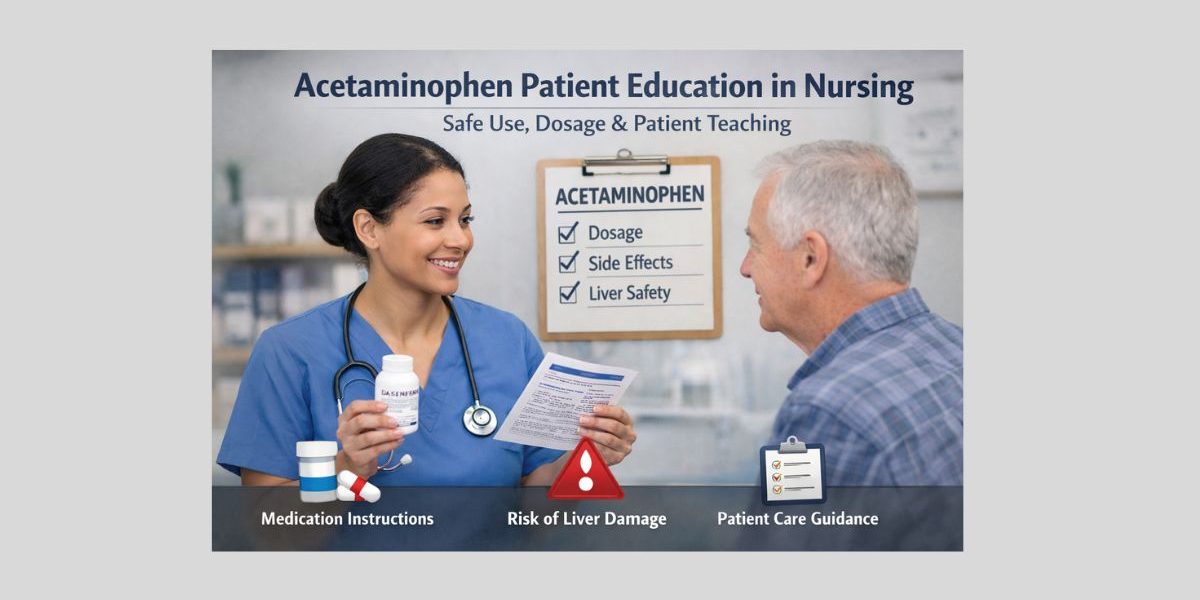
Acetaminophen Patient Education in Nursing: A Complete Guide
Introduction
Acetaminophen, also known as paracetamol, is one of the most widely used medications in healthcare. It is commonly prescribed for pain relief and fever management across all age groups. Despite its widespread use, improper administration and lack of patient education can lead to serious complications, particularly liver toxicity.
For nursing students, understanding acetaminophen patient education in nursing is essential for ensuring safe medication practices and improving patient outcomes. Nurses play a critical role in educating patients about correct usage, dosage limits, and potential risks.
This guide provides a practical and academically useful framework for understanding how to educate patients effectively about acetaminophen in both clinical and academic settings.
Understanding Acetaminophen in Clinical Practice
Acetaminophen is classified as an analgesic and antipyretic. Unlike nonsteroidal anti-inflammatory drugs (NSAIDs), it does not have strong anti-inflammatory properties but is widely used due to its safety profile when taken correctly.
Mechanism of Action (Simplified)
Acetaminophen works by inhibiting prostaglandin synthesis in the central nervous system, reducing pain and fever. Unlike NSAIDs, it has minimal effect on inflammation and platelet function.
Understanding this mechanism helps nurses explain to patients why acetaminophen is effective for mild to moderate pain and fever.
Common Clinical Uses
Acetaminophen is used for:
- Headaches
- Fever
- Musculoskeletal pain
- Post-operative pain
- Mild to moderate chronic pain
Because of its accessibility, patients often self-medicate, making education even more important.
Importance of Patient Education in Nursing
Patient education is a cornerstone of nursing care. With acetaminophen, education is particularly critical because it is widely available over the counter and often perceived as completely safe.
However, misuse can lead to serious complications, including acute liver failure.
Effective patient education helps:
- Prevent overdose
- Reduce risk of toxicity
- Improve medication adherence
- Enhance patient safety
Key Components of Acetaminophen Patient Education
1. Correct Dosage and Maximum Daily Limits
One of the most important aspects of patient education is ensuring that patients understand dosage limits.
Patients should be taught:
- Follow prescribed or recommended dose
- Do not exceed the maximum daily dose
- Be cautious with combination medications
Exceeding recommended doses is the leading cause of acetaminophen toxicity.
2. Awareness of Hidden Sources
Many patients are unaware that acetaminophen is included in multiple medications, such as:
- Cold and flu remedies
- Combination pain medications
Nurses must educate patients to:
- Read medication labels carefully
- Avoid taking multiple products containing acetaminophen
Request a Quote
Need help with pharmacology assignments or patient education topics?
Request a quote now and get expert academic support tailored to your needs.
Receive high-quality nursing content for your coursework and research today.
3. Risk of Liver Damage
Acetaminophen is generally safe at recommended doses but can cause severe liver damage when misused.
Patients should be informed about:
- Signs of liver toxicity
- Risks of overdose
- Importance of sticking to dosage guidelines
Symptoms of Toxicity
- Nausea
- Vomiting
- Loss of appetite
- Abdominal pain
- Yellowing of skin (jaundice)
Patients should seek immediate medical attention if these symptoms occur.
4. Alcohol Interaction
Alcohol significantly increases the risk of liver damage when combined with acetaminophen.
Patients should be advised to:
- Limit or avoid alcohol
- Inform healthcare providers about alcohol use
5. Use in Special Populations
Certain groups require extra caution:
- Patients with liver disease
- Older adults
- Children (require weight-based dosing)
Nurses must tailor education based on patient characteristics.
Patient-Centered Teaching Strategies
Effective education depends on how information is delivered.
Use Clear and Simple Language
Avoid medical jargon and explain concepts in everyday language.
For example:
Instead of “hepatotoxicity,” say “liver damage.”
Use the Teach-Back Method
Ask patients to repeat instructions in their own words. This confirms understanding and reduces errors.
Provide Written Instructions
Patients may forget verbal instructions. Written materials improve adherence.
Tailor Education to Individual Needs
Consider:
- Literacy level
- Cultural background
- Age
Personalized teaching improves outcomes.
Acetaminophen in Nursing Practice
Nurses are responsible for:
- Administering medication safely
- Monitoring patient response
- Educating patients
Clinical Example
A patient taking acetaminophen for post-operative pain must understand:
- Correct dosing intervals
- Maximum daily limit
- Signs of overdose
Nurses ensure patients are informed and safe.
Request a Quote
Struggling with nursing research, pharmacology, or patient education topics?
Request a quote now and receive professional academic assistance.
Get clear, structured, and high-quality nursing assignments today.
Common Mistakes in Patient Education
1. Underestimating Risk
Patients assume acetaminophen is always safe
2. Lack of Clear Instructions
Leads to incorrect dosing
3. Ignoring Combination Medications
Increases overdose risk
4. Failure to Assess Understanding
Patients may misuse medication
Avoiding these mistakes improves patient safety.
Nursing Implications for Academic Writing
This topic is highly relevant for:
- Pharmacology essays
- Patient safety discussions
- Clinical care assignments
- Dissertation chapters
How to Use This Topic Academically
Include:
- Mechanism of action
- Safety considerations
- Patient education strategies
- Nursing responsibilities
This strengthens both theoretical and practical aspects of your work.
Best Practices for Acetaminophen Patient Education
To ensure effective education:
- Emphasize dosage limits
- Highlight risks of overdose
- Encourage label reading
- Reinforce key instructions
Consistency and clarity are key.
Request a Quote
Need expert help with your nursing assignments or dissertation?
Request a quote now and get personalized academic support.
Save time, reduce stress, and achieve top grades in your nursing studies.
FAQ: Acetaminophen Patient Education in Nursing
1. Why is acetaminophen patient education important?
It helps prevent overdose, reduces risk of liver damage, and ensures safe medication use.
2. What is the maximum safe dose of acetaminophen?
It depends on guidelines, but patients should always follow prescribed or recommended limits.
3. Why is acetaminophen dangerous in high doses?
High doses can cause severe liver damage and potentially fatal toxicity.
4. Can patients take acetaminophen with alcohol?
It is not recommended, as it increases the risk of liver damage.
5. What should nurses teach patients about acetaminophen?
Dosage, side effects, risks, interactions, and proper use.
6. How can nurses ensure patient understanding?
By using simple language and the teach-back method.
7. What are signs of acetaminophen overdose?
Nausea, vomiting, abdominal pain, and jaundice.
8. Is acetaminophen safe for children?
Yes, when given in correct weight-based doses.
Conclusion
Understanding acetaminophen patient education in nursing is essential for safe and effective patient care. While acetaminophen is widely used and generally safe, improper use can lead to serious complications, particularly liver damage.
Nurses play a critical role in ensuring patients understand how to use this medication correctly. By combining pharmacological knowledge with effective communication strategies, nurses can significantly improve patient safety and outcomes.
For nursing students, mastering this topic enhances both academic performance and clinical competence, making it a valuable area of study and application
