

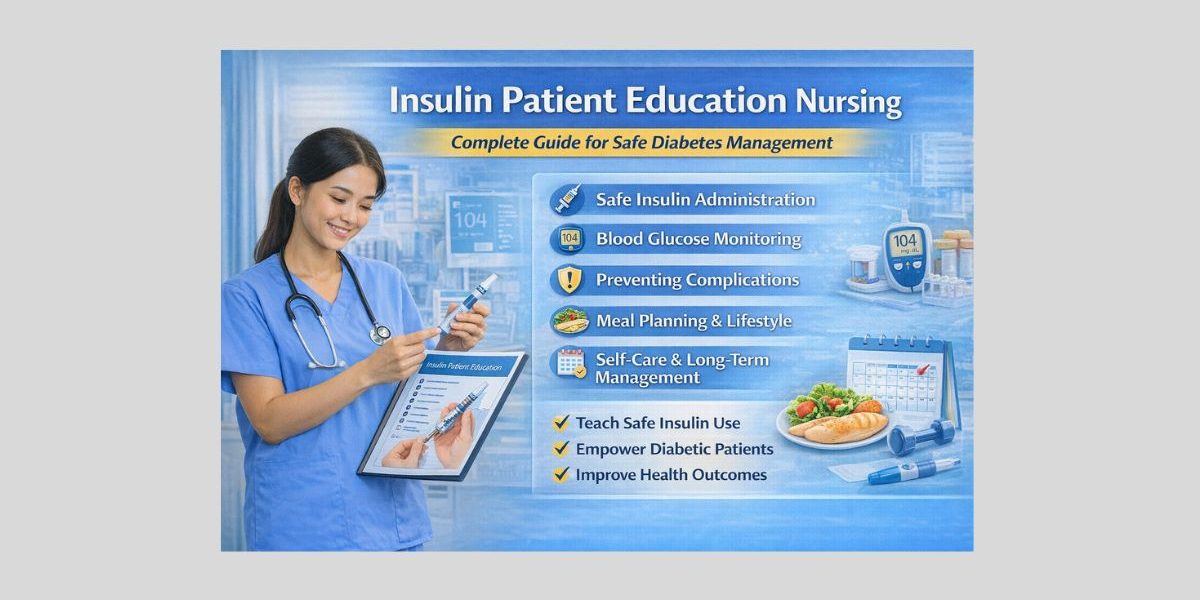
Insulin Patient Education Nursing: A Comprehensive Guide for Safe Diabetes Management
Insulin patient education in nursing is a critical component of diabetes management, as improper insulin use can lead to serious complications such as hypoglycemia, hyperglycemia, and long-term organ damage. Nurses play a central role in ensuring that patients understand how to safely administer insulin, monitor blood glucose levels, and adapt their lifestyle to maintain optimal glycemic control.
A well-structured approach to nursing education for insulin therapy goes beyond simple instructions. It requires clear communication, patient-centered teaching strategies, and continuous evaluation of understanding. For both nursing students and practicing professionals, mastering insulin education is essential for improving patient outcomes and promoting self-management.
Understanding Insulin Therapy in Nursing Practice
To effectively deliver insulin patient education, nurses must first have a solid understanding of insulin therapy itself. Insulin is a hormone that regulates blood glucose levels by facilitating the uptake of glucose into cells. In patients with diabetes—particularly type 1 and advanced type 2—insulin therapy is necessary to maintain normal glucose levels.
Different types of insulin vary in onset, peak, and duration of action. This variability directly affects how and when insulin should be administered. Therefore, patient education must be tailored to the specific insulin regimen prescribed.
Common Types of Insulin
- Rapid-acting insulin: Begins working quickly, used before meals
- Short-acting insulin: Covers meals and corrects high glucose
- Intermediate-acting insulin: Provides basal coverage
- Long-acting insulin: Maintains steady glucose control throughout the day
Understanding these types allows nurses to provide accurate and individualized insulin teaching for patients.
Importance of Insulin Patient Education in Nursing
Effective patient education on insulin administration is essential because patients are often responsible for managing their condition outside the clinical setting. Without proper guidance, errors in dosage, timing, or technique can lead to life-threatening complications.
Education empowers patients to take control of their health. It also reduces hospital readmissions and improves adherence to treatment plans. For nurses, this represents a key aspect of patient-centered care.
Key Goals of Insulin Education
- Ensure safe and accurate insulin administration
- Promote consistent blood glucose monitoring
- Prevent complications such as hypoglycemia
- Encourage adherence to treatment plans
- Support long-term diabetes self-management
By achieving these goals, nurses contribute significantly to improved quality of life for patients with diabetes.
Core Components of Insulin Patient Education
A comprehensive insulin patient education nursing plan must address multiple aspects of diabetes management. Teaching should be structured, progressive, and adapted to the patient’s level of understanding.
Education is not a one-time event. Instead, it is an ongoing process that requires reinforcement and evaluation.
Essential Teaching Areas
- Insulin administration techniques
- Blood glucose monitoring
- Dosage timing and adjustment
- Storage and handling of insulin
- Recognition of complications
Each of these components must be explained clearly and demonstrated when necessary.
Teaching Insulin Administration Techniques
One of the most critical aspects of nursing education for insulin therapy is teaching proper injection technique. Incorrect administration can affect insulin absorption and effectiveness.
Nurses must demonstrate the procedure step by step, ensuring that the patient can replicate it independently. Hands-on practice is particularly important, as it builds confidence and reduces anxiety.
Key Steps in Insulin Administration
- Wash hands and prepare equipment
- Check insulin type and dosage
- Choose appropriate injection site
- Rotate injection sites to prevent tissue damage
- Inject at the correct angle
In addition to technique, nurses must emphasize the importance of consistency in timing and dosage.
Blood Glucose Monitoring Education
Monitoring blood glucose levels is essential for evaluating the effectiveness of insulin therapy. Therefore, insulin patient education in nursing must include training on how to use glucometers and interpret results.
Patients should understand target glucose ranges and what actions to take when levels are too high or too low. This knowledge enables timely interventions and prevents complications.
Key Monitoring Guidelines
- Check blood glucose at recommended times
- Record readings for trend analysis
- Recognize abnormal values
- Adjust lifestyle or medication as advised
By reinforcing these practices, nurses help patients maintain better glycemic control.
Recognizing and Managing Hypoglycemia and Hyperglycemia
A critical component of insulin patient education nursing is teaching patients to recognize and respond to abnormal blood glucose levels.
Hypoglycemia can occur when insulin levels are too high relative to blood glucose, while hyperglycemia results from insufficient insulin or poor glucose control. Both conditions require immediate attention.
Signs of Hypoglycemia
- Sweating and shakiness
- Dizziness or confusion
- Rapid heartbeat
- Hunger
Signs of Hyperglycemia
- Increased thirst
- Frequent urination
- Fatigue
- Blurred vision
Patients must be taught how to respond appropriately, such as consuming fast-acting carbohydrates for hypoglycemia or seeking medical advice for persistent hyperglycemia.
Lifestyle Education in Insulin Therapy
Insulin therapy does not function in isolation. Diet, physical activity, and daily routines all influence blood glucose levels. Therefore, a comprehensive insulin education plan for patients must include lifestyle guidance.
Nurses should educate patients on the relationship between food intake, insulin timing, and physical activity. This helps patients make informed decisions and maintain stable glucose levels.
Key Lifestyle Considerations
- Balanced diet with controlled carbohydrate intake
- Regular physical activity
- Consistent meal timing
- Stress management
These factors play a crucial role in achieving effective diabetes management.
Request a Professional Nursing Assignment
Request Quote
Need a high-quality insulin patient education nursing assignment with depth, clinical accuracy, and proper structure?
Insulin Patient Education Nursing : Advanced Teaching Strategies, Individualization, and Case Application
A high-quality approach to insulin patient education in nursing requires more than simply explaining procedures. At advanced levels of practice, nurses must tailor education to individual patient needs, assess learning readiness, and apply evidence-based teaching strategies. This ensures that education is not only delivered but also understood, retained, and applied in real-life situations.
In both academic and clinical settings, this level of depth demonstrates true competence. It reflects the nurse’s ability to combine clinical knowledge with patient-centered communication, ultimately improving adherence and health outcomes.
Individualizing Insulin Education for Different Patients
One of the most critical aspects of nursing education for insulin therapy is recognizing that no two patients are the same. Age, cognitive ability, cultural background, health literacy, and emotional state all influence how patients receive and apply information.
For example, a young adult newly diagnosed with type 1 diabetes may require detailed technical instruction and lifestyle integration strategies. In contrast, an elderly patient may need simplified instructions, repetition, and caregiver involvement.
This individualized approach ensures that education is meaningful and practical, rather than generic and ineffective.
Key Factors Influencing Patient Education
- Age and developmental stage
- Cognitive ability and memory
- Cultural beliefs and language
- Health literacy level
- Emotional readiness and acceptance
By assessing these factors, nurses can adapt their teaching style to meet patient-specific needs within an effective insulin patient education nursing plan.
Advanced Teaching Strategies in Insulin Education
Delivering education effectively requires the use of structured teaching strategies. Simply providing information is not enough; nurses must ensure that patients understand and can apply what they have learned.
One of the most effective methods is the teach-back technique. In this approach, patients are asked to repeat the information in their own words, allowing the nurse to assess understanding and correct misconceptions.
Demonstration and return demonstration are also essential, particularly for insulin injection techniques. Watching a patient perform the procedure provides valuable insight into their competence and confidence.
Evidence-Based Teaching Strategies
- Use simple, clear, and non-technical language
- Apply the teach-back method to confirm understanding
- Demonstrate procedures and allow patient practice
- Provide written and visual materials
- Reinforce learning through repetition
These strategies ensure that insulin teaching for patients is both effective and sustainable.
Addressing Barriers to Effective Insulin Education
Even when education is well-structured, patients may face barriers that affect their ability to follow instructions. Identifying and addressing these barriers is a key responsibility in insulin patient education nursing.
Barriers may include fear of injections, financial constraints, lack of support, or misconceptions about insulin therapy. For instance, some patients may believe that insulin indicates disease severity, leading to resistance or denial.
Nurses must approach these challenges with empathy and problem-solving skills, ensuring that education is supportive rather than overwhelming.
Common Barriers and Nursing Responses
- Fear of injections: Provide reassurance and guided practice
- Low health literacy: Simplify instructions and use visuals
- Financial limitations: Refer to support programs if available
- Cultural beliefs: Respect and integrate cultural perspectives
- Lack of support: Involve family or caregivers
By addressing these barriers, nurses improve adherence and outcomes in the insulin education plan for patients.
Case Study: Insulin Patient Education in Practice
To illustrate how theory translates into practice, consider the following clinical scenario.
A 55-year-old patient with type 2 diabetes has been prescribed insulin therapy due to poor glycemic control. The patient expresses anxiety about injections and has limited knowledge of diabetes management.
In this case, the nurse begins by assessing the patient’s understanding, emotional state, and readiness to learn. Education is then delivered in stages, starting with basic concepts and gradually introducing more complex information.
The nurse demonstrates insulin administration and allows the patient to practice under supervision. The teach-back method is used to confirm understanding, and written instructions are provided for reinforcement.
Key Interventions in the Case Study
- Assessment of learning needs and readiness
- Step-by-step demonstration of insulin injection
- Use of teach-back to confirm understanding
- Emotional support and reassurance
- Provision of educational materials
Evaluation of Outcomes
Over time, the patient demonstrates improved confidence and competence in insulin administration. Blood glucose levels stabilize, and the patient reports reduced anxiety.
These outcomes indicate that the insulin patient education nursing plan has been effective and appropriately tailored.
Monitoring and Follow-Up in Insulin Education
Education does not end after initial instruction. Continuous monitoring and follow-up are essential to ensure that patients maintain proper insulin management practices.
Nurses must assess whether patients are adhering to their regimen, accurately monitoring blood glucose, and recognizing complications. Follow-up appointments provide an opportunity to reinforce learning and address any emerging issues.
Key Follow-Up Practices
- Review blood glucose logs
- Assess injection technique
- Evaluate adherence to medication
- Address patient concerns and questions
- Adjust education based on progress
This ongoing process ensures long-term success in insulin patient education nursing.
Evidence-Based Practice in Insulin Education
A high-level insulin education plan for patients must be grounded in current clinical guidelines and research. Evidence-based practice ensures that teaching strategies and interventions are both effective and up to date.
Research supports the use of structured education programs, patient-centered communication, and continuous reinforcement in improving diabetes outcomes. Nurses must remain informed about best practices to provide optimal care.
Evidence-Based Approaches
- Structured diabetes education programs
- Patient-centered teaching methods
- Continuous reinforcement and follow-up
- Integration of technology (e.g., glucose monitoring apps)
By applying these approaches, nurses enhance both patient outcomes and professional practice.
Request a Professional Nursing Assignment
Request Quote
Need a distinction-level insulin patient education nursing assignment with advanced clinical reasoning and proper academic structure?
Get expert help from RN and PhD-level nursing writers who understand exactly what universities expect.
Insulin Patient Education Nursing : Long-Term Management, Discharge Planning, Prevention, and FAQs
A complete insulin patient education nursing approach does not end after initial instruction. In fact, the long-term success of insulin therapy depends on how well patients integrate knowledge into their daily lives. While early education focuses on technique and safety, advanced nursing care emphasizes self-management, lifestyle adaptation, and prevention of complications.
For nursing students and professionals, this stage reflects holistic, patient-centered care. It demonstrates the ability to support patients beyond the clinical setting, ensuring sustained health outcomes and improved quality of life.
Long-Term Self-Management in Insulin Therapy
Long-term diabetes management requires patients to consistently apply what they have learned. Insulin therapy becomes part of daily routine, and success depends on the patient’s ability to make informed decisions about diet, activity, and medication.
Nurses must reinforce the idea that insulin is not a standalone treatment. Instead, it works in combination with lifestyle factors to maintain stable blood glucose levels. Patients who understand this relationship are more likely to adhere to their treatment plan.
Key Elements of Long-Term Self-Management
- Regular blood glucose monitoring
- Accurate insulin administration
- Consistent meal planning
- Awareness of physical activity effects
- Recognition of symptoms requiring intervention
By strengthening these areas, nurses support effective insulin patient education in nursing practice.
Discharge Planning in Insulin Education
Discharge planning is a critical transition point in nursing education for insulin therapy, as it determines how well patients manage their condition independently. Without proper preparation, patients may misuse insulin, leading to complications or hospital readmission.
Nurses must ensure that patients leave the healthcare setting with clear, practical instructions. Education should be reinforced, and patients should demonstrate competence before discharge.
Essential Components of Discharge Planning
- Clear instructions on insulin dosage and timing
- Demonstration of correct injection technique
- Guidance on blood glucose monitoring
- Information on diet and activity
- Emergency management instructions
In addition, nurses should assess whether the patient has access to necessary supplies and support systems.
Preventing Complications Through Patient Education
One of the most important goals of insulin patient education nursing is preventing complications. Both short-term and long-term complications can arise if insulin therapy is not properly managed.
Hypoglycemia and hyperglycemia are immediate risks, while long-term complications include cardiovascular disease, kidney damage, and neuropathy. Education plays a crucial role in reducing these risks.
Common Complications to Prevent
- Hypoglycemia (low blood sugar)
- Hyperglycemia (high blood sugar)
- Diabetic ketoacidosis (DKA)
- Long-term organ damage
Preventive Nursing Strategies
- Teach early recognition of symptoms
- Encourage adherence to insulin regimen
- Promote healthy lifestyle habits
- Reinforce regular monitoring
By focusing on prevention, nurses improve patient safety and long-term outcomes.
Lifestyle Integration in Insulin Therapy
Successful insulin therapy requires patients to integrate treatment into their daily routines. This involves balancing insulin administration with diet, physical activity, and other lifestyle factors.
Nurses must provide practical guidance that patients can realistically follow. Overly complex instructions may lead to confusion and non-adherence.
Key Lifestyle Recommendations
- Maintain a balanced diet with controlled carbohydrates
- Engage in regular physical activity
- Follow consistent meal schedules
- Manage stress effectively
These recommendations help stabilize blood glucose levels and support overall health.
Psychosocial Support in Insulin Education
Living with diabetes can be emotionally challenging. Patients may experience anxiety, frustration, or burnout, particularly when adjusting to insulin therapy. Therefore, a holistic insulin patient education nursing plan must include psychosocial support.
Nurses should encourage open communication and provide reassurance. Involving family members can also enhance support and adherence.
Psychosocial Interventions
- Provide emotional support and reassurance
- Encourage patient participation in care decisions
- Involve family or caregivers
- Refer to support groups if needed
Addressing emotional needs improves both adherence and quality of life.
Common Mistakes in Insulin Patient Education
To ensure effective outcomes, it is important to avoid common errors in insulin education for patients. These mistakes can lead to misunderstanding, poor adherence, and increased risk of complications.
Frequent Mistakes
- Providing too much information at once
- Using complex medical terminology
- Failing to confirm patient understanding
- Ignoring individual patient needs
- Skipping follow-up and reinforcement
Avoiding these pitfalls strengthens the effectiveness of patient education.
Frequently Asked Questions (FAQ)
What is insulin patient education in nursing?
It involves teaching patients how to safely use insulin, monitor blood glucose, and manage their condition effectively.
Why is insulin education important?
Proper education prevents complications, improves adherence, and enhances patient outcomes.
What should nurses teach about insulin administration?
Nurses should teach injection technique, dosage timing, site rotation, and proper storage of insulin.
How do patients manage hypoglycemia?
Patients should consume fast-acting carbohydrates and monitor blood glucose levels closely.
What role do nurses play in insulin education?
Nurses provide instruction, support, and evaluation to ensure patients can manage insulin therapy safely.
How can insulin therapy be integrated into daily life?
Through proper planning of meals, activity, and medication schedules, supported by consistent monitoring.
Final Request for Professional Help
Request Quote
Need a high-quality insulin patient education nursing assignment that meets academic standards and stands out?
Let expert nursing writers deliver precise, evidence-based content tailored to your needs.
Final Thoughts
A comprehensive insulin patient education nursing plan reflects more than technical knowledge—it demonstrates the ability to empower patients, prevent complications, and support long-term health management. From initial instruction to lifelong self-care, education remains the cornerstone of effective diabetes management.
For nursing students, mastering insulin education strengthens academic performance and clinical readiness. For professionals, it enhances patient outcomes and promotes evidence-based care.
