

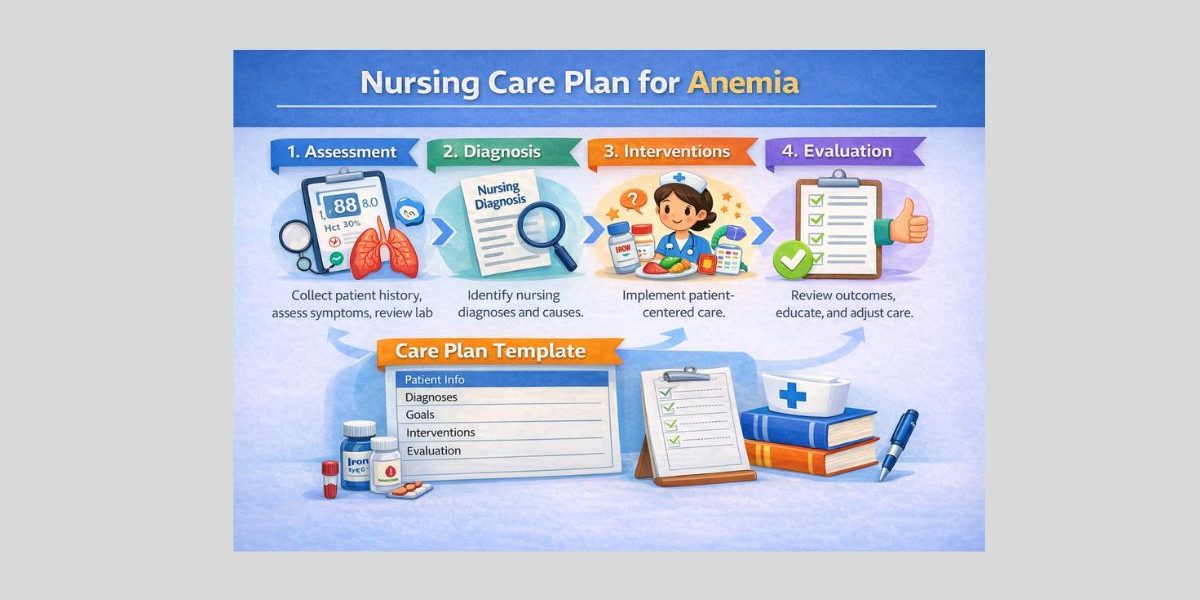
Nursing Care Plan for Anemia (Advanced Clinical)
Introduction: Nursing Care Plan for Anemia
A nursing care plan for anemia is a comprehensive, patient-centered framework that guides clinical decision-making in the management of reduced hemoglobin levels and impaired oxygen-carrying capacity. Because anemia affects virtually every organ system, its management requires a multidimensional nursing approach that integrates assessment, diagnosis, intervention, and evaluation.
In clinical practice, anemia is frequently encountered across acute care, chronic disease management, and community health settings. Therefore, an effective anemia nursing care plan must go beyond symptom management and instead address the underlying etiology, physiological consequences, and psychosocial impact on the patient.
Moreover, nurses play a pivotal role in early identification, ongoing monitoring, and patient education. By applying evidence-based strategies, a well-structured nursing care plan for anemia patient management can significantly reduce complications such as hypoxia, cardiovascular strain, and decreased functional capacity.
Pathophysiology of Anemia in Clinical Nursing Practice
Understanding the underlying mechanisms of anemia is essential for developing an effective nursing care plan for anemia, as interventions must be tailored to the specific cause.
At its core, anemia results from a disruption in the balance between red blood cell production, destruction, and loss. Consequently, this imbalance leads to decreased hemoglobin concentration and reduced oxygen delivery to tissues.
From a clinical standpoint, anemia develops through three primary mechanisms:
1. Reduced Red Blood Cell Production
This occurs when the bone marrow fails to produce sufficient erythrocytes. The causes are often nutritional or pathological, including:
- Iron deficiency due to inadequate intake or chronic blood loss
- Vitamin B12 deficiency leading to impaired DNA synthesis
- Folate deficiency affecting cell maturation
- Bone marrow suppression in conditions such as aplastic anemia
In such cases, the anemia patient care plan in nursing must prioritize correcting deficiencies and supporting erythropoiesis.
2. Increased Red Blood Cell Destruction (Hemolysis)
Hemolytic processes shorten the lifespan of red blood cells, often resulting in acute or chronic anemia. This may occur due to:
- Autoimmune disorders
- Genetic conditions such as sickle cell disease
- Infections or toxic exposures
Because hemolysis can lead to complications like jaundice and splenomegaly, the nursing care plan for anemia patient care must include close monitoring and prevention of secondary complications.
3. Blood Loss (Acute or Chronic)
Blood loss remains one of the most common causes of anemia in clinical settings. It can be categorized as:
- Acute hemorrhage (trauma, surgery)
- Chronic bleeding (gastrointestinal ulcers, heavy menstruation)
In these scenarios, the anemia nursing care plan must emphasize hemodynamic stabilization, fluid balance, and identification of the bleeding source.
Types of Anemia and Their Nursing Implications
A critical component of any nursing care plan for anemia is identifying the specific type, as each presents unique clinical challenges and requires tailored interventions.
Iron Deficiency Anemia
Iron deficiency anemia is the most prevalent form globally and is often associated with nutritional deficits or chronic blood loss. Patients typically present with fatigue, pallor, and sometimes pica.
Nursing implications include:
- Monitoring dietary intake and nutritional status
- Administering iron supplements as prescribed
- Educating patients on iron-rich foods and absorption enhancers
Megaloblastic Anemia (Vitamin B12 or Folate Deficiency)
This type of anemia is characterized by the production of large, immature red blood cells. Neurological symptoms, particularly in Vitamin B12 deficiency, make early intervention critical.
Key nursing considerations:
- Monitoring neurological status
- Administering vitamin supplements
- Assessing for malabsorption syndromes
Hemolytic Anemia
In hemolytic anemia, red blood cells are destroyed prematurely, leading to increased bilirubin levels and potential organ complications.
Important nursing priorities:
- Observing for jaundice and dark urine
- Monitoring spleen size
- Preventing triggers in genetic conditions
Aplastic Anemia
Aplastic anemia is a life-threatening condition involving bone marrow failure. Patients are at high risk for infection and bleeding.
Nursing focus areas include:
- Infection control precautions
- Monitoring for signs of bleeding
- Supporting transfusion therapy
Sickle Cell Anemia
This genetic disorder leads to abnormal hemoglobin formation and vaso-occlusive crises.
Nursing priorities:
- Pain management during crises
- Ensuring adequate hydration
- Preventing hypoxia and infection
Clinical Manifestations of Anemia
The clinical presentation of anemia varies depending on severity, duration, and underlying cause. However, certain symptoms are commonly observed and should guide the development of a nursing care plan for anemia patient management.
General Symptoms
Patients with anemia often present with:
- Persistent fatigue and generalized weakness
- Pallor of skin and mucous membranes
- Shortness of breath, especially on exertion
- Tachycardia and palpitations
These symptoms result from decreased oxygen delivery and compensatory physiological mechanisms.
Severe and Advanced Symptoms
In more advanced cases, anemia may present with:
- Chest pain due to myocardial hypoxia
- Dizziness or syncope
- Cognitive impairment and confusion
- Cold extremities and cyanosis
Therefore, early recognition is critical in preventing deterioration.
Comprehensive Nursing Assessment for Anemia
A thorough and systematic assessment is the cornerstone of an effective anemia nursing care plan.
1. Detailed Patient History
A comprehensive history provides critical insights into the cause of anemia. Key areas to explore include:
- Dietary patterns (iron, folate, Vitamin B12 intake)
- History of chronic diseases (e.g., renal disease, cancer)
- Medication use (NSAIDs, anticoagulants)
- Menstrual and reproductive history
- Family history of hematologic disorders
This information helps guide diagnostic reasoning and care planning.
2. Physical Examination
A focused physical examination should identify both general and specific signs of anemia.
Common findings include:
- Pale conjunctiva and nail beds
- Glossitis (inflamed tongue)
- Brittle or spoon-shaped nails
- Tachycardia and hypotension
Additionally, findings such as jaundice or splenomegaly may indicate hemolytic processes.
3. Laboratory and Diagnostic Evaluation
Laboratory investigations confirm the diagnosis and help classify anemia.
Essential tests include:
- Hemoglobin and hematocrit levels
- Mean corpuscular volume (MCV)
- Serum ferritin and iron levels
- Vitamin B12 and folate levels
- Reticulocyte count
Interpreting these results allows nurses to refine the nursing care plan for anemia patient care and collaborate effectively with the healthcare team.
Nursing Diagnoses in Anemia Care Planning
Accurate nursing diagnoses are essential for targeted and effective interventions.
Primary Nursing Diagnoses
The most common diagnoses in a nursing care plan for anemia include:
- Fatigue related to decreased oxygen-carrying capacity
- Activity intolerance related to imbalance between oxygen supply and demand
- Imbalanced nutrition: less than body requirements
- Ineffective tissue perfusion
- Risk for infection (especially in bone marrow disorders)
Each diagnosis must be supported by clinical evidence and individualized to the patient.
Goal Setting and Expected Outcomes
Establishing clear goals ensures measurable progress in the anemia patient nursing care plan.
Short-Term Goals
- Reduction in fatigue levels
- Stabilization of vital signs
- Improved oxygenation
Long-Term Goals
- Restoration of normal hemoglobin levels
- Improved nutritional status
- Resolution of underlying cause
Furthermore, patient adherence to treatment is a key determinant of success.
Request Professional Nursing Assignment Help
Need a top-grade nursing care plan for anemia written to academic or clinical standards?
Request a Quote Now – Get expert help tailored to BSN, MSN, or DNP level
Evidence-based, plagiarism-free, and fully referenced
Delivered fast with guaranteed quality
Advanced Clinical Considerations in Anemia
Anemia has far-reaching effects that extend beyond simple fatigue, making comprehensive care essential.
Cardiovascular Implications
Chronic anemia increases cardiac workload, which may eventually lead to:
- Left ventricular hypertrophy
- Heart failure in severe cases
Neurological Implications
Reduced oxygen supply to the brain can result in:
- Poor concentration
- Memory impairment
- Dizziness and fainting
Functional and Psychosocial Impact
Patients may experience:
- Reduced productivity
- Emotional distress
- Decreased quality of life
Thus, holistic care must be incorporated into the nursing care plan for anemia.
Nursing Care Plan for Anemia (Interventions, Rationales, and Clinical Management)
Therapeutic Nursing Interventions in a Nursing Care Plan for Anemia
In a comprehensive nursing care plan for anemia, nursing interventions must be both symptom-oriented and etiologically driven. This means that care should not only alleviate clinical manifestations such as fatigue and dyspnea but also address the underlying cause of the anemia. Because oxygen delivery is compromised in anemic patients, interventions are primarily focused on optimizing oxygenation, conserving energy, restoring hematologic balance, and preventing complications.
To begin with, one of the most critical nursing priorities is the continuous monitoring of the patient’s physiological status. Regular assessment of vital signs, including heart rate, respiratory rate, blood pressure, and oxygen saturation, provides essential information about the patient’s compensatory mechanisms and overall stability. For instance, tachycardia and tachypnea often indicate the body’s attempt to compensate for reduced oxygen-carrying capacity. Therefore, nurses must interpret these findings within the broader clinical picture and adjust care accordingly.
In addition, ongoing evaluation of laboratory parameters is essential in determining the effectiveness of the anemia nursing care plan. Monitoring hemoglobin levels, hematocrit, and reticulocyte counts allows healthcare providers to assess whether treatment interventions are producing the desired outcomes. A rising reticulocyte count, for example, may indicate effective bone marrow response, whereas persistently low values may suggest ongoing pathology or inadequate treatment.
Energy Conservation and Fatigue Management in Anemia Care
Fatigue is one of the most prominent and debilitating symptoms of anemia, and as such, it requires targeted intervention within any effective nursing care plan for anemia patient management. Because reduced hemoglobin levels limit oxygen delivery to tissues, patients often experience significant exhaustion even with minimal physical activity.
Nurses play a crucial role in helping patients manage fatigue through structured energy conservation strategies. This involves encouraging the patient to prioritize activities, incorporate rest periods, and avoid unnecessary exertion. For example, scheduling activities during periods when the patient feels most energetic can help optimize functional capacity. At the same time, clustering nursing interventions minimizes interruptions and allows for uninterrupted rest, which is essential for recovery.
Furthermore, patient education is integral to fatigue management. Patients must understand the importance of balancing activity with rest, as overexertion can exacerbate symptoms and delay recovery. By teaching patients how to recognize early signs of fatigue and respond appropriately, nurses empower them to take an active role in their care.
Oxygenation and Tissue Perfusion Management
Because anemia directly impairs oxygen transport, maintaining adequate oxygenation is a central focus of the nursing care plan for anemia. In cases of moderate to severe anemia, supplemental oxygen therapy may be required to enhance tissue oxygenation and reduce the workload on the cardiovascular system.
Positioning also plays a significant role in optimizing oxygen delivery. Elevating the head of the bed can improve lung expansion and facilitate breathing, particularly in patients experiencing dyspnea. Additionally, nurses should monitor for signs of hypoxia, such as restlessness, confusion, and cyanosis, as these may indicate worsening anemia or inadequate intervention.
Equally important is the assessment of peripheral tissue perfusion. Nurses should regularly evaluate capillary refill, skin temperature, and color to determine whether tissues are receiving sufficient oxygen. Any signs of impaired perfusion must be addressed promptly to prevent complications such as organ dysfunction.
Nutritional Therapy in an Anemia Nursing Care Plan
Nutritional management is a cornerstone of any effective anemia patient care plan in nursing, particularly in cases of iron deficiency or vitamin-related anemia. Since many forms of anemia are directly linked to inadequate nutrient intake or absorption, dietary interventions are both preventive and therapeutic.
Nurses must collaborate with dietitians to develop individualized nutrition plans that address specific deficiencies. For patients with iron deficiency anemia, emphasis should be placed on iron-rich foods such as red meat, leafy green vegetables, legumes, and fortified cereals. At the same time, educating patients about factors that enhance iron absorption, such as vitamin C, can significantly improve treatment outcomes.
Moreover, patients should be advised to avoid substances that inhibit iron absorption, including tea, coffee, and calcium-rich foods when taking iron supplements. This level of detailed education is critical in ensuring adherence and maximizing the effectiveness of dietary interventions.
In cases of Vitamin B12 or folate deficiency, supplementation is often required alongside dietary modifications. Nurses must ensure that patients understand the importance of adherence to prescribed therapy, as deficiencies can lead to serious complications, including neurological damage.
Medication Management in the Nursing Care Plan for Anemia
Pharmacological therapy is often an essential component of the nursing care plan for anemia patient care, and nurses must be well-versed in the administration, monitoring, and evaluation of these treatments.
Iron supplementation, whether oral or intravenous, is the most common pharmacological intervention. When administering oral iron, nurses should educate patients about potential side effects such as gastrointestinal discomfort, constipation, and dark stools. Advising patients to take iron with food may reduce discomfort, although it can also decrease absorption, which must be carefully balanced.
In more severe cases, particularly when oral therapy is ineffective or poorly tolerated, intravenous iron may be administered. This requires close monitoring for adverse reactions, including hypersensitivity responses. Therefore, nurses must be prepared to recognize and respond to complications promptly.
Vitamin B12 injections are another critical intervention, especially in patients with malabsorption issues. Regular administration and monitoring are necessary to prevent recurrence of deficiency and associated complications.
Additionally, blood transfusions may be required in cases of severe anemia or acute blood loss. While transfusions can rapidly improve hemoglobin levels, they carry risks such as transfusion reactions and fluid overload. Consequently, nurses must follow strict protocols, monitor vital signs closely, and assess for any signs of adverse reactions during and after the procedure.
Patient Education and Self-Management Strategies
Patient education is a fundamental aspect of any successful nursing care plan for anemia, as it directly influences adherence to treatment and long-term outcomes. Education should be individualized and tailored to the patient’s level of understanding, cultural background, and specific condition.
Patients must be informed about the causes of their anemia, the importance of treatment, and the potential consequences of non-adherence. For example, explaining how untreated anemia can lead to complications such as heart failure or cognitive impairment can motivate patients to follow prescribed therapies.
Furthermore, teaching patients how to recognize symptoms of worsening anemia, such as increased fatigue, dizziness, or shortness of breath, enables early intervention and prevents complications. Nurses should also provide guidance on lifestyle modifications, including dietary changes, activity management, and follow-up care.
Importantly, education should not be a one-time event but rather an ongoing process that reinforces key concepts and addresses any emerging concerns.
Psychosocial Support in Anemia Care
An often-overlooked aspect of the anemia nursing care plan is the psychosocial impact of the condition. Chronic anemia can significantly affect a patient’s quality of life, leading to emotional distress, anxiety, and decreased social engagement.
Nurses must assess the patient’s emotional and psychological well-being as part of holistic care. Providing emotional support, encouraging open communication, and involving family members in the care process can help alleviate anxiety and improve coping mechanisms.
Additionally, referral to support services or counseling may be beneficial for patients experiencing significant distress. By addressing both physical and emotional needs, nurses can ensure comprehensive and patient-centered care.
Request Professional Nursing Writing Help
Need a high-level, clinically accurate nursing care plan for anemia written to distinction level?
Request a Quote Now – Get expert BSN, MSN, or DNP-level support
Fully evidence-based with deep clinical analysis
Designed to score top grades and meet strict rubrics
Evaluation of Nursing Interventions in Anemia
Evaluation is the final yet ongoing phase of the nursing care plan for anemia patient management, ensuring that interventions are effective and goals are being met. Nurses must continuously assess patient outcomes, including improvements in symptoms, laboratory values, and overall functional status.
If expected outcomes are not achieved, the care plan must be revised to address any gaps or emerging issues. This iterative process ensures that care remains dynamic, responsive, and aligned with the patient’s evolving needs.
Nursing Care Plan for Anemia
Comprehensive Sample Nursing Care Plan for Anemia (Applied Scenario)
To fully apply a nursing care plan for anemia, it is essential to move beyond theory and examine a structured clinical case. Consider a 32-year-old female patient presenting with fatigue, pallor, dizziness, and shortness of breath on exertion. Laboratory investigations confirm iron deficiency anemia, as evidenced by low hemoglobin, reduced hematocrit, and decreased serum ferritin.
In this scenario, the nurse must first establish priority nursing diagnoses. Most importantly, fatigue related to decreased oxygen-carrying capacity becomes the central focus. At the same time, imbalanced nutrition and risk for ineffective tissue perfusion must also be addressed.
Structured Nursing Care Plan (Clinical Format)
Assessment Findings
- Patient reports persistent fatigue and weakness
- Observable pallor of skin and conjunctiva
- Shortness of breath during minimal activity
- Laboratory findings: low Hb, low ferritin
Nursing Diagnoses
- Fatigue related to reduced oxygen supply
- Activity intolerance due to decreased hemoglobin
- Imbalanced nutrition: less than body requirements
- Risk for ineffective tissue perfusion
Goals and Expected Outcomes
- Patient will report reduced fatigue within a defined period
- Patient will demonstrate improved activity tolerance
- Hemoglobin levels will gradually return to normal
- Patient will verbalize understanding of dietary changes
Nursing Interventions with Rationales
- Encourage rest and cluster care activities
→ This reduces oxygen demand and conserves energy - Administer prescribed iron supplements
→ Supports red blood cell production and hemoglobin synthesis - Educate patient on iron-rich diet
→ Improves long-term nutritional status and prevents recurrence - Monitor vital signs and oxygen saturation
→ Detects early signs of deterioration or hypoxia - Assess laboratory values regularly
→ Evaluates effectiveness of treatment interventions
Evaluation Criteria
- Fatigue levels decrease progressively
- Patient tolerates increased activity
- Laboratory values show improvement
- Patient adheres to treatment plan
Advanced Clinical Scenarios in Anemia Care
In more complex cases, the nursing care plan for anemia patient management must be adapted to address additional risks and complications. Therefore, nurses must apply critical thinking and clinical judgment.
1. Anemia in Chronic Kidney Disease
Patients with chronic kidney disease often develop anemia due to reduced erythropoietin production.
Key nursing considerations include:
- Monitor response to erythropoiesis-stimulating agents
- Assess for hypertension and clotting risks
- Evaluate renal function alongside hemoglobin levels
2. Sickle Cell Anemia Crisis Management
During a vaso-occlusive crisis, immediate and aggressive intervention is required.
Nursing priorities include:
- Administer prescribed analgesics for pain control
- Maintain adequate hydration to reduce sickling
- Provide oxygen therapy when indicated
- Monitor for complications such as acute chest syndrome
3. Acute Blood Loss Anemia
In emergency settings, rapid stabilization becomes the primary goal.
Critical interventions involve:
- Initiating IV fluids to maintain circulation
- Preparing for blood transfusion
- Monitoring for shock and hemodynamic instability
- Observing for transfusion reactions
Common Mistakes in a Nursing Care Plan for Anemia
Although many students understand the basics, several common mistakes reduce the effectiveness of a nursing care plan for anemia. Addressing these errors improves both clinical outcomes and academic performance.
Frequent Errors to Avoid
- Focusing only on symptoms instead of the underlying cause
→ This leads to incomplete and ineffective care - Writing vague or non-measurable goals
→ Goals must be specific, time-bound, and observable - Neglecting patient education
→ Poor understanding reduces adherence to treatment - Failing to evaluate outcomes properly
→ Without evaluation, care cannot be improved - Overlooking psychosocial factors
→ Emotional and lifestyle impacts are critical in chronic anemia
Evidence-Based Practice in Anemia Nursing Care
To ensure high-quality care, every anemia nursing care plan must integrate evidence-based practice. This means combining clinical expertise with current research findings.
Key Evidence-Based Insights
- Oral iron is best absorbed when taken with vitamin C
- Calcium and caffeine reduce iron absorption
- Restrictive transfusion strategies are safer in stable patients
- Early intervention reduces long-term complications
As a result, incorporating these findings strengthens both clinical care and academic credibility.
Long-Term Management and Prevention Strategies
Long-term success in a nursing care plan for anemia patient care depends on prevention and sustained management. Therefore, nurses must emphasize lifestyle changes and follow-up care.
Essential Prevention Strategies
- Maintain a balanced diet rich in iron, folate, and vitamin B12
- Attend regular medical check-ups
- Manage chronic conditions effectively
- Avoid substances that interfere with nutrient absorption
Patient Self-Management Focus
- Recognize early symptoms of anemia
- Adhere strictly to prescribed medications
- Follow dietary recommendations consistently
Request Expert Nursing Assignment Help
Need a high-distinction nursing care plan for anemia that meets strict academic and clinical standards?
Request a Quote Now – BSN, MSN, and DNP-level support
Fully evidence-based and plagiarism-free
Structured to meet grading rubrics and pass Turnitin
Frequently Asked Questions (FAQ)
What is the priority in a nursing care plan for anemia?
The priority is improving oxygen delivery to tissues while addressing the underlying cause of anemia through targeted interventions.
What are the key nursing interventions for anemia?
They include iron supplementation, nutritional therapy, fatigue management, monitoring vital signs, and patient education.
How do you evaluate a nursing care plan for anemia?
Evaluation involves assessing symptom improvement, laboratory results, and patient adherence to treatment.
Why is nutrition important in anemia management?
Nutrition directly affects red blood cell production and helps prevent recurrence of anemia.
When should blood transfusion be considered?
Transfusion is indicated in severe anemia or acute blood loss when rapid correction is required.
Final Thoughts
In conclusion, a well-structured nursing care plan for anemia integrates assessment, diagnosis, intervention, and evaluation into a cohesive framework. Furthermore, combining clinical knowledge with evidence-based practice ensures optimal patient outcomes.
Ultimately, mastering anemia care planning requires attention to detail, critical thinking, and a commitment to continuous improvement. Therefore, nurses must remain adaptable and responsive to patient needs at every stage of care.
