

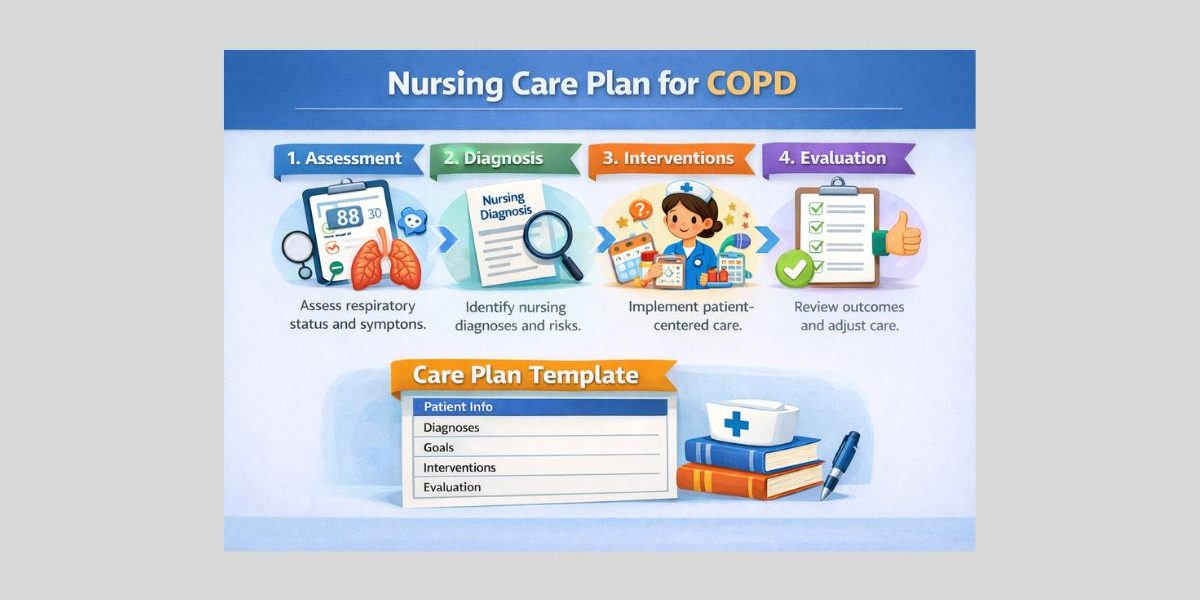
Chronic obstructive pulmonary disease (COPD) is a debilitating, progressive lung disorder that affects millions worldwide. Patients experience breathlessness, chronic cough, frequent infections and fatigue. Family members often watch loved ones struggle with simple tasks like climbing stairs or sleeping through the night. A Nursing Care Plan for COPD offers hope by providing structured strategies to manage symptoms, prevent exacerbations and improve quality of life. Without guidance, students and practitioners may feel overwhelmed by complex treatment regimens, evidence‑based guidelines and documentation requirements. This detailed service guide explains why you need a COPD care plan, outlines key components, and shows how our academic support services can help you succeed.
Understanding the Challenges of COPD Care
COPD is characterized by progressive airflow limitation and lung tissue destruction due to chronic inflammation[1]. Smoking is the most common cause, but secondhand smoke, occupational exposures and genetic factors like alpha‑1 antitrypsin deficiency also contribute[2]. According to the StatPearls article, COPD prevalence was 174 million cases worldwide in 2015 with 3.2 million deaths[3]. These numbers highlight the global burden and underscore the need for effective management.
Complexity of Disease Management
COPD management involves multifaceted treatment: pharmacologic therapy (bronchodilators, inhaled corticosteroids, PDE4 inhibitors), non‑pharmacologic interventions (pulmonary rehabilitation, smoking cessation, vaccinations) and monitoring for complications. The article lists beta2‑agonists, antimuscarinics, methylxanthines and inhaled corticosteroids as commonly used medications[4]. Each class has unique actions, side effects and dosing regimens that require careful management. Students must also understand the difference between maintenance therapy and acute exacerbation treatment[5].
Adherence and Education
Adherence to inhalers and smoking cessation can be challenging. Poor inhaler technique reduces medication efficacy, leading to exacerbations and hospital admissions. Patients may deny disease severity, delay seeking care or experience mental health issues like anxiety and depression. Family caregivers often lack knowledge about disease progression, oxygen therapy and emergency management. A structured Nursing Care Plan for COPD provides clarity and empowerment for both patients and caregivers.
Documentation and Evidence
Nursing students and professionals must document assessment, interventions and outcomes in a legal and ethical manner. They must cite credible sources, follow guidelines like the GOLD (Global Initiative for Chronic Obstructive Lung Disease) recommendations and use NANDA nursing diagnoses. Our nursing research paper help provides support in accessing peer‑reviewed literature and integrating evidence into care plans.
Why a Nursing Care Plan for COPD Is Essential
A comprehensive nursing care plan transforms theoretical knowledge into actionable interventions, ensuring safe and effective patient care.
Controls Symptoms and Improves Quality of Life
The primary goal of COPD management is to control symptoms, enhance quality of life and reduce exacerbations[6]. Non‑pharmacologic approaches like smoking cessation and pulmonary rehabilitation are vital for all patients[7]. Vaccination against influenza and pneumococcal infections reduces morbidity and mortality[8]. Pharmacologic therapy including bronchodilators, inhaled steroids and PDE4 inhibitors reduces dyspnea and improves lung function[9].
Prevents Exacerbations and Hospitalizations
COPD exacerbations accelerate lung function decline and increase mortality. Bronchodilators and corticosteroids, along with antibiotics for bacterial infections, treat acute episodes[10]. Long‑acting medications reduce exacerbation frequency. Nurses monitor patients for early signs of deterioration (e.g., increased sputum, fever, worsening breathlessness) and implement interventions promptly. Education on early recognition empowers patients to seek timely care.
Supports Interprofessional Collaboration
Managing COPD requires a diverse team: pulmonologists, respiratory therapists, pharmacists, dieticians, physical therapists, mental health professionals and nurses[11]. Nurses educate patients about breathing techniques like pursed‑lip breathing (PLB), monitor for respiratory distress, coordinate care and liaise with other disciplines[11]. Our how it works page outlines our collaborative approach.
Enhances Academic and Professional Success
Care plans are integral to nursing education and practice. They demonstrate critical thinking, evidence integration and documentation skills. Our support services such as coursework help for nursing students and nursing assignment help assist students in mastering these competencies ethically.
Key Components of a COPD Nursing Care Plan
A comprehensive care plan includes assessment, nursing diagnoses, planning, implementation and evaluation. It must be tailored to individual patient needs, severity and co‑morbidities.
Assessment
Subjective Data
- Symptoms: Chronic cough, dyspnea on exertion, wheezing, fatigue, chest tightness.
- History: Smoking history (pack-years), exposure to secondhand smoke or occupational pollutants, previous exacerbations and hospitalizations.
- Functional limitations: Difficulty with activities of daily living (ADLs), exercise intolerance, weight loss due to energy expenditure during breathing.
- Psychosocial: Anxiety, depression, social isolation. Patients may fear suffocation or activity due to breathlessness.
- Medication adherence and technique: Assess whether inhalers are used correctly and consistently.
Objective Data
- Physical examination: Barrel chest, prolonged expiratory phase, use of accessory muscles, cyanosis, digital clubbing.
- Vital signs: Respiratory rate, heart rate, oxygen saturation (SpO2), blood pressure, temperature.
- Pulmonary function tests (PFTs): FEV1/FVC ratio <70 % indicates obstruction; FEV1 severity classifies COPD (mild to very severe).
- Chest imaging: Hyperinflation, flattened diaphragms on chest X-ray or CT.
- Laboratory tests: Arterial blood gases (ABGs) to assess oxygenation and carbon dioxide retention.
- Questionnaires: Modified Medical Research Council (mMRC) dyspnea scale, COPD Assessment Test (CAT) to evaluate symptoms and quality of life.
- Vaccination status: Influenza and pneumococcal vaccinations per guidelines[8].
Nursing Diagnoses
Common nursing diagnoses for COPD include:
- Impaired Gas Exchange related to alveolar-capillary membrane changes as evidenced by decreased SpO2, cyanosis and ABG abnormalities.
- Ineffective Airway Clearance related to increased mucus production and weakened cough, evidenced by thick secretions and crackles.
- Ineffective Breathing Pattern related to airway obstruction and hyperinflation, manifested by tachypnea, use of accessory muscles and prolonged expiratory phase.
- Activity Intolerance related to imbalance between oxygen supply and demand, evidenced by dyspnea, fatigue and decreased exercise tolerance.
- Risk for Infection related to decreased ciliary function and mucus stasis, predisposing to respiratory infections.
- Imbalanced Nutrition: Less Than Body Requirements related to increased energy expenditure for breathing and appetite loss.
- Anxiety related to breathlessness and fear of suffocation.
These diagnoses help structure the care plan, prioritise interventions and measure outcomes.
Planning: Setting SMART Goals
Goals should be patient‑centred and measurable. Examples include:
- Gas Exchange Goal: Patient will maintain SpO2 ≥92 % on room air or prescribed oxygen during hospital stay.
- Airway Clearance Goal: Patient will expectorate mucus effectively with assistive devices and remain free from signs of pneumonia.
- Breathing Pattern Goal: Patient will demonstrate pursed‑lip breathing during episodes of dyspnea to reduce respiratory rate and work of breathing.
- Activity Goal: Patient will ambulate 100 meters without undue dyspnea after pulmonary rehabilitation sessions.
- Nutritional Goal: Patient will consume 6 small, nutrient-dense meals per day to prevent weight loss.
- Anxiety Goal: Patient will verbalise decreased anxiety after learning relaxation techniques and using rescue inhalers.
Implementation: Evidence‑Based Interventions
Oxygen Therapy and Breathing Techniques
- Oxygen administration: Provide low-flow oxygen via nasal cannula or venturi mask, monitoring ABGs and SpO2. Use caution in CO2 retainers (chronic hypercapnia) to avoid suppressing respiratory drive. Titrate to maintain SpO2 between 88–92 % as ordered.
- Pursed‑Lip Breathing (PLB): Teach the technique: inhale slowly through the nose and exhale through puckered lips longer than inhalation. PLB generates positive end-expiratory pressure, prevents airway collapse, improves gas exchange and reduces dyspnea[12]. It is simple and effective for COPD, though proper instruction is required[13].
- Diaphragmatic Breathing: Encourage diaphragmatic breathing to improve ventilation efficiency. Combine with PLB to maximise benefits[14].
- Tripod Positioning: Assist patient to sit forward with arms resting on knees or table. This position facilitates accessory muscle use and eases breathing.
- Ambulation with Rest: Encourage gentle walking with frequent rest periods to improve endurance while preventing desaturation.
Airway Clearance Techniques
- Hydration: Encourage fluid intake (if not contraindicated) to thin secretions.
- Chest Physiotherapy: Teach percussion, vibration and postural drainage to mobilise secretions. Use mechanical devices (flutter valve, acapella) if available.
- Incentive Spirometry: Encourage deep breathing and lung expansion; though primarily used post‑operatively, it can aid COPD patients to maintain lung capacity.
- Effective Coughing: Teach huff coughing to clear mucus without causing airway collapse. Use stacked coughing or controlled coughing techniques.
Medications
- Short‑Acting Bronchodilators: Administer SABAs (e.g., albuterol) and short-acting antimuscarinics (SAMA) during acute dyspnea. They relax smooth muscle and relieve symptoms[15]. Monitor heart rate and tremors.
- Long‑Acting Bronchodilators: Provide LABAs (e.g., salmeterol) and LAMAs (e.g., tiotropium) for maintenance therapy to reduce exacerbations[15]. Assess for anticholinergic effects like dry mouth or urinary retention.
- Methylxanthines: Use theophylline for patients unresponsive to inhaled therapies; monitor serum levels for toxicity[16].
- Inhaled Corticosteroids (ICS): Administer alone or with LABA to decrease airway inflammation. Be aware of pneumonia risk and teach patients to rinse mouth after use[17].
- Systemic Corticosteroids: Administer for acute exacerbations; avoid long-term use due to side effects (e.g., osteoporosis, hyperglycemia). Intravenous corticosteroids are not more effective than oral and may cause more side effects[5].
- Phosphodiesterase-4 (PDE4) Inhibitors: Prescribe roflumilast for severe COPD with chronic bronchitis to decrease exacerbations[18].
- Antibiotics: Use for acute exacerbations with bacterial infection. Monitor for side effects and antibiotic resistance[19].
- Vaccinations: Administer influenza vaccine annually and pneumococcal vaccines per guidelines[8].
- Smoking Cessation Aids: Provide nicotine replacement therapy (patches, gums) or prescription medications (varenicline, bupropion). Refer to smoking cessation programs.
Non‑Pharmacologic Interventions
- Pulmonary Rehabilitation: A multidisciplinary program including exercise training, education and behaviour modification to improve physical capacity and psychological well‑being[20]. Nurses help set goals, monitor progress and reinforce adherence.
- Nutrition and Fluid Management: Provide high‑calorie, high‑protein meals to meet energy demands. Encourage small, frequent meals. Assess for swallowing difficulties and consult dietician.
- Energy Conservation: Teach pacing of activities, planning tasks in manageable segments, using assistive devices (rolling walkers), sitting to perform tasks like showering.
- Psychosocial Support: Address anxiety and depression; refer to counseling or support groups. Provide relaxation techniques like mindfulness and meditation. Involve mental health professionals to address coping[21].
- Education: Teach correct inhaler technique, importance of adherence, recognition of exacerbation signs and use of rescue medications. Provide written and visual materials. Evaluate understanding using teach‑back.
- Environmental Control: Advise patients to avoid air pollutants, extremes of temperature and respiratory irritants. Suggest using air purifiers and staying indoors on smoggy days.
- Sleep Hygiene: Encourage 7–9 hours of sleep per night, positioning with head elevated, using CPAP or BiPAP devices as prescribed for overlap with obstructive sleep apnea.
- Advance Care Planning: Discuss disease progression, palliative care and end‑of‑life decisions early. Respect patient values and autonomy.
Interprofessional Collaboration
Effective COPD management requires communication and coordination:
- Respiratory Therapists: Assist with inhaler training, chest physiotherapy and mechanical ventilation. Evaluate ABG results and oxygen therapy.
- Pulmonologists: Diagnose and manage complex cases, adjust medications, evaluate for surgical interventions.
- Pharmacists: Review medication regimens, educate patients on proper use, monitor interactions and adherence.
- Physical Therapists: Design exercise plans, supervise pulmonary rehabilitation.
- Dieticians: Provide nutritional assessment and meal plans to meet increased energy demands.
- Social Workers: Identify community resources, address financial barriers, arrange home health or hospice care.
- Mental Health Professionals: Treat anxiety, depression and improve coping[22].
Team collaboration ensures each aspect of care is covered and prevents duplication or omission. Nurses coordinate the team, document interventions and communicate changes.
Cultural and Socioeconomic Considerations
COPD disproportionately affects older adults, smokers and those with lower socioeconomic status. Many patients cannot afford inhalers or pulmonary rehabilitation. Limited health literacy and language barriers impede understanding of disease management. Culturally sensitive care includes using interpreters, tailoring education materials to reading level and acknowledging cultural beliefs about smoking and illness.
Environmental exposures differ by occupation and geography. For example, individuals working in mines or factories may have greater exposure to dust and chemicals. Nurses should advocate for workplace safety and access to protective equipment. Social determinants housing, transportation, food security impact adherence and outcomes. Collaborate with social workers to address these barriers.
Table 1: Socioeconomic Barriers and Nursing Responses
| Barrier | Impact on COPD Management | Nursing Interventions |
|---|---|---|
| Limited income | Cannot afford medications or oxygen equipment | Connect to assistance programs, low-cost clinics, or respiratory foundations. |
| Low health literacy | Misunderstand inhaler instructions or fail to recognise symptoms | Use plain language, pictorial aids, teach‑back method. |
| Language barriers | Difficulty communicating symptoms and understanding care instructions | Use certified interpreters; translate materials; confirm understanding. |
| Lack of transportation | Miss appointments, pulmonary rehab sessions | Arrange telehealth visits, community transport or home health services. |
| Social isolation | Depression and decreased motivation for self-care | Refer to support groups, community centres, online forums. |
Case Study: Developing a COPD Nursing Care Plan
Patient Profile
Mr. Green, 65-year-old male with 40 pack‑year smoking history and known COPD. He presents with increased shortness of breath, cough and thick yellow sputum. He denies fever or chest pain. He lives alone and has limited income. Medications include albuterol and ipratropium inhalers but admits using them “when I feel bad.” He drinks little water and eats one large meal late at night.
Assessment
Subjective: Complains of worsening dyspnea and fatigue. Reports difficulty walking to the mailbox. Smokes occasionally despite diagnosis.
Objective: Vital signs: BP 136/88 mmHg, HR 94 bpm, RR 24/min, SpO2 88 % on room air. Barrel chest, use of accessory muscles. Auscultation: expiratory wheezes, decreased breath sounds in lower lobes. Sputum thick and yellow.
PFTs show FEV1 55 % predicted (moderate COPD). ABGs reveal pH 7.35, PaO2 60 mmHg, PaCO2 55 mmHg. Chest X‑ray indicates hyperinflation.
Nursing Diagnoses
- Impaired Gas Exchange related to alveolar destruction and airway collapse as evidenced by PaO2 60 mmHg and SpO2 88 %.
- Ineffective Airway Clearance related to thick secretions and weakened cough as evidenced by wheezes and sputum production.
- Activity Intolerance related to imbalance between oxygen supply and demand evidenced by dyspnea at rest.
- Imbalanced Nutrition: Less Than Body Requirements related to decreased appetite and increased energy expenditure for breathing.
Planning
Short‑Term Goals:
- SpO2 ≥92 % with oxygen therapy within 24 hours.
- Patient will demonstrate effective pursed‑lip breathing during episodes of dyspnea by the end of the shift.
- Patient will use inhalers correctly and take medications as ordered within 48 hours.
- Patient will consume at least 1.5 litres of fluids daily to thin secretions.
Long‑Term Goals:
- Patient will quit smoking within three months and enroll in a cessation program.
- Patient will attend pulmonary rehabilitation twice weekly for six weeks.
- Patient will gain 1 kg of weight and maintain BMI within normal range over three months.
Implementation
- Oxygen Therapy: Administer 1–2 litres/min via nasal cannula; titrate to keep SpO2 88–92 %. Monitor ABGs, ensuring CO2 retention does not worsen.
- Medication Management: Provide short-acting bronchodilator (albuterol) and antimuscarinic inhaler (ipratropium) every 4–6 hours. Teach proper inhaler use, including shaking inhaler, slow inhalation and holding breath for 10 seconds. Add long-acting bronchodilator (tiotropium) and an inhaled corticosteroid if prescribed. Record responses and side effects.
- Airway Clearance: Encourage fluid intake (unless contraindicated) to 1.5–2 litres/day; provide mucolytic agent if ordered; perform chest physiotherapy (percussion and vibration); teach huff coughing; use nebulised saline for sputum mobilization.
- Breathing Techniques: Demonstrate and practise pursed‑lip breathing and diaphragmatic breathing; incorporate during walking or anxiety episodes[12].
- Positioning: Encourage high Fowler’s position to maximise lung expansion; use tripod position during acute dyspnea.
- Smoking Cessation Counseling: Discuss health risks and benefits of quitting; refer to smoking cessation program; provide nicotine replacement therapy; set quit date and follow up.
- Nutrition: Consult dietician; provide high‑protein, high‑calorie meals and snacks; suggest smaller frequent meals to reduce breathlessness during eating; monitor weight.
- Activity and Exercise: Start with 5‑minute walks within room; gradually increase to 15 minutes; incorporate rest periods; coordinate with physical therapist for pulmonary rehabilitation.
- Education: Explain disease process, importance of adherence, and recognition of early exacerbation signs (increased sputum, color change, fever, worsening dyspnea). Provide written instructions; ensure literacy; use teach‑back.
- Psychosocial Support: Encourage expression of fears; offer relaxation techniques; refer to counseling for anxiety. Involve social worker to discuss financial assistance for medications and transportation.
Evaluation
After 24 hours, Mr. Green maintains SpO2 at 92 % on 2 L O2 via nasal cannula; uses pursed‑lip breathing effectively; coughs up secretions; and demonstrates inhaler technique correctly. He verbalises intent to quit smoking and schedules pulmonary rehab sessions. Weight and fluid intake documented; ABGs improved slightly. Goals in progress; revise plan based on continued assessment.
This case illustrates how to integrate assessment findings, diagnoses, interventions and evaluation into a nursing care plan, emphasising patient education and interprofessional collaboration.
Benefits of Using Our Academic and Clinical Support Services
Creating a Nursing Care Plan for COPD requires time, research and critical thinking. Our services help you excel academically while maintaining ethical standards.
Comprehensive Expertise
Our writers and analysts hold advanced nursing degrees and have clinical experience in pulmonary and critical care. They understand COPD pathophysiology, evidence‑based guidelines and nursing process, ensuring accuracy and depth in your assignments.
Evidence‑Based Research
We use peer‑reviewed journals, PubMed and university databases to support your work. This ensures credibility and meets academic expectations. For example, the StatPearls article describes the etiology, epidemiology and management of COPD[23][24]. Our team can access and interpret such sources for your care plan.
Personalized Guidance
Whether you need a care plan, research paper or data analysis, we tailor our approach to your topic, level and deadline. We provide feedback, editing and citations so you learn and submit high‑quality work.
Time Management
Balancing coursework, clinical placements and personal life can be overwhelming. Outsourcing complex tasks gives you breathing room to focus on learning and self‑care. Our do my nursing homework service and nursing homework help support everyday assignments.
Ethical Support
We uphold academic integrity. Our services include consultations, outlines, literature reviews and editing. We do not write papers for you but guide you through the process so you develop your skills. See our about us page to learn more.
How Our Process Works
We ensure a transparent and efficient process:
- Place an Order: Use our order form to submit assignment details, formatting requirements and deadlines.
- Match with Expert: We assign your project to a writer with experience in COPD management and nursing care plans.
- Collaborate and Review: Communicate with your expert; provide additional instructions and feedback; receive drafts for review.
- Editing and Quality Check: Our editors verify adherence to guidelines, correct referencing and grammar.
- Delivery and Revisions: Receive your completed assignment; request revisions if necessary. Our nursing dissertation refund policy ensures satisfaction.
Our nursing dissertation pricing page outlines transparent costs. Payment plans and discounts are available.
How to Choose the Best Nursing Care Plan Service
Selecting the right academic partner ensures a positive experience and quality results. Consider:
- Credentials: Verify that writers hold nursing or medical degrees.
- Expertise: Look for services specialising in nursing care plans, evidence‑based practice and data analysis.
- Communication: Choose services allowing direct dialogue with your expert for clarifications and feedback.
- Transparency: Ensure pricing, policies and examples are accessible. Our case studies showcase successes.
- Comprehensive Support: Seek services that offer research help, data analysis, regression analysis, inferential statistics and qualitative analysis. Our platform covers all these, including clinical medical writing and report writing.
Other Academic Support Services
We provide numerous services to assist nursing students and professionals:
- Dissertation data analysis help: Guidance on statistical tests and software.
- Regression analysis help: Support with complex quantitative models.
- Inferential statistics help for nursing research: Assistance with t‑tests, ANOVA, chi‑square and other analyses.
- Qualitative data analysis help: Coding, theme development and interpretation.
- Coursework help for nursing students: Support for assignments across specialties.
- DNP dissertation help: Assistance with doctoral projects.
- Report writing: Professional editing and formatting for clinical and academic reports.
Ethical Considerations
We adhere to ethical standards in both clinical care and academic services.
Patient Care Ethics
- Autonomy: Respect patient decisions about treatment and lifestyle. Educate but do not coerce.
- Beneficence and Non‑maleficence: Provide interventions that benefit the patient and avoid harm (e.g., proper oxygen titration to avoid CO2 retention).
- Justice: Offer equitable care regardless of socioeconomic status or race. Advocate for access to resources.
- Confidentiality: Protect patient privacy and handle sensitive information carefully.
- Informed Consent: Ensure patients understand treatment options, risks and benefits. Encourage active participation in care decisions.
Academic Ethics
- Integrity: Provide original work and proper citations. Avoid plagiarism and ghostwriting.
- Collaboration: Work with our experts to enhance your understanding rather than circumvent learning.
- Transparency: Discuss expectations and limitations upfront. Our qualitative data analysis help and regression analysis help services outline how we support you ethically.
FAQs
- What is the goal of a Nursing Care Plan for COPD?
The goal is to control symptoms, improve quality of life, prevent exacerbations, and maintain lung function through personalized assessments, evidence‑based interventions and patient education[6]. - What are key nursing interventions for COPD?
Interventions include oxygen therapy, bronchodilators, inhaled corticosteroids, pursed‑lip and diaphragmatic breathing, pulmonary rehabilitation, smoking cessation, nutrition support, vaccination and education[24][12]. - How do nurses teach pursed‑lip breathing?
Nurses explain the technique, demonstrate inhaling through the nose and exhaling through pursed lips, and practice with patients. Proper instruction ensures benefits like improved gas exchange and reduced dyspnea[12]. - Why is pulmonary rehabilitation important?
Pulmonary rehab combines exercise, education and behaviour change, improving exercise tolerance, reducing dyspnea and enhancing quality of life. It is recommended for all COPD stages[20]. - When are systemic corticosteroids used?
Systemic steroids are used for acute exacerbations; they are not recommended for long-term therapy due to side effects[5]. - Can COPD be cured?
No. COPD is progressive and irreversible but treatable. Early diagnosis, smoking cessation and adherence to care plans slow progression and manage symptoms.
Final Call to Action
COPD doesn’t just steal breath it robs independence, mobility and peace of mind. A well‑constructed Nursing Care Plan for COPD can slow disease progression, reduce hospitalizations and restore control. Whether you’re a nursing student crafting your first care plan or a clinician seeking evidence‑based guidance, our team is here to help. Visit our how it works page, and review our transparent pricing. Place an order today for ethical, expert support. Together we can improve life for those living with COPD one breath at a time.
References
[1] [2] [3] [4] [5] [6] [7] [8] [9] [10] [15] [16] [17] [18] [19] [20] [23] [24] Chronic Obstructive Pulmonary Disease – StatPearls – NCBI Bookshelf
https://www.ncbi.nlm.nih.gov/books/NBK559281/
[11] [12] [13] [14] [21] [22] Pursed-lip Breathing – StatPearls – NCBI Bookshelf
