

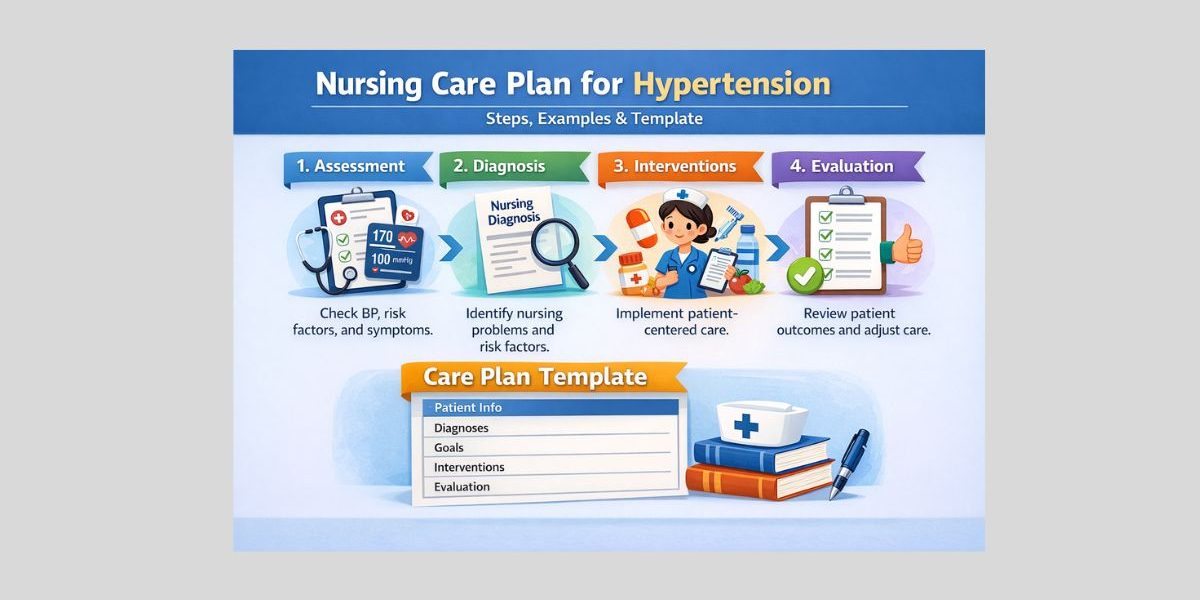
The Nursing Care Plan for Hypertension often intimidates students and working nurses because they worry about using the wrong nursing diagnoses or failing to translate complex pathophysiology into actionable, patient‑centred interventions. Hypertension (“the silent killer”) affects nearly half of adults in the United States, but symptoms may be absent until serious damage occurs[1]. Without structured guidance, many caregivers deliver generic care that does little to reduce life‑threatening risks or achieve long‑term blood pressure control. This article explores why you need a solid hypertension care plan, explains common challenges, and shows you step‑by‑step how to build a research‑driven, personalised plan while maintaining academic integrity and boosting your confidence.
Understanding the Challenges of Hypertension Care Planning
Hypertension management can feel overwhelming because high blood pressure is a complex, chronic condition with multi‑system consequences. Nurses often struggle to weave evidence into a coherent care plan for several reasons.
Difficulty Translating Theory into Practice
Nursing courses teach pathophysiology and pharmacology, but translating those principles into NANDA nursing diagnoses is tricky. For example, how do you relate systemic vascular resistance and left ventricular strain to nursing diagnoses like Ineffective Health Management or Excess Fluid Volume? Many novices default to generic statements that don’t address the patient’s actual risk factors. Evidence shows that missing personalised assessments can lead to poor patient outcomes and emergency visits[2].
Crafting SMART Goals
A common pitfall is writing vague goals such as “Patient will improve blood pressure,” which lacks clarity and measurability. Effective nursing care plans use SMART (Specific, Measurable, Achievable, Relevant, Time‑bound) goals. Research emphasises that setting measurable targets for systolic/diastolic pressure, weight loss, or sodium intake improves adherence and outcomes[2].
Evidence‑Based Interventions
Nurses must rely on guidelines and peer‑reviewed research to determine interventions like the Dietary Approaches to Stop Hypertension (DASH) diet, medication adherence strategies or lifestyle modifications. Open‑access studies highlight the importance of lifestyle changes and monitoring in preventing hypertensive crises[3]. Without referencing credible sources, care plans lack academic rigor and legal defensibility.
Integrating Scholarly Evidence
College assignments and professional documentation require citations from PubMed, Google Scholar or university publications. Searching for and interpreting research can be time‑consuming. Many students risk plagiarism or outdated information because they don’t know how to access or cite sources properly. Our nursing research paper help offers ethical support for analysing peer‑reviewed literature.
Why a Nursing Care Plan for Hypertension Matters
Hypertension is a major risk factor for cardiovascular disease, stroke and renal failure. The American Heart Association defines a hypertensive crisis as severely elevated blood pressure with target‑organ damage[4]. Even in chronic management, consistent elevation increases the risk of organ damage and life‑threatening events. A structured nursing care plan ensures comprehensive assessment, early detection of complications, personalised education and appropriate interventions.
Improves Patient Outcomes
Studies show that nurse‑led interventions reduce emergency visits, improve medication adherence and lower blood pressure levels[3]. A care plan encourages frequent monitoring, patient education, lifestyle counselling and coordination with physicians. Incorporating evidence‑based recommendations (e.g., controlling salt intake, weight management, smoking cessation) significantly reduces systolic and diastolic pressures over time.
Promotes Continuity of Care
A nursing care plan functions as a roadmap. It documents assessment data, diagnoses, interventions and outcomes, ensuring each team member understands the patient’s needs. Continuity reduces duplication of efforts, strengthens communication and enhances patient safety. As emphasised in the literature, inter‑professional collaboration and discharge planning decrease hospital readmissions and hypertensive crises[5].
Enhances Professional Competence
Writing a thorough plan requires critical thinking, evidence appraisal and clinical judgement. It fosters a deeper understanding of hypertension pathophysiology and interventions. Students who practise care plan writing build confidence and prepare for real‑world clinical challenges. Our coursework help for nursing students supports learners in developing these skills.
Ethical and Legal Documentation
Documentation ensures accountability and protects nurses legally. A well‑structured care plan demonstrates that the nurse followed standard of care and adhered to guidelines. Ethically, it shows commitment to patient autonomy, informed consent and evidence‑based practice. Our report writing service helps present your documentation professionally.
Key Components of a Nursing Care Plan for Hypertension
To design an effective hypertension care plan, follow the nursing process: assessment, diagnosis, planning, implementation and evaluation.
Assessment
Assessment collects subjective and objective data. Use validated tools, interview questions and physical assessments to gather information.
Subjective Data
- Patient reports of headaches, dizziness, blurred vision, shortness of breath or fatigue.
- Lifestyle habits: high‑sodium diet, sedentary behaviour, smoking, alcohol use.
- Medication adherence and understanding of hypertension.
- Family history of hypertension or cardiovascular disease.
Objective Data
- Accurate blood pressure readings (multiple measurements at different times).
- Body mass index (BMI) and waist circumference.
- Laboratory values: serum creatinine, electrolytes, lipid profile.
- Signs of target‑organ damage: edema, retinal changes, renal impairment.
Research suggests that many hypertensive emergencies result from non‑compliance with antihypertensives or sympathomimetic drug use[6]. Documenting adherence and medication history is therefore critical.
Table 1: Hypertension Stages
| Category | Systolic (mmHg) | Diastolic (mmHg) |
|---|---|---|
| Normal | <120 | <80 |
| Elevated | 120–129 | <80 |
| Stage 1 | 130–139 | 80–89 |
| Stage 2 | ≥140 | ≥90 |
Note: Based on widely used guidelines; patients with diabetes or kidney disease may require stricter targets.
Nursing Diagnoses
Once assessment data is compiled, identify NANDA nursing diagnoses relevant to hypertension. Common diagnoses include:
- Ineffective Health Management related to knowledge deficit or complexity of therapeutic regimen.
- Risk for Decreased Cardiac Output related to increased afterload.
- Excess Fluid Volume related to compromised regulatory mechanisms.
- Risk for Impaired Renal Function related to prolonged hypertension.
- Activity Intolerance related to fatigue or shortness of breath.
Use evidence to justify diagnoses and prioritise based on potential harm. For instance, risk of decreased cardiac output may take precedence if the patient exhibits signs of heart failure.
Planning: Setting SMART Goals
Goals should be patient‑centred and measurable. Consider the patient’s values, readiness to change and resources. Examples:
- Short‑term Goal: Patient will demonstrate proper blood pressure monitoring technique before discharge.
- Long‑term Goal: Patient will maintain blood pressure below 130/80 mmHg within three months by adhering to medication and lifestyle modifications.
Incorporate time frames, measurable outcomes (e.g., weight loss of 5% within six months) and clarity. Engaging the patient in goal setting increases adherence.
Implementation: Interventions
Interventions include monitoring, medication management, lifestyle modification and education.
Monitoring
- Measure blood pressure at each visit, using proper technique.
- Monitor intake and output, daily weights and signs of fluid overload.
- Assess for symptoms of target‑organ damage: chest pain, dyspnea, confusion.
- Conduct laboratory tests: renal function, electrolyte levels and lipid profiles.
Frequent monitoring helps detect hypertensive crises early. Guidelines for hypertensive emergencies emphasise frequent blood pressure checks, oxygen administration if saturation drops, intravenous access and ECG monitoring[3].
Medication Management
Antihypertensive medications include ACE inhibitors, ARBs, beta‑blockers, calcium channel blockers and diuretics. Nurses should:
- Verify prescriptions and understand mechanisms and side effects.
- Assess adherence; non‑compliance is a major cause of crises[6].
- Educate on timing, dosages and potential interactions.
- Monitor for adverse effects: cough (ACE inhibitors), bradycardia (beta‑blockers), hypokalemia (diuretics).
Lifestyle Modifications
Lifestyle changes are first‑line interventions for hypertension and crucial for long‑term control.
- Dietary Approaches to Stop Hypertension (DASH): Emphasises fruits, vegetables, whole grains, low‑fat dairy and reduced sodium. Research shows the DASH diet significantly lowers blood pressure.
- Sodium Restriction: Limit intake to 1,500–2,300 mg/day.
- Weight Management: Encourage weight loss if overweight; a reduction of 1 kg may lower systolic blood pressure by ~1 mmHg.
- Physical Activity: Aim for at least 150 minutes of moderate aerobic exercise per week.
- Limit Alcohol and Quit Smoking: Provide resources for cessation programs.
Patient Education
Education empowers patients to manage their condition effectively. Cover topics such as:
- Importance of medication adherence and potential consequences of discontinuation.
- Proper use of home blood pressure monitors.
- Identifying warning signs of a hypertensive crisis.
- Stress management techniques (meditation, yoga).
- Scheduling regular follow‑up appointments.
Evidence indicates that patient education reduces mortality and prevents complications[2]. Use teach‑back methods to confirm understanding.
Evaluation
Evaluation determines whether interventions are effective and goals are met. Reassess blood pressure, weight, lab values and patient knowledge. Modify the care plan if the patient fails to meet goals or experiences side effects. Long‑term follow‑up ensures sustained control and prevents target‑organ damage.
Addressing User Challenges with Professional Academic Support
Many students and nurses feel overwhelmed by the complexity of care planning, time limitations and academic standards. Partnering with experienced professionals can alleviate these pressures.
Benefits of Using Our Services
- Expert Guidance: Our team comprises qualified nursing professionals with clinical and academic expertise. They help craft tailored care plans, dissertations and assignments.
- Ethical Support: We provide guidance and resources, not pre‑written papers. This upholds academic integrity while helping you learn.
- Time Management: Outsourcing analysis or formatting tasks gives you more time to study, work or rest.
- Quality Assurance: We adhere to the latest evidence and guidelines, ensuring your work meets academic requirements.
Visit About Us to learn more about our mission and credentials.
How Our Process Works
We value transparency. Here’s how to engage with our services:
- Submit Your Request: Use our order form detailing your assignment requirements, deadlines and academic level.
- Match with an Expert: We assign a qualified writer or analyst based on your topic and timeline.
- Collaboration: Communicate with your expert, provide feedback and receive drafts.
- Quality Review: Our editors ensure the final product meets your requirements and follows guidelines.
- Delivery and Support: Receive your work on time with the option for revisions.
To understand pricing, see nursing dissertation pricing. We also provide a refund policy to protect your investment.
How to Choose the Best Service
When selecting academic support, consider these factors:
- Credentials and Expertise: Ensure writers have clinical backgrounds and advanced degrees.
- Quality and Originality Guarantees: Look for services that guarantee plagiarism‑free work and provide references.
- Communication: Choose platforms with direct writer communication for clarity and feedback.
- Price Transparency: Hidden fees create stress; transparent pricing fosters trust.
- Customer Reviews: Testimonials and case studies (e.g., case studies) reveal service quality.
Our platform meets these criteria and emphasises ethical academic assistance.
Other Academic Services for Nurses
We support nurses throughout their academic journey:
- DNP dissertation help for doctoral projects.
- Dissertation data analysis help including statistical tests and data interpretation.
- Regression analysis help for quantitative research.
- Inferential statistics help for nursing research.
- Qualitative data analysis to explore lived experiences.
- Coursework help for nursing students to manage multiple assignments.
- Nursing assignment help for case studies, care plans and research papers.
- Report writing for professional documentation.
- Do my nursing homework service when you’re overwhelmed.
- Nursing homework help for smaller tasks.
- Assignment help across disciplines.
We also provide guidance on how it works and our refund policy.
Ethical Considerations
We adhere to academic integrity. Our services are educational; we do not condone plagiarism or reselling of assignments. Instead, we provide guidance, editing and resource synthesis. We encourage you to engage actively with your assignments, apply critical thinking and cite sources appropriately. Consult your institution’s policies to ensure compliance.
Ethical Nursing Practice
When caring for hypertensive patients, uphold ethical principles:
- Autonomy: Respect patients’ decisions and include them in care planning.
- Beneficence and Non‑maleficence: Provide interventions that benefit the patient and avoid harm.
- Justice: Offer fair and equal care regardless of demographics.
- Confidentiality: Protect patient information.
Nursing also requires cultural competence and sensitivity to patient beliefs about lifestyle, diet and medication.
Frequently Asked Questions (FAQs)
- How do you prioritise nursing diagnoses for hypertension?
Prioritise based on immediate risks. For example, Risk for Decreased Cardiac Output may take precedence if the patient shows signs of heart failure. Use assessment data and consider potential complications. - What is the role of lifestyle changes versus medication?
Lifestyle modifications (e.g., DASH diet, exercise, sodium restriction) are first‑line interventions. They complement medication and can reduce or even eliminate the need for drugs in early stages. Evidence shows that combined interventions lower blood pressure effectively[3]. - How often should blood pressure be monitored?
Initially, measure daily at home and at each clinic visit. Once stable, weekly monitoring may suffice. Frequency increases if medications change or if there are symptoms. - What is a hypertensive crisis and how should it be managed?
A hypertensive crisis is a rapid elevation of blood pressure with signs of target‑organ damage[4]. Immediate action includes frequent monitoring, IV antihypertensive, oxygen, and addressing the underlying cause[3]. - Are non‑pharmacologic interventions enough for all patients?
No. Some patients require medication due to genetics, comorbidities or severe hypertension. However, lifestyle changes remain essential adjuncts. - How can I stay updated on hypertension guidelines?
Use scholarly databases like PubMed, attend continuing education, and join professional organizations. Our nursing assignment help can also guide you to the latest research.
Final Call to Action
A meticulously crafted Nursing Care Plan for Hypertension transforms theoretical knowledge into life‑saving action. It improves patient outcomes, fosters professional growth and demonstrates ethical responsibility. If you feel overwhelmed by assignments or clinical documentation, our team is ready to support you. Explore our services at nursing dissertation help and place an order today to receive customized, evidence‑based guidance. We honor academic integrity and empower you to achieve excellence while providing compassionate care to hypertensive patients.
By investing in structured planning now, you ensure that your patients receive the safe, high‑quality care they deserve—and you secure your future as a competent, confident nursing professional.
Deep Dive: Understanding Hypertension Pathophysiology and Risks
To design an effective care plan you need a working knowledge of hypertension’s underlying mechanisms. Primary (essential) hypertension accounts for about 90–95 % of cases. It develops from a complex interplay between genetics, environment and lifestyle. Secondary hypertension results from identifiable causes such as renal artery stenosis, endocrine disorders or medication use. While the exact etiology of essential hypertension remains multifactorial, the following physiological mechanisms are crucial:
- Increased Systemic Vascular Resistance: Chronic vasoconstriction due to overactive sympathetic nervous system or impaired nitric oxide production raises peripheral resistance. Elevated resistance means the heart must pump harder, increasing systolic blood pressure.
- Renin–Angiotensin–Aldosterone System (RAAS): Overactivation leads to increased levels of angiotensin II (vasoconstrictor) and aldosterone (sodium retention), elevating blood volume and pressure.
- Sodium Retention: Excess sodium intake or impaired renal excretion leads to fluid retention. This increases blood volume and cardiac output, particularly in salt‑sensitive individuals.
- Endothelial Dysfunction: Damage to the vascular endothelium from oxidative stress, smoking or diabetes impairs vasodilation and promotes inflammation. Endothelial dysfunction is an early marker of atherosclerosis, further increasing cardiovascular risk.
- Genetic Factors: Family history plays a role; certain gene variants affect sodium handling, renin levels and vascular tone. Research suggests that hypertension clusters in families, but lifestyle modification can mitigate genetic risk.
Understanding these mechanisms helps nurses explain the importance of lifestyle changes to patients. For example, reducing sodium intake and engaging in regular physical activity directly counteract volume overload and vascular stiffness. When you connect interventions to physiology, patients are more likely to adhere.
Global Prevalence and Public Health Impact
Hypertension is a global epidemic. The World Health Organization estimates that around 1.28 billion adults aged 30–79 years have hypertension; an estimated 46 % are unaware of their condition. In the United States, nearly one in three adults has hypertension, and many more are classified as having elevated blood pressure. The StatPearls article notes that approximately 30 % of adults have hypertension, and 1–2 % experience hypertensive crises[1]. These crises, often precipitated by poor medication adherence or stimulants, can lead to strokes, heart failure or renal failure[6]. Thus, early screening and continuous care planning have a profound impact on public health.
Risk Factors to Include in Assessment
A comprehensive assessment must include evaluation of non‑modifiable and modifiable risk factors. Nurses should ask about:
- Age and Sex: Blood pressure tends to rise with age. Men have a higher prevalence until women reach menopause, when their risk becomes similar.
- Race/Ethnicity: African American individuals have a higher prevalence and earlier onset; they may require more aggressive management.
- Family History: Genetic predisposition increases risk but does not make hypertension inevitable.
- Lifestyle Behaviours: High sodium intake, heavy alcohol consumption, smoking, inadequate physical activity and high BMI all contribute. Dietary patterns such as processed food consumption exacerbate hypertension.
- Comorbid Conditions: Diabetes mellitus, chronic kidney disease and dyslipidemia often co‑exist with hypertension and amplify cardiovascular risk.
- Stress and Socioeconomic Factors: Chronic stress, low socioeconomic status and limited access to healthcare can impede management and adherence.
- Medication and Substance Use: Oral contraceptives, corticosteroids, non‑steroidal anti‑inflammatory drugs (NSAIDs), stimulants and illicit drugs (e.g., cocaine) may raise blood pressure and require additional monitoring.
Identifying and documenting these factors during assessment informs nursing diagnoses and prioritisation. For example, a patient with obesity and sedentary lifestyle may benefit from targeted physical activity interventions, while an individual with limited health literacy may need simplified educational materials.
Expanded Planning: Detailed Goals and Outcomes
SMART goals go beyond simple pressure targets. They encompass lifestyle outcomes, knowledge acquisition and prevention of complications. Consider dividing goals into physiological, behavioural and educational categories. For example:
- Physiological Goal: The patient will maintain serum creatinine within normal range (0.7–1.3 mg/dL) and estimated glomerular filtration rate (eGFR) above 60 mL/min/1.73 m² within six months, indicating preserved renal function.
- Behavioural Goal: The patient will engage in moderate aerobic exercise (e.g., brisk walking) for at least 30 minutes, five days per week within eight weeks, as reported in the activity log.
- Educational Goal: The patient will accurately describe the mechanism of action and potential side effects of prescribed antihypertensive medications during the next clinic visit.
Incorporating multiple domains ensures holistic management. Documenting these goals in your care plan demonstrates a thorough understanding of hypertension’s broad impact.
Implementation Details: Pharmacologic and Non‑pharmacologic Therapies
Pharmacologic Therapies
Pharmacologic treatment should be individualised and often involves combination therapy. Common classes and nursing considerations include:
| Drug Class | Examples | Nursing Considerations |
|---|---|---|
| ACE Inhibitors | Lisinopril, Enalapril | Monitor for dry cough, hyperkalemia and angioedema. Assess renal function regularly and caution in pregnancy. |
| Angiotensin II Receptor Blockers (ARBs) | Losartan, Valsartan | Alternative for patients intolerant of ACE inhibitors. Monitor potassium levels and renal function. |
| Thiazide Diuretics | Hydrochlorothiazide, Chlorthalidone | Encourage potassium‑rich diet or supplementation. Monitor electrolytes and renal function; caution in gout. |
| Calcium Channel Blockers | Amlodipine, Diltiazem | Observe for peripheral edema, constipation or bradycardia (non‑dihydropyridines). |
| Beta‑Blockers | Metoprolol, Carvedilol | Assess pulse; hold medication if heart rate <50 bpm unless prescribed by physician. Caution in asthma or COPD. |
| Aldosterone Antagonists | Spironolactone | Monitor potassium and renal function; watch for gynecomastia and menstrual irregularities. |
| Direct Vasodilators | Hydralazine, Minoxidil | Used in refractory cases; monitor for reflex tachycardia and fluid retention; often paired with beta‑blockers and diuretics. |
In hypertensive emergencies, intravenous medications (nicardipine, labetalol, sodium nitroprusside) may be necessary. Nurses must titrate medications carefully, monitor blood pressure every 5–15 minutes, and observe for adverse effects[3].
Non‑pharmacologic Therapies
Beyond lifestyle modifications, consider:
- Sleep Hygiene: Poor sleep patterns contribute to sympathetic activation. Encourage consistent sleep schedules, bedtime routines and screening for sleep apnea.
- Mind–Body Techniques: Yoga, meditation and deep breathing exercises reduce stress and lower blood pressure. Evaluate patient interest and incorporate into interventions.
- Community Support: Connect patients with support groups, community gyms or cooking classes to reinforce behaviour changes.
- Technology and Apps: Recommend smartphone apps or home blood pressure monitors that sync data to health records, enhancing monitoring and accountability.
These complementary interventions empower patients and create a supportive environment for long‑term adherence.
Coordination of Care: Interdisciplinary Approach
Effective hypertension management relies on collaboration among healthcare providers. Nurses coordinate with physicians, dieticians, pharmacists, social workers and community resources. Essential actions include:
- Case Management: Schedule regular follow‑up visits; ensure appointments with specialists (cardiologists, nephrologists) when necessary.
- Medication Reconciliation: Collaborate with pharmacists to review medication regimens, identify potential interactions and simplify dosing schedules.
- Nutrition Counseling: Refer to dieticians for personalised meal plans, particularly for patients with comorbid diabetes or renal disease.
- Social Services: Engage social workers to address barriers such as transportation, finances or access to healthy food. Many hypertensive crises arise from inadequate resources or lack of insurance.
- Telehealth: Use telehealth services for remote monitoring and counselling; this increases access for rural or mobility‑limited patients.
Documentation of these collaborations in the care plan ensures accountability and continuity. Interdisciplinary teamwork is also emphasised in guidelines to reduce hypertensive emergencies and improve outcomes[5].
Case Example: Crafting a Hypertension Care Plan
To illustrate the nursing process in action, let’s consider a fictional patient:
Patient Profile: Mr. Johnson, 55 years old, African American, BMI = 32, BP = 160/95 mmHg at three separate visits. He experiences headaches and occasional blurred vision but takes his medication irregularly due to side effects and forgetfulness. He consumes a high‑sodium diet and has a sedentary lifestyle. Family history includes hypertension and stroke. Lab results show elevated cholesterol and normal renal function.
Assessment
Subjective: Reports headaches, fatigue; admits missing doses of lisinopril because of cough; eats processed foods; works long hours with high stress; doesn’t exercise.
Objective: BP 160/95 mmHg; BMI 32; serum creatinine 1.0 mg/dL; LDL cholesterol 150 mg/dL; potassium 3.8 mEq/L; no edema.
Diagnoses
- Ineffective Health Management related to medication side effects and knowledge deficit.
- Risk for Decreased Cardiac Output related to increased afterload.
- Knowledge Deficit related to hypertension pathophysiology and lifestyle factors.
- Readiness for Enhanced Nutrition related to desire to improve diet.
Planning
Goals include: maintaining blood pressure below 130/80 mmHg in three months; attending a nutrition counselling session within two weeks; exercising 30 minutes per day, five days per week within four weeks; verbalising understanding of medication actions and side effects within one week.
Implementation
- Medication Adjustment: Consult physician to switch to an ARB (e.g., losartan) to eliminate cough. Provide education on new medication regimen and side effects.
- Lifestyle Intervention: Refer to dietician; implement DASH diet with low sodium and high potassium; set up weekly meal planning. Encourage brisk walking for 30 minutes most days; provide pedometer and exercise log.
- Stress Management: Teach deep breathing exercises; discuss scheduling short breaks during work; recommend exploring a stress management class.
- Education: Provide printed materials on hypertension and its complications. Use teach‑back to confirm understanding. Review home BP monitoring technique; schedule follow‑up call to review readings.
- Support Systems: Involve family in meal preparation and exercise; discuss community resources such as local walking groups.
Evaluation
At two‑week follow‑up, Mr. Johnson has met with the dietician and switched medications. He reports improved energy and is using a BP monitor at home. After three months, his BP averages 128/78 mmHg, he has lost 3 kg and exercises 25 minutes five days per week. Goals achieved; continue monitoring and adjust as needed.
This example demonstrates how evidence‑based interventions and patient engagement lead to success. Use similar frameworks in your assignments and clinical practice.
Common Mistakes in Hypertension Care Plans and How to Avoid Them
Recognizing pitfalls improves your care plan quality. Avoid these common errors:
- Omitting Comprehensive Assessment: Rushing through assessment can result in missed risk factors or symptoms. Use structured formats to collect thorough data.
- Using Non‑Specific Goals: “Improve blood pressure” is insufficient. Always define numbers, time frames and measurable behaviours.
- Ignoring Lifestyle Factors: Focusing solely on medication overlooks underlying causes. Include diet, exercise, stress and substance use.
- Lack of Patient Involvement: Goals set without patient input often fail. Collaborate; respect cultural and personal preferences.
- Poor Documentation: Incomplete notes compromise legal protection and continuity. Document rationale, interventions and patient responses.
- Failure to Evaluate and Revise: A care plan isn’t static. Evaluate outcomes and modify interventions based on progress, side effects or new evidence.
Developing awareness of these pitfalls enhances your clinical reasoning and academic performance. Our assignment help provides personalised feedback on care plans, ensuring you avoid common missteps.
The Importance of Research and Continuing Education
Evidence‑based practice changes constantly. Recent guidelines emphasise lower blood pressure targets for patients with diabetes or high cardiovascular risk. Studies highlight the role of social determinants, mental health and technology in hypertension management. Keeping current with research via PubMed or university subscriptions ensures your care plans remain relevant and accurate. Our nursing homework help and report writing services can assist in staying updated and synthesising research into assignments.
Staying Informed
- Professional Organisations: Join groups like the American Heart Association or American Nurses Association for access to guidelines, webinars and journals.
- Continuing Education Courses: Many institutions offer hypertension management courses that count toward mandatory education credits.
- Peer Discussion: Join online forums or local study groups to discuss care plans and share evidence.
Cultural and Socioeconomic Considerations
Hypertension does not occur in a vacuum. Cultural beliefs, socioeconomic status and health literacy profoundly influence management and outcomes. For instance, some cultures emphasise salty or fried foods, making dietary changes challenging. Others view medication as unnatural or unnecessary when symptoms are absent. Nurses must explore these beliefs with sensitivity and adjust interventions accordingly. Incorporate culturally appropriate foods into the DASH diet and engage family members to support change. Language barriers may impede education; consider using interpreters or translated materials.
Socioeconomic factors such as income, insurance status and access to healthy foods also impact adherence. Patients living in food deserts may struggle to find fresh produce. Those working multiple jobs may have little time for exercise or doctor visits. Nurses should collaborate with social workers to locate community resources, such as food pantries, subsidised gym memberships or free health clinics. Recognising these barriers and advocating for patients upholds the ethical principle of justice.
Table 2: Socioeconomic Factors and Nursing Interventions
| Factor | Impact on Hypertension | Potential Nursing Intervention |
|---|---|---|
| Low income | Difficulty affording medication or fresh foods | Connect to prescription assistance programs; refer to community gardens or nutrition assistance. |
| Low health literacy | Misunderstanding medication instructions; poor adherence | Use plain language; provide pictorial instructions; employ teach‑back method. |
| Language barriers | Miscommunication about symptoms or medication | Use certified interpreters; provide translated materials; ensure comprehension. |
| Limited transportation | Missed appointments; lack of follow‑up | Arrange telehealth visits; coordinate with community transport services. |
| High stress jobs | Elevated sympathetic activity; poor self‑care | Teach stress management; negotiate with employer for breaks; encourage micro‑exercises at work. |
Understanding the patient’s context enhances the effectiveness of your plan and builds trust.
Harnessing Technology: Telehealth and Remote Monitoring
Digital tools can revolutionise hypertension management. Home blood pressure monitors connected via Bluetooth allow patients to track readings daily and share data with healthcare providers. Many devices include reminders and educational modules. Mobile apps record medication schedules, dietary intake and physical activity, helping patients see patterns and stay accountable.
Telehealth consultations provide convenient access for those with transportation barriers or mobility issues. Nurses can review blood pressure logs, adjust medications and provide counselling without requiring in‑person visits. Telemonitoring programs have demonstrated improved blood pressure control and adherence in several studies. To integrate technology safely:
- Ensure patients know how to operate devices and interpret readings.
- Protect privacy by using secure, HIPAA‑compliant platforms.
- Encourage patients to verify high readings at the clinic to rule out device error.
Technology should complement, not replace, personal contact. Combined with traditional nursing care, it enhances monitoring and engagement.
Empowering Patients Through Self‑Management Programs
Empowerment is a cornerstone of chronic disease management. Self‑management programs teach patients to monitor symptoms, make informed decisions and communicate effectively with healthcare professionals. Components include:
- Goal Setting and Action Plans: Patients identify personal goals and barriers and develop strategies to overcome them.
- Skill Development: Training on home blood pressure monitoring, reading nutrition labels and incorporating exercise into daily routines.
- Peer Support: Group sessions where participants share experiences, challenges and successes. Social support has been shown to improve adherence and reduce blood pressure.
- Problem‑Solving Techniques: Facilitators guide patients through scenarios (e.g., dining out, traveling) to maintain their regimen.
Nurses facilitate these programs in clinics, community centres and online forums. Empowered patients take ownership of their health, reducing dependence on acute care services and improving long‑term outcomes.
Conclusion: Building Confidence and Transforming Practice
Hypertension is a silent yet pervasive threat to global health. As nurses, you hold the key to mitigating this threat through comprehensive, evidence‑based care planning. A Nursing Care Plan for Hypertension is not just an academic exercise; it is a blueprint that saves lives. When you integrate thorough assessments, precise diagnoses, SMART goals, targeted interventions and continuous evaluation, you transform clinical knowledge into patient well‑being.
This guide has covered the pathophysiology of hypertension, assessment strategies, nursing diagnoses, detailed interventions, cultural considerations and the importance of interdisciplinary collaboration. It has also introduced supportive services to help you excel academically and professionally. Use our how it works page to begin your journey and explore case studies samples to see some of our examples.
Ultimately, crafting a high‑quality care plan is both an art and a science. It requires empathy, analytical thinking and a commitment to lifelong learning. Embrace the process, and it will enhance your confidence and improve patient lives.
References
[1] [2] [3] [4] [5] [6] Hypertensive Emergency (Nursing) – StatPearls – NCBI Bookshelf
