

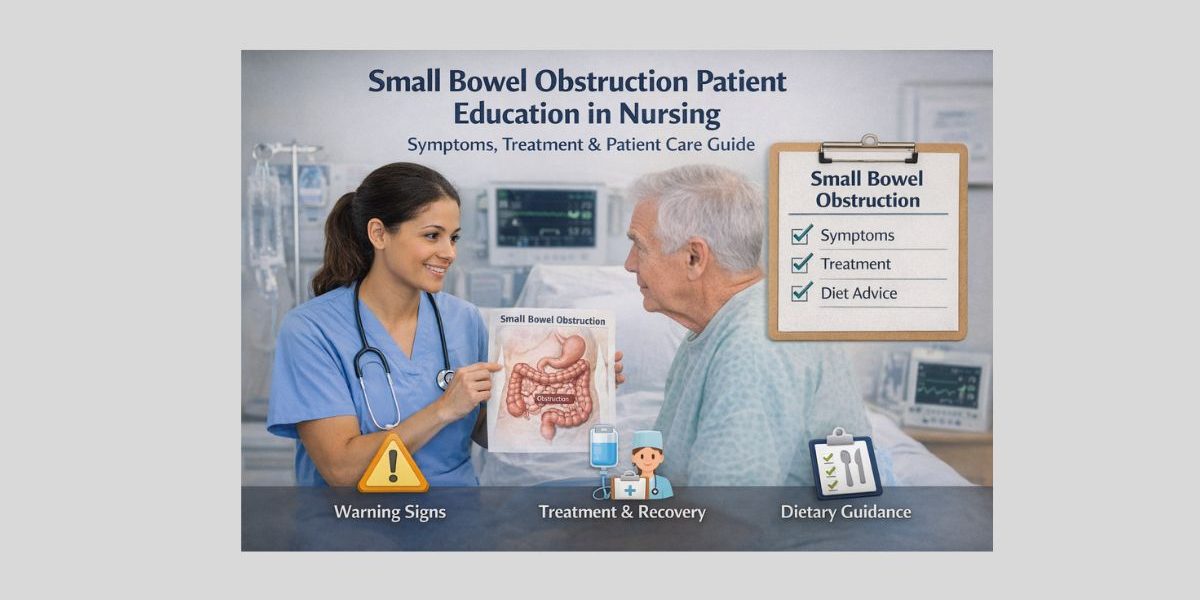
Small Bowel Obstruction Patient Education in Nursing: A Comprehensive Guide
Introduction
Small bowel obstruction patient education in nursing is a critical component of patient care, particularly in surgical, gastrointestinal, and emergency settings. Small bowel obstruction (SBO) is a potentially life-threatening condition that requires prompt medical intervention and continuous nursing management. For nursing students, understanding how to educate patients about intestinal blockage, treatment plans, and recovery is essential for improving outcomes and preventing complications.
Patient education in SBO focuses on helping individuals recognize symptoms early, adhere to treatment, manage diet, and understand when to seek medical help. This article provides a detailed, academically useful, and clinically relevant guide that can support coursework, research, and real-world nursing practice.
Understanding Small Bowel Obstruction in Nursing Practice
What is Small Bowel Obstruction?
Small bowel obstruction occurs when there is a blockage in the small intestine that prevents the normal movement of digestive contents. This obstruction can be partial or complete and may result from various causes.
Causes of Intestinal Obstruction
Common causes include:
- Adhesions from previous surgeries
- Hernias
- Tumors
- Inflammatory conditions (e.g., Crohn’s disease)
Understanding these causes helps nurses explain to patients why the condition occurs and how it can be prevented or managed.
Pathophysiology (Simplified for Patient Education)
When the small intestine is blocked:
- Fluids and gases accumulate
- Pressure builds up in the intestine
- Blood flow may be compromised
If untreated, this can lead to complications such as tissue death or infection.
Importance of Small Bowel Obstruction Patient Education in Nursing
Patient education is essential in SBO management because it directly affects recovery and prevention of recurrence.
Effective nursing education helps:
- Reduce complications
- Improve treatment adherence
- Enhance patient safety
- Promote early recognition of symptoms
Without proper education, patients may delay seeking care, leading to severe outcomes.
Key Symptoms to Teach Patients (SBO Nursing Education)
Recognizing Early Signs
Patients should be educated to recognize symptoms such as:
- Abdominal pain (often cramp-like)
- Vomiting
- Abdominal distension
- Constipation or inability to pass gas
When to Seek Medical Attention
Patients must understand that SBO is a medical emergency. They should seek immediate care if they experience:
- Severe abdominal pain
- Persistent vomiting
- Swelling of the abdomen
- Inability to pass stool
Early intervention can prevent complications.
Request a Quote
Need help with gastrointestinal nursing assignments or patient education topics?
Request a quote now and get expert academic support tailored to your needs.
Get clear, structured, and high-quality nursing content today.
Treatment and Nursing Care for Small Bowel Obstruction
Non-Surgical Management
Some cases of SBO can be managed without surgery.
Patients should be educated about:
- Nasogastric (NG) tube insertion
- Fluid therapy
- Bowel rest (no oral intake)
Surgical Intervention
If the obstruction is severe, surgery may be required.
Patient education should include:
- Purpose of surgery
- Expected recovery process
- Post-operative care
Nursing Responsibilities
Nurses play a key role in:
- Monitoring patient condition
- Managing pain
- Educating patients
- Preventing complications
Diet and Nutrition Education in SBO
Importance of Diet in Recovery
Diet plays a crucial role in recovery and prevention of recurrence.
Recommended Dietary Guidelines
Patients may be advised to:
- Start with clear liquids
- Gradually transition to soft foods
- Avoid high-fiber foods initially
Foods to Avoid
Patients should avoid:
- Foods that are difficult to digest
- High-residue foods
- Large meals
Long-Term Dietary Advice
For prevention, patients may need to:
- Eat smaller, frequent meals
- Chew food thoroughly
- Stay hydrated
Small Bowel Obstruction Patient Education Nursing for Discharge
Discharge Teaching Essentials
Before discharge, patients must understand:
- Medication instructions
- Diet recommendations
- Activity restrictions
Warning Signs After Discharge
Patients should be educated to watch for:
- Recurring abdominal pain
- Vomiting
- Changes in bowel movements
Prompt reporting can prevent complications.
Request a Quote
Struggling with nursing research, case studies, or clinical assignments?
Request a quote now and receive professional academic support.
Boost your grades with high-quality nursing writing assistance.
Patient-Centered Teaching Strategies in SBO Nursing Education
Use Simple Language
Avoid complex medical terms. Explain conditions in a way patients can easily understand.
Use Visual Aids
Diagrams and illustrations can help patients understand intestinal blockage.
Teach-Back Method
Ask patients to repeat instructions to confirm understanding.
Individualized Education
Tailor teaching based on:
- Age
- Education level
- Cultural background
Complications and Risk Education
Patients should be informed about possible complications:
- Dehydration
- Infection
- Bowel perforation
Understanding risks encourages adherence to treatment.
Preventing Recurrence of Small Bowel Obstruction
Lifestyle and Behavioral Changes
Patients can reduce risk by:
- Following dietary guidelines
- Staying hydrated
- Seeking early medical care
Importance of Follow-Up Care
Regular check-ups help monitor recovery and prevent complications.
Academic Relevance for Nursing Students
This topic is highly useful in:
- Gastrointestinal nursing assignments
- Patient education essays
- Clinical case studies
- Dissertation research
How to Use This Topic Academically
Include:
- Pathophysiology
- Patient education strategies
- Nursing interventions
- Clinical implications
This strengthens both theoretical and practical understanding.
Request a Quote
Need expert help with your nursing dissertation or assignments?
Request a quote now and get personalized academic support.
Save time, reduce stress, and achieve top academic results.
FAQ: Small Bowel Obstruction Patient Education in Nursing
1. What is small bowel obstruction in nursing?
It is a condition where the small intestine is blocked, requiring medical and nursing intervention.
2. Why is patient education important in SBO?
It helps patients recognize symptoms, follow treatment, and prevent complications.
3. What are the key symptoms of SBO?
Abdominal pain, vomiting, distension, and inability to pass stool or gas.
4. How is SBO treated?
Treatment may include non-surgical methods or surgery depending on severity.
5. What diet is recommended after SBO?
Clear liquids followed by soft foods, avoiding high-fiber foods initially.
6. What complications can occur?
Dehydration, infection, and bowel perforation.
7. How can recurrence be prevented?
By following dietary advice, staying hydrated, and seeking early medical care.
8. What is the nurse’s role in SBO?
Monitoring patients, providing care, and educating patients effectively.
Conclusion
Understanding small bowel obstruction patient education in nursing is essential for ensuring safe and effective patient care. Nurses play a critical role in helping patients understand their condition, follow treatment plans, and recognize warning signs.
For nursing students, mastering this topic enhances academic performance and prepares them for real-world clinical practice. By combining clinical knowledge with effective communication, nurses can significantly improve patient outcomes and safety.
