

Nursing Care Plan for Diabetes: A Comprehensive Guide
When patients struggle with diabetes management, they often miss key symptoms and feel overwhelmed by complex instructions. A Nursing Care Plan for Diabetes provides clarity and tailored guidance on glucose control, diet, and lifestyle. In this article, you’ll discover expert strategies to overcome these challenges and learn why you need a solid care plan with evidence-based interventions[1][2].
Challenges Patients with Diabetes Face
Diabetes mellitus is increasingly prevalent worldwide[3]. Patients often face fluctuating blood sugars, risk of complications, and confusion about diet or medications. For example, many patients with type 2 diabetes experience peripheral neuropathy or vision issues that affect daily life[4][5]. Without clear guidance, they may have deficient knowledge about self-management and increased risk for complications like ketoacidosis or cardiovascular disease[4][6]. Nurses find that patients often delay care until symptoms worsen, because they lack understanding of warning signs (e.g., extreme thirst, blurred vision)[4][6].
Research confirms these challenges. A StatPearls nursing review notes that diabetes complications can affect all body systems, making comprehensive education essential[3]. Patients can feel overwhelmed by dietary restrictions and monitoring tasks. For instance, some studies show that inadequate diabetes education correlates with poor glycaemic control[6][7]. Therefore, a well-structured Nursing Care Plan for Diabetes is crucial to help patients recognize critical signs and follow a safe, evidence-based regimen[4][6].
Why a Nursing Care Plan for Diabetes is Important
A focused care plan turns medical management into actionable steps for patients and families. Diabetes requires multitiered interventions: blood glucose monitoring, insulin or medication adherence, nutrition management, and lifestyle modifications. The StatPearls review emphasizes that nursing diagnoses for diabetes often include “deficient knowledge” and “ineffective health maintenance”[4]. This highlights the need for education within care planning.
A care plan integrates clinical guidelines with patient education. For example, the American Diabetes Association (ADA) Standards of Care encourage personalized nutrition and consistent blood sugar checks[8]. By incorporating ADA guidelines into the Nursing Care Plan for Diabetes, nurses ensure interventions (e.g. carbohydrate counting, scheduled exercise) align with best practices. This plan serves as a daily roadmap, so patients and providers “stay on the same page” about goals and management steps.
Benefits of Using Our Nursing Care Plan Service
We offer an expert-crafted Nursing Care Plan for Diabetes aimed at nursing students and professionals. Our service delivers:
- Customized, evidence-based plans: We pull from current guidelines and nursing literature (e.g. NCBI StatPearls) to create plans with correct diagnoses, outcomes, and interventions[4][6].
- Clear patient education tools: Benefit from patient-friendly handouts and teach-back scripts that demystify diabetes self-care, reducing patient anxiety.
- Conversion-focused guidance: We integrate conversion techniques (like assessing patient barriers) to make education relatable and actionable, boosting adherence.
- Ethical academic support: We help you develop your care plan with guidance, not by writing it for you. You remain the author; our role is tutoring, editing, and offering evidence synthesis, ensuring no academic integrity issues (learn more on our ethical policy page)[9].
Trust our specialized nursing dissertation help to enhance your skills. For example, check our Case Studies section to see how we structured a type 1 diabetes plan with patient goal-setting[9].
How Our Process Works
We simplify the process of creating an outstanding care plan:
1. Initial Consultation: You tell us your assignment requirements (e.g. patient profile, format) via our secure order page[9].
2. Draft and Research: Our team compiles current data (ADA Standards, StatPearls, .edu sources) and outlines a plan.
3. Your Involvement: You receive an outline with citations and provide feedback. This keeps you engaged and ensures the plan reflects your voice (preventing any ethics issues).
4. Final Delivery: You get a polished care plan draft, with clear headings, bullet lists, and evidence-backed interventions. We guide you on how to use the information, but you ultimately author the final document.
See How It Works for more on our collaborative approach. We also support data analysis if your care plan includes audit results – check our regression analysis and statistical consulting services.
How to Choose the Best Help for Your Care Plan
When seeking support for a Nursing Care Plan for Diabetes, look for:
- Specialist knowledge: Providers should have nursing backgrounds and familiarity with diabetic care (like ADA guidelines[8]).
- Transparency and trust signals: Check their pricing page and refund policy upfront. Our pricing page is clear, and we offer revisions under our refund policy for peace of mind.
- Ethical approach: Verify that the service emphasizes tutoring rather than doing your work. Read their “about us” story to confirm they value integrity.[9] Our About Us page explains our commitment to academic honesty.
- Results: Look at our case studies examples (our samples page) showing improved grades and confidence.
Key Components of a Diabetes Care Plan
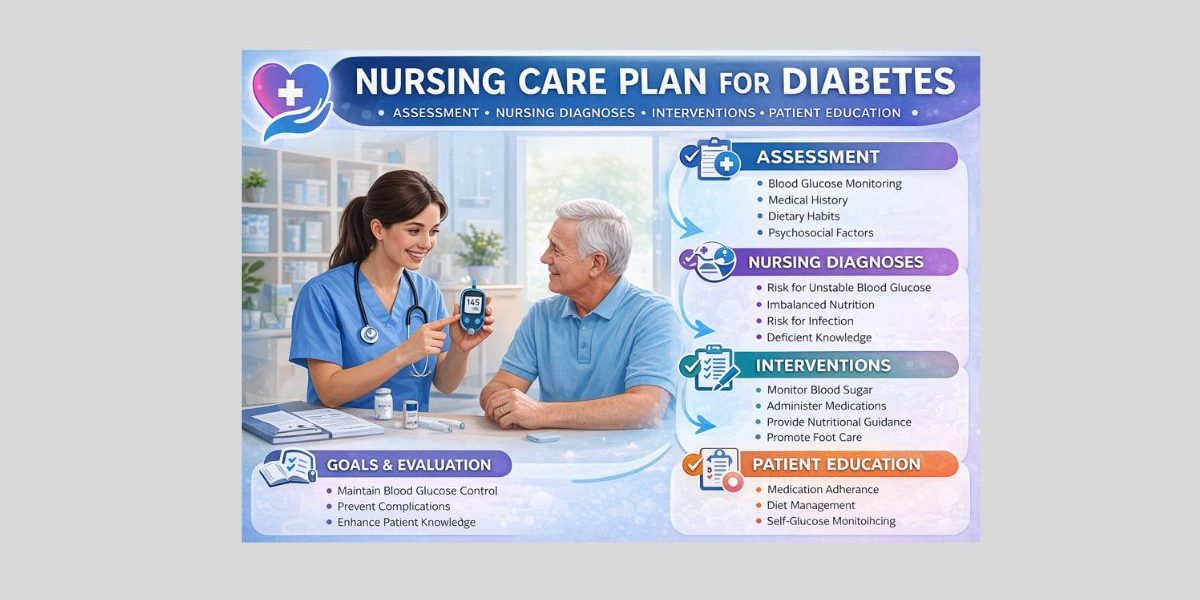
A robust nursing care plan for diabetes typically includes:
- Assessment Data: Document baseline issues like HbA1c, BMI, and symptom reports (blurred vision, numbness). Incorporate psychosocial factors: does the patient understand carb counting or has a food insecurity risk? An NCBI review lists important risk factors (family history, obesity) and assessment findings (wounds, neuropathy)[6][7].
- Nursing Diagnoses: Common diagnoses include Ineffective Health Management, Imbalanced Nutrition, Risk for Unstable Blood Glucose, Deficient Knowledge[4]. For instance, “Deficient Knowledge about dietary management” if a patient lacks understanding of diet–blood sugar links.
- Expected Outcomes: These are measurable goals. Example: “Patient will demonstrate correct insulin administration and record blood glucose values within target range of 80–130 mg/dL fasting.”
- Interventions:
- Education: Provide diabetes self-management training (DSM) using teach-back. Literature shows nurse-led education improves self-efficacy and glycemic control[6].
- Lifestyle coaching: Counsel on Mediterranean diet or plate method; ADA advises ~45–60g carbs per meal for type 2 patients.
- Medication support: Teach proper insulin storage and injection technique. Ensure understanding of hypoglycaemia signs.
- Follow-up: Arrange referrals (dietitian or endocrinologist) and plan for lab monitoring (e.g. quarterly HbA1c).
- Evaluation: Document patient’s progress and revise plan. For example, recheck knowledge and technique using a checklist at discharge. Evidence suggests using checklists (e.g. for foot care) reduces complications.
In practice, we include tables for clarity. For instance, a “Discharge Checklist” may list actions (glucose log, foot exam) and when to call doctor. We will craft these in your care plan document.
Ethical Considerations
Our support strictly follows academic integrity guidelines. The Quality Assurance Agency defines “contract cheating” as outsourcing work[8]. We avoid any black-hat practices. You will receive outlines and drafts for guidance only. We encourage you to contribute ideas and edits so you maintain ownership of the care plan content.
Every recommendation we make is evidence-based and cited. For example, our interventions refer to NCBI StatPearls[6] or ADA resources to back up claims. This level of scholarship both strengthens your submission and models ethical writing standards.
FAQs
Q: How detailed should a diabetes care plan be?
A: It should cover essential data (medical history, labs) and address key areas: diet, medication, glucose monitoring, and education. Use clear measurable goals. The StatPearls guideline suggests including diagnoses like ineffective health management and deficient knowledge, which ensure the plan is patient-centered and teach-focused[4].
Q: What interventions improve patient adherence?
A: Teach-back and self-management education are proven strategies. Nurse-led interventions have been shown to improve glycemic control and self-efficacy[6]. For example, having patients demonstrate insulin injection or carbohydrate counting before discharge can reduce errors.
Q: Can I get help with data analysis for care plan outcomes?
A: Yes. If you need to analyze survey data or intervention results (like pre/post HbA1c), our dissertation data analysis and inferential statistics teams can assist with SPSS/SPSS/Excel analysis and interpretation.
Q: Are you providing the entire care plan for me?
A: No, we act as a guide. We help you understand requirements and strengthen your writing. You provide the final authorship. This maintains ethical standards and ensures you learn. (See our refund policy for our approach to revisions.)
Q: How do I start with your service?
A: It’s easy: go to our Order page and submit details of your assignment (topic, deadline, requirements). We’ll follow up with a clear plan and timeline.
Final Call to Action
Crafting a comprehensive Nursing Care Plan for Diabetes is critical to patient safety and your academic success. Don’t struggle alone—leverage our expertise to turn confusion into a clear, structured plan. You’ll learn evidence-based interventions and effective teaching strategies, boost your confidence, and ensure your care plan stands out.
Ready to take the next step? Visit our secure order page now, and let’s create a care plan that you own, ethically and expertly. Your diabetes care plan journey starts here.
References
[1] [2] [3] [4] [5] [6] [7] Type 2 Diabetes (Nursing) – StatPearls – NCBI Bookshelf
https://www.ncbi.nlm.nih.gov/books/NBK568737/
[8] 16. Diabetes Care in the Hospital: Standards of Care in Diabetes …
[9] 20 Diabetes Mellitus Nursing Diagnosis & Care Plans – Nurseslabs
https://nurseslabs.com/diabetes-mellitus-nursing-care-plans/
