

Disclaimer – This article is for nursing education and general information. It does not replace clinical judgment, provider orders, medication labels, institutional policies or national guidelines. Always follow your facility’s protocols and consult prescribers before administering any medication.
Introduction
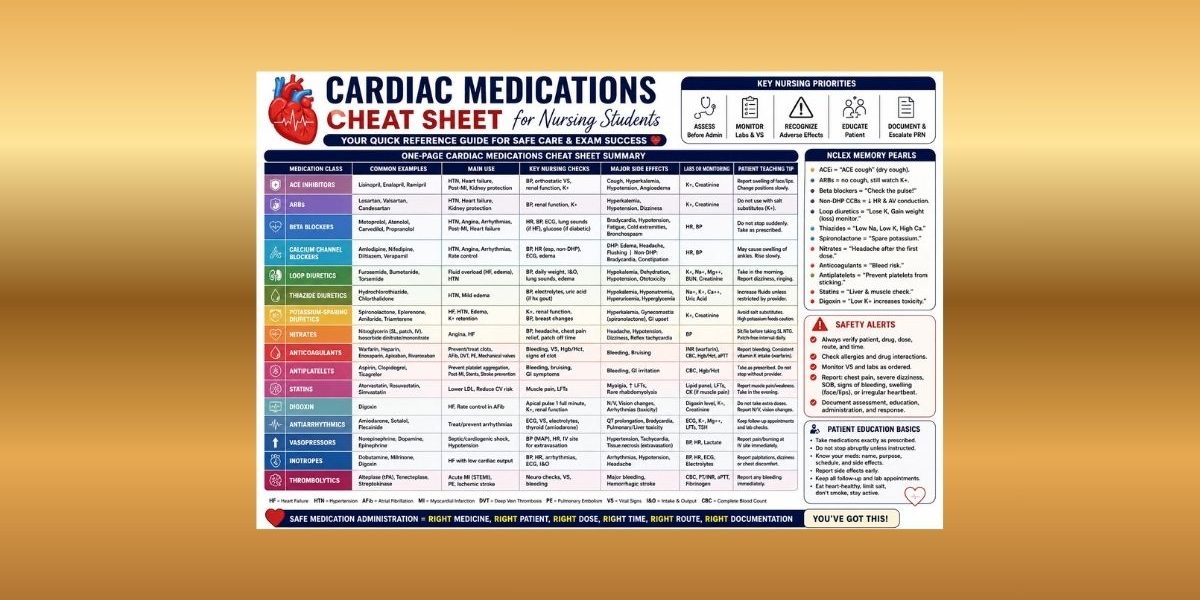
Cardiovascular drugs are cornerstones of modern patient care. Nursing students encounter them during pharmacology courses, simulation labs, clinical rotations and licensure examinations. Learning multiple classes such as ACE inhibitors, beta blockers, diuretics, anticoagulants and nitrates can be overwhelming because each class has its own mechanism of action, monitoring requirements and side‑effect profile. A concise cardiac medications cheat sheet helps consolidate this information in a memorable format. This article introduces key cardiac drug classes, organizes important points in an easy‑to‑scan table, and provides nursing considerations, major adverse effects, patient‑teaching tips and NCLEX hints. For a broader explanation of drug categories, clinical uses, and nursing responsibilities, students can first review the full Cardiac Medications guide before using this cheat sheet for quick revision.
What Is a Cardiac Medications Cheat Sheet?
A cardiac medications cheat sheet is a structured summary of cardiovascular drug classes. It lists common examples, primary uses, simplified mechanisms, essential vital signs and laboratory values to check, major side effects, and patient‑education tips. Nursing students can use a cheat sheet to prepare for exams, review before clinical shifts, or double‑check medication orders at the bedside. Because cardiac drugs carry serious risks, such as hypotension, arrhythmias, electrolyte disturbances and bleeding, a well‑designed cheat sheet reminds students of critical safety steps. Tables and bullet points make the information easy to scan and memorize.
How to Use This Cheat Sheet
- Review drug classes in order. Learn prototypes within each class to recognize naming patterns (e.g., drugs ending in “‑pril” are ACE inhibitors).
- Understand the purpose of each class (e.g., lowering blood pressure, treating arrhythmias, relieving angina).
- Check vital signs and labs before giving medications. Many cardiac drugs require holding the dose if blood pressure or heart rate falls outside provider‑ordered parameters.
- Watch for common and serious adverse effects. Use the cheat sheet to anticipate problems like hyperkalemia, hypotension or bleeding.
- Educate patients about medication adherence, lifestyle modifications and when to seek help.
One‑Page Cardiac Medications Summary Table
The table below condenses the essential information for major cardiac drug classes. Use it as a printable revision aid or quick reference during clinical practice. Keep in mind that this table highlights common examples and does not list every available medication.
| Medication class | Examples | Main uses | Key nursing checks | Major side effects | Labs/monitoring | Patient teaching |
| ACE inhibitors | Lisinopril, Enalapril, Ramipril | Hypertension, heart failure, post‑MI | Check blood pressure and renal function; monitor potassium | Dry cough, dizziness, hypotension, hyperkalemia, rare angioedema (Singh et al. 2025). | BUN/creatinine, potassium | Report persistent cough or facial swelling; avoid potassium supplements and NSAIDs |
| ARBs | Losartan, Valsartan, Candesartan | Hypertension, heart failure, ACE‑inhibitor intolerance | Monitor blood pressure, renal function and potassium | Hyperkalemia, hypotension, dizziness; cough less common than ACE inhibitors (Singh et al. 2025). | BUN/creatinine, potassium | Avoid salt substitutes high in potassium; rise slowly |
| Beta blockers | Metoprolol, Atenolol, Carvedilol, Propranolol | Hypertension, angina, arrhythmias, heart failure | Check apical pulse and blood pressure; hold if pulse < 60 bpm unless ordered | Bradycardia, hypotension, fatigue, dizziness, constipation; bronchospasm and QT prolongation (sotalol) (Farzam & Jan, 2023). | Heart rate, blood pressure; monitor QT interval for sotalol | Do not stop abruptly; teach patients to check pulse and report shortness of breath |
| Calcium‑channel blockers | DHP: Amlodipine, Nifedipine; Non‑DHP: Diltiazem, Verapamil | Hypertension, angina; non‑DHPs also treat arrhythmias | Monitor blood pressure and heart rate; watch for edema | DHP: dizziness, flushing, headache, peripheral edema (Cleveland Clinic, 2022); non‑DHP: constipation, fatigue, bradycardia | Blood pressure, heart rate; liver enzymes | Avoid grapefruit juice; report swollen ankles or constipation |
| Loop diuretics | Furosemide, Bumetanide | Edema, heart failure, hypertension | Check blood pressure, urine output and weight; monitor electrolytes | Hyponatremia, hypokalemia, dehydration, dizziness, tinnitus/ototoxicity (Huxel et al., 2023) | Potassium, sodium, magnesium, creatinine; daily weights | Take in the morning to avoid nocturia; rise slowly; eat potassium‑rich foods |
| Thiazide diuretics | Hydrochlorothiazide, Chlorthalidone | Hypertension, mild edema | Monitor blood pressure, weight and electrolytes; assess for gout | Hypokalemia, hyponatremia, metabolic alkalosis, hypercalcemia, hyperglycemia, hyperuricemia (Akbari & Khorasani-Zadeh, 2023). | Potassium, sodium, calcium, uric acid, glucose | Take in the morning; use sunscreen; monitor for gout or photosensitivity |
| Potassium‑sparing diuretics | Spironolactone, Eplerenone | Heart failure, resistant hypertension, cirrhosis | Monitor blood pressure, renal function and potassium; assess for endocrine effects | Hyperkalemia, gynecomastia, menstrual irregularities, dehydration (Patibandla et al., 2023) | Potassium, creatinine | Avoid potassium supplements and salt substitutes; report breast tenderness or irregular menses |
| Nitrates | Nitroglycerin, Isosorbide mononitrate | Acute and chronic angina | Check blood pressure and chest pain status; assess for headache | Headache, dizziness, flushing, hypotension, syncope (Kim, K. H. (2023). | Blood pressure, heart rate; review for PDE‑5 inhibitor use | Sit down before taking; take one tablet for chest pain and call emergency services if pain persists |
| Anticoagulants | Warfarin, Heparin, Enoxaparin, Apixaban, Rivaroxaban, Dabigatran | Prevent and treat thromboembolism | Verify dosing and indication; assess bleeding risk; check interactions | Bleeding, bruising, anemia; heparin: thrombocytopenia; warfarin: drug interactions | INR for warfarin, aPTT for unfractionated heparin, anti‑Xa for LMWH, renal function for DOACs | Maintain consistent vitamin K intake (warfarin); report bleeding; avoid NSAIDs |
| Antiplatelets | Aspirin, Clopidogrel, Ticagrelor | Prevention of myocardial infarction and stroke, post‑stent | Assess for bleeding and gastrointestinal upset; check platelet count when indicated | Bleeding, dyspepsia, bruising; hypersensitivity reactions | CBC (platelets), hemoglobin; monitor for bleeding | Take with food; report unusual bleeding; avoid additional antiplatelet agents without prescription |
| Statins | Atorvastatin, Rosuvastatin, Simvastatin | Lower cholesterol; reduce cardiovascular risk | Monitor liver enzymes; assess for muscle pain | Myalgia, elevated liver enzymes, rare rhabdomyolysis | Liver function tests; lipid panel | Take at night (for short‑acting statins); report unexplained muscle pain; avoid grapefruit juice |
| Digoxin | Digoxin | Heart failure, atrial fibrillation | Check apical pulse for one minute; evaluate potassium and renal function | Bradycardia, nausea, vomiting, visual disturbances; digoxin toxicity | Serum digoxin level (0.5–2 ng/mL), potassium, creatinine | Teach patients to check pulse; report yellow/green vision or nausea |
| Antiarrhythmics | Amiodarone, Adenosine, Lidocaine, Sotalol | Treat atrial and ventricular arrhythmias | Monitor ECG, blood pressure and heart rate; check QT interval for amiodarone and sotalol | Bradycardia, hypotension, QT prolongation, pulmonary toxicity (amiodarone) | ECG, liver and thyroid function (amiodarone), electrolytes | Wear sunscreen (amiodarone); avoid grapefruit juice; report new cough or dyspnea |
Detailed Discussion by Drug Class
The summary table above condenses information into a single page. The sections that follow expand on each class with nursing considerations, adverse effects and patient‑teaching points. If you need a deeper breakdown of how each drug group differs, review Classes of Cardiac Medications alongside this quick-reference table.
ACE Inhibitors
Mechanism – ACE inhibitors block the angiotensin‑converting enzyme, reducing angiotensin II and aldosterone. This lowers vascular tone and decreases sodium and water retention. They are first‑line agents for heart failure, hypertension, post‑myocardial infarction and diabetic nephropathy. Guidelines from major societies recommend ACE inhibitors in patients with heart failure and reduced ejection fraction (Singh et al. 2025). This is a useful example of pharmacodynamics because it shows how a medication changes body function; students can review Pharmacodynamics for Nursing Students for a clearer explanation of drug effects.
Nursing considerations – Measure baseline blood pressure and renal function. Monitor serum potassium because inhibition of aldosterone can cause hyperkalemia. Assess for signs of angioedema (lip or facial swelling) and persistent dry cough; these adverse effects may require discontinuation. Avoid concurrent use of potassium‑sparing diuretics or salt substitutes.
Adverse effects – Dry cough, dizziness, hypotension, increased BUN/creatinine and hyperkalemia. Rare but severe reactions include angioedema and neutropenia.
Patient teaching – Tell patients to rise slowly to prevent dizziness, avoid over‑the‑counter medications with high sodium or potassium content, and report persistent cough or swelling. ACE inhibitors are contraindicated in pregnancy.
NCLEX hint – Look for drugs ending in “‑pril.” Always check blood pressure and potassium before administration; hold the medication and notify the provider if systolic blood pressure is below your institution’s threshold or potassium is elevated.
Angiotensin II Receptor Blockers (ARBs)
Mechanism – ARBs block angiotensin II receptors, producing vasodilation and reducing aldosterone secretion. They provide similar benefits to ACE inhibitors but with fewer cough and angioedema complaints. ARBs are used for hypertension, heart failure and diabetic nephropathy.
Nursing considerations – Monitor blood pressure, kidney function and potassium. Hyperkalemia and hypotension remain risks. Avoid combining ARBs with ACE inhibitors because the dual blockade increases the risk of renal impairment and hyperkalemia.
Adverse effects – Dizziness, hypotension and hyperkalemia. Cough and angioedema are rare but possible.
Patient teaching – Reinforce the importance of taking the medication daily, rising slowly and avoiding potassium‑rich salt substitutes. Encourage hydration but caution against excessive potassium intake.
NCLEX hint – Drugs ending in “‑sartan.” Monitor blood pressure and potassium; caution against NSAIDs and monitor kidney function.
Beta Blockers
Mechanism – Beta blockers inhibit β‑adrenergic receptors. Cardio‑selective drugs (e.g., metoprolol) primarily block β1 receptors, slowing heart rate and reducing contractility; non‑selective drugs (e.g., propranolol) also block β2 receptors and may exacerbate asthma. They are used for hypertension, angina, arrhythmias, heart failure, migraine prophylaxis and thyrotoxicosis.
Nursing considerations – Assess baseline heart rate and blood pressure. Hold the dose and notify the provider if the pulse is below the ordered parameter (commonly < 60 bpm) or if blood pressure is too low. In diabetics, beta blockers may mask hypoglycemia symptoms. Use cardio‑selective agents for asthma patients (Farzam & Jan, 2023).
Adverse effects – Bradycardia, hypotension, fatigue, dizziness, constipation and sleep disturbances. Non‑selective agents can cause bronchospasm. Sotalol may prolong the QT interval and induce torsades de pointes.
Patient teaching – Advise patients not to stop the medication abruptly to avoid rebound tachycardia or angina. Teach them how to check their pulse and recognize signs of heart failure (weight gain, ankle swelling, shortness of breath). Diabetics should continue glucose monitoring.
NCLEX hint – Look for “‑lol.” Check apical pulse and blood pressure before giving; hold medication if parameters are outside the ordered range.
Calcium‑Channel Blockers
Mechanism – These drugs inhibit L‑type calcium channels in cardiac and vascular smooth muscle. Dihydropyridines (DHPs) such as amlodipine primarily cause peripheral vasodilation, while non‑dihydropyridines (non‑DHPs) such as diltiazem and verapamil also slow conduction through the atrioventricular node. CCBs treat hypertension and angina; non‑DHPs also manage supraventricular tachycardias.
Nursing considerations – Measure blood pressure and heart rate before administration. Avoid combining non‑DHP CCBs with beta blockers unless specifically ordered due to the risk of bradycardia or heart block. Monitor for peripheral edema and constipation.
Adverse effects – DHPs can cause lightheadedness, flushing, headaches and ankle swelling. Non‑DHPs may cause constipation, fatigue and bradycardia. Gingival hyperplasia and reflex tachycardia can occur.
Patient teaching – Encourage patients to avoid grapefruit juice, which can increase drug levels, and to report constipation or swelling. Do not crush extended‑release tablets.
NCLEX hint – “‑pine” drugs are mostly DHPs. Always check blood pressure and heart rate; hold the medication if the heart rate is too low or if AV block is present unless ordered otherwise.
Loop Diuretics
Mechanism – Loop diuretics inhibit the Na‑K‑2Cl cotransporter in the thick ascending limb of the loop of Henle, causing profound diuresis. They manage fluid overload in heart failure, pulmonary edema and cirrhotic ascites, and they sometimes treat resistant hypertension .
Nursing considerations – Assess blood pressure, weight, urine output and electrolytes before administering. Give the medication in the morning to minimize nocturia. Monitor for tinnitus and ototoxicity, particularly with high doses or rapid IV administration. Encourage potassium‑rich foods (unless contraindicated) and consider potassium supplements.
Adverse effects – Hyponatremia, hypokalemia, hypomagnesemia, metabolic alkalosis, dehydration and dizziness. High doses or rapid IV administration can lead to ototoxicity and hearing loss. Photosensitivity and interstitial nephritis are rare complications.
Patient teaching – Emphasize the importance of daily weight checks and reporting weight changes of more than 1–2 kg in a day. Advise patients to stand up slowly to avoid dizziness and to report ringing in the ears or muscle cramps.
NCLEX hint – Loop diuretics are potent. Monitor electrolytes closely; hold the drug and notify the provider if potassium is low. Avoid giving late in the day to prevent nighttime diuresis.
Thiazide Diuretics
Mechanism – Thiazides inhibit the Na–Cl symporter in the distal convoluted tubule, causing moderate diuresis and some vasodilation. They are first‑line treatments for hypertension and mild edema.
Nursing considerations – Monitor blood pressure, daily weight and electrolytes. Use caution in patients with gout, diabetes or sulfonamide allergy. Avoid giving in severe renal impairment.
Adverse effects – Hypokalemia, hyponatremia, metabolic alkalosis, hypercalcemia, hyperglycemia, hyperuricemia and hyperlipidemia (Akbari & Khorasani-Zadeh, 2023). Patients with sulfonamide allergies may experience rashes or hypersensitivity.
Patient teaching – Advise patients to take the medication in the morning, use sunscreen due to photosensitivity risk, and report symptoms of gout (e.g., joint pain) or muscle cramps. Encourage a potassium‑rich diet unless contraindicated.
NCLEX hint – Watch for electrolyte disturbances and interactions with lithium or digoxin; thiazides can increase lithium levels and promote digoxin toxicity.
Potassium‑Sparing Diuretics
Mechanism – Spironolactone and eplerenone block aldosterone receptors in the distal nephron, reducing sodium reabsorption and preventing potassium excretion. They treat heart failure with reduced ejection fraction, resistant hypertension and cirrhosis.
Nursing considerations – Check blood pressure, renal function and potassium levels. Hyperkalemia is the most serious risk (Patibandla et al., 2023). Assess for endocrine effects such as gynecomastia and menstrual irregularities.
Adverse effects – Hyperkalemia, gynecomastia, menstrual disturbances, dehydration and gastrointestinal upset.
Patient teaching – Tell patients to avoid potassium supplements, salt substitutes and high‑potassium diets. Teach them to report breast tenderness or irregular menses. Regular blood tests are important to monitor potassium and kidney function.
NCLEX hint – “Spironolactone retains potassium.” If potassium levels are elevated or creatinine is high, hold the drug and notify the provider.
Nitrates
Mechanism – Nitrates convert to nitric oxide in vascular smooth muscle, increasing cyclic GMP and causing venous and arterial vasodilation. They decrease preload and myocardial oxygen demand, making them first‑line therapy for angina.
Nursing considerations – Evaluate blood pressure and heart rate before administration. Because nitrates cause vasodilation, they can lead to hypotension or syncope; ensure the patient is sitting or lying down for sublingual doses. Do not give nitrates if the patient has taken phosphodiesterase‑5 inhibitors (e.g., sildenafil) within 24–48 hours.
Adverse effects – Headache, dizziness, flushing, palpitations, nausea and syncope. Severe hypotension can occur in preload‑dependent states.
Patient teaching – Keep sublingual tablets in the original dark bottle; check the expiration date. Instruct patients to sit or lie down before taking a dose, take one tablet at onset of chest pain, repeat every five minutes for up to three doses and call emergency services if pain persists. Caution them about combining nitrates with erectile dysfunction medications.
NCLEX hint – Remember that nitrates cause vasodilation and may produce throbbing headaches. Always check blood pressure before administration and avoid combining with PDE‑5 inhibitors.
Anticoagulants
Mechanism – Anticoagulants inhibit various steps in the coagulation cascade. Warfarin blocks vitamin K–dependent clotting factors (II, VII, IX, X). Unfractionated heparin (UFH) and low‑molecular‑weight heparins (LMWHs) like enoxaparin potentiate antithrombin III to inhibit thrombin and factor Xa. Direct oral anticoagulants (DOACs) such as apixaban, rivaroxaban (factor Xa inhibitors) and dabigatran (direct thrombin inhibitor) offer predictable anticoagulation without routine monitoring. These drugs prevent and treat atrial fibrillation–related embolism, deep vein thrombosis and pulmonary embolism.
Nursing considerations – Verify the correct indication and dosing. Assess for bleeding (bruising, dark stools, hematuria) and fall risk. For warfarin, emphasize consistent vitamin K intake and avoid mixing with many antibiotics or antifungals. UFH requires aPTT monitoring and weight‑based dosing; LMWH may require anti‑Xa monitoring in special populations (e.g., pregnancy or renal impairment). DOACs generally do not need routine lab monitoring but may require dose adjustment in renal impairment.
Adverse effects – Bleeding is the primary risk. UFH can cause heparin‑induced thrombocytopenia (HIT). Warfarin has numerous drug interactions and necessitates INR monitoring. DOACs have fewer interactions but still pose a bleeding risk.
Patient teaching – Advise patients to report signs of bleeding, use a soft toothbrush and electric razor, and avoid contact sports. Remind them not to start or stop medications (including herbal supplements) without consulting a provider. Teach warfarin patients to maintain a consistent diet of vitamin K–containing foods.
NCLEX hint – Know the antidotes: vitamin K for warfarin, protamine sulfate for UFH/LMWH, idarucizumab for dabigatran and andexanet alfa for factor Xa inhibitors. Monitor INR (typical target 2–3) for warfarin and hold the medication if the INR is above the prescribed range.
Antiplatelets
Mechanism – Aspirin irreversibly inhibits cyclooxygenase‑1 (COX‑1), reducing thromboxane A₂ and platelet aggregation. Clopidogrel and ticagrelor inhibit the P2Y₁₂ receptor on platelets. Antiplatelets prevent platelet plug formation and are used after myocardial infarction or stent placement and to reduce stroke risk.
Nursing considerations – Assess for allergies, bleeding and gastrointestinal irritation. Use caution when combining with anticoagulants or non‑steroidal anti‑inflammatory drugs (NSAIDs).
Adverse effects – Bleeding, dyspepsia and bruising. Ticagrelor may cause dyspnea. Clopidogrel requires activation by CYP450 enzymes; poor metabolizers may derive less benefit.
Patient teaching – Take aspirin with food. Do not combine multiple antiplatelets or NSAIDs unless prescribed. Encourage adherence, especially after stent implantation, because premature discontinuation increases stent thrombosis risk.
NCLEX hint – Antiplatelets differ from anticoagulants; they affect platelets, not clotting factors. Monitor for bleeding and hold the medication before invasive procedures as directed by policy.
Statins
Mechanism – Statins inhibit HMG‑CoA reductase, the rate‑limiting enzyme in cholesterol synthesis, thereby lowering LDL cholesterol and providing plaque‑stabilizing and anti‑inflammatory effects. They are the most effective agents for primary and secondary prevention of atherosclerotic cardiovascular disease.
Nursing considerations – Obtain baseline liver function tests and a lipid panel. Monitor for muscle pain or weakness; statins can cause myopathy and rarely rhabdomyolysis. Use caution when prescribing with drugs that increase statin levels (e.g., macrolide antibiotics, certain antifungals).
Adverse effects – Myalgia, elevated liver enzymes and rare rhabdomyolysis. Grapefruit juice can increase serum levels, leading to toxicity.
Patient teaching – Take statins at night for short‑acting agents (e.g., simvastatin) to align with nighttime cholesterol synthesis; long‑acting statins like atorvastatin can be taken anytime. Avoid grapefruit juice. Report unexplained muscle pain, weakness or dark urine.
NCLEX hint – “Statins lower lipids.” Monitor liver function tests and creatine kinase (CK) if myopathy is suspected. Educate patients about lifestyle changes (diet, exercise, smoking cessation) to enhance drug efficacy.
Digoxin
Mechanism – Digoxin inhibits the Na⁺/K⁺‑ATPase pump, increasing intracellular calcium and improving myocardial contractility. It slows conduction through the AV node, useful for atrial fibrillation and heart failure with reduced ejection fraction.
Nursing considerations – Check the apical pulse for one full minute before each dose; hold the medication and notify the provider if the pulse is below the ordered parameter. Monitor serum digoxin levels, potassium and magnesium; hypokalemia predisposes to digoxin toxicity (Huxel et al., 2023).
Adverse effects – Nausea, vomiting, anorexia, fatigue, bradycardia, arrhythmias and visual disturbances (yellow‑green halos). Signs of digoxin toxicity include confusion, visual changes and arrhythmias.
Patient teaching – Teach patients how to take their pulse and to recognize symptoms of toxicity. Encourage consistent potassium intake. Caution against herbal preparations like ginseng or St. John’s wort, which may alter digoxin levels.
NCLEX hint – Therapeutic digoxin level is typically 0.5–2 ng/mL. The antidote is digoxin immune Fab. Monitor renal function and electrolytes.
Digoxin is also a strong example of why Pharmacokinetics for Nursing Students matters, because drug levels, renal clearance, half-life, and toxicity risk affect monitoring.
Antiarrhythmics
Mechanism – Antiarrhythmics are grouped by the Vaughan‑Williams classification. Amiodarone (Class III) prolongs repolarization and the QT interval; adenosine transiently blocks the AV node; lidocaine (Class Ib) blocks sodium channels; sotalol has beta‑blocking and Class III properties. These drugs treat supraventricular and ventricular arrhythmias.
Nursing considerations – Continuous ECG and vital signs monitoring are mandatory during administration. Amiodarone requires baseline and periodic liver, thyroid and pulmonary function tests because of risk for hepatotoxicity, thyroid dysfunction and pulmonary fibrosis. Sotalol and amiodarone prolong the QT interval, so monitor for torsades de pointes. Adenosine is administered as a rapid IV push with a saline flush and may cause brief asystole.
Adverse effects – Bradycardia, hypotension, QT prolongation, photosensitivity, thyroid dysfunction and pulmonary toxicity with amiodarone. Adenosine can cause flushing, chest discomfort and transient dyspnea.
Patient teaching – For amiodarone, advise patients to use sun protection and report cough or dyspnea. Remind them of the need for regular lab checks. Alert patients receiving adenosine that they may feel chest pressure or a brief pause in heart beats during the injection.
NCLEX hint – Amiodarone has a long half‑life (weeks). Monitor the QT interval when giving drugs like sotalol. Prepare for transient asystole when giving adenosine.
Cardiac Medication Safety Checklist
Before administering a cardiovascular drug, follow this checklist to enhance patient safety:
- Verify the patient’s identity using two identifiers (e.g., name and date of birth).
- Confirm the medication order (right drug, dose, route, time and indication).
- Review allergies and prior adverse reactions.
- Assess baseline vital signs (blood pressure, heart rate, respiratory rate, oxygen saturation and apical pulse when relevant). Hold the medication and notify the provider if parameters are outside ordered limits.
- Check relevant laboratory values (potassium, sodium, creatinine, BUN, INR/aPTT/anti‑Xa, digoxin level, liver enzymes, lipid panel). Do not administer if values are outside safe ranges without clarifying with the prescriber.
- Assess bleeding risk before giving anticoagulants or antiplatelets (consider recent surgeries, falls, coagulopathies and concurrent medications).
- Evaluate for interacting medications (e.g., nitrates and PDE‑5 inhibitors, amiodarone with other QT‑prolonging agents, warfarin with antibiotics).
- Educate the patient about what the medication does and what side effects to watch for. Encourage questions.
Common Side Effects and Laboratory Monitoring
Because cardiac drugs act on vital organ systems, they can produce significant side effects. Nurses should anticipate and monitor for the following general patterns:
| Drug class | Common side effects | Key labs |
| ACE inhibitors & ARBs | Hypotension, dizziness, hyperkalemia, dry cough (ACE); rare angioedema | BUN/creatinine, potassium |
| Beta blockers | Bradycardia, hypotension, fatigue, bronchospasm (non‑selective), dizziness | Heart rate, blood pressure, ECG |
| Calcium‑channel blockers | DHPs: headache, flushing, ankle swelling; non‑DHPs: constipation, bradycardia | Blood pressure, heart rate |
| Loop diuretics | Dehydration, electrolyte imbalances (hyponatremia, hypokalemia), ototoxicity | Sodium, potassium, magnesium, creatinine |
| Thiazide diuretics | Hypokalemia, hyponatremia, hypercalcemia, hyperuricemia, hyperglycemia | Sodium, potassium, calcium, uric acid, glucose |
| Potassium‑sparing diuretics | Hyperkalemia, endocrine effects | Potassium, creatinine |
| Nitrates | Headache, flushing, hypotension, syncope | Blood pressure |
| Anticoagulants & antiplatelets | Bleeding, bruising, anemia | INR/aPTT/anti‑Xa (depending on drug), CBC |
| Statins | Myalgia, liver enzyme elevation | Liver function tests, lipid panel |
| Digoxin | Nausea, vomiting, bradycardia, visual changes | Digoxin level, potassium, creatinine |
| Antiarrhythmics | Bradycardia, hypotension, QT prolongation, pulmonary toxicity | ECG, liver and thyroid function (amiodarone), electrolytes |
High‑Risk Alerts
Cardiac medications carry the potential for life‑threatening complications. Nurses must remain vigilant for the following high‑risk alerts:
- Hyperkalemia – Associated with ACE inhibitors, ARBs and potassium‑sparing diuretics. Check potassium levels and hold medication if levels exceed institutional thresholds.
- Severe hypotension or syncope – Can occur with nitrates, CCBs, beta blockers and diuretics. Always assess blood pressure and instruct patients to change positions slowly.
- Bradycardia and heart block – Occurs with beta blockers, non‑DHP CCBs, digoxin and antiarrhythmics. Check apical pulse and ECG; hold or adjust doses as ordered.
- Bleeding and hemorrhage – Primary risks with anticoagulants and antiplatelets. Assess for bleeding, educate patients and ensure safe dosing.
- Ototoxicity – High doses of loop diuretics (especially IV furosemide) can damage the inner ear. Monitor for tinnitus or hearing loss and slow the IV rate if needed.
- QT prolongation – Sotalol, amiodarone and some antibiotics can prolong the QT interval. Monitor ECG and electrolytes; report QT prolongation to the provider.
- Medication interactions – Be mindful of interactions like nitrates with PDE‑5 inhibitors (risk of severe hypotension), statins with certain macrolide antibiotics (risk of myopathy) and warfarin with numerous drugs (risk of hemorrhage).
NCLEX‑Style Tips for Cardiac Drugs
Preparing for the NCLEX or other licensing exams requires memorizing high‑yield facts. Here are some memory aids:
- Drug suffixes – “‑pril” for ACE inhibitors, “‑sartan” for ARBs, “‑lol” for beta blockers, “‑pine” for most dihydropyridine CCBs, and “‑statin” for lipid‑lowering agents.
- Vital sign thresholds – Know when to hold medications. For example, hold beta blockers or digoxin if the pulse is < 60 bpm; hold antihypertensives if systolic blood pressure is below 90 mmHg or the facility’s ordered parameter.
- Electrolyte associations – Loop and thiazide diuretics lower potassium; potassium‑sparing diuretics and ACE/ARBs can raise potassium. Recognize that hypokalemia increases digoxin toxicity risk.
- Antidotes – Memorize antidotes: vitamin K for warfarin, protamine for heparin, idarucizumab for dabigatran, andexanet alfa for factor Xa inhibitors, digoxin immune Fab for digoxin and naloxone for opioids (though opioids are not cardiovascular drugs).
- Contraindicated combinations – Never give nitrates with PDE‑5 inhibitors; avoid beta blocker plus non‑DHP CCBs unless under close supervision.
Patient‑Teaching Highlights
Patient education enhances adherence and safety. Use the following general tips as a template:
| Medication class | Teaching highlights |
| ACE inhibitors & ARBs | Teach patients to take blood pressure regularly, avoid salt substitutes high in potassium, report persistent cough or swelling, and never stop abruptly. |
| Beta blockers | Show patients how to check their pulse; advise them not to stop abruptly; caution them to monitor blood pressure and to report symptoms of heart failure (weight gain, swelling). |
| Calcium‑channel blockers | Instruct patients to avoid grapefruit juice, report constipation or edema, and not to crush extended‑release tablets. |
| Diuretics (loop, thiazide, potassium‑sparing) | Emphasize morning dosing to prevent nocturia; teach patients to monitor weight and report rapid changes; counsel about electrolyte‑rich or low‑potassium diets accordingly. |
| Nitrates | Advise patients to sit or lie down when taking sublingual tablets; instruct on the proper sequence for dosing (one tablet every five minutes up to three doses); caution against erectile‑dysfunction drugs. |
| Anticoagulants & antiplatelets | Emphasize bleeding precautions (soft toothbrush, electric razor, fall prevention); instruct on drug interactions and consistent vitamin K intake for warfarin users; ensure patients understand the importance of adherence after stent placement. |
| Statins | Encourage adherence at the recommended time of day; caution against grapefruit juice; advise patients to report muscle pain or dark urine. |
| Digoxin | Teach patients to check their pulse before dosing; instruct them about signs of toxicity; encourage a consistent potassium intake; discourage the use of herbs without consulting their provider. |
| Antiarrhythmics | Inform patients about the need for regular monitoring; instruct them to use sun protection (amiodarone) and to report new respiratory symptoms. |
Common Mistakes and How to Avoid Them
- Skipping vital signs or lab checks – Always assess blood pressure, heart rate and relevant labs before giving cardiac drugs. Hold medication if parameters are outside the prescribed limits.
- Confusing drug classes – Memorize naming patterns and mechanisms. ACE inhibitors and ARBs both act on the renin–angiotensin system but differ in their site of action and side‑effect profiles.
- Ignoring toxicity signs – Recognize early warning signs of digoxin toxicity (nausea, visual disturbances), heparin‑induced thrombocytopenia and amiodarone‑induced pulmonary toxicity. Prompt action can prevent severe complications.
- Poor patient education – Ensure patients know how to take their medications, check their pulse when necessary, avoid certain foods, and seek help for alarming symptoms. Use teach‑back techniques to confirm understanding.
Students who struggle to connect medication monitoring with assignments, care plans, or clinical explanations may benefit from structured Nursing Assignment Help.
Frequently Asked Questions (FAQs)
Why are ACE inhibitors and ARBs not used together? Both classes act on the renin–angiotensin–aldosterone system. Combined therapy provides little additional benefit but markedly increases the risk of renal impairment and hyperkalemia.
Why do I need to check INR regularly with warfarin? Warfarin’s effect varies with diet, medications and genetic factors. Regular INR monitoring ensures the patient remains within the therapeutic range (usually 2–3 for most indications) and helps prevent bleeding or clotting.
Conclusion
Mastering cardiac pharmacology is essential for nursing students because these drugs influence vital functions such as blood pressure, heart rate, fluid balance and clotting. A cardiac medications cheat sheet organizes complex information into digestible sections, making it easier to recall drug classes, mechanisms, key assessments, side effects and patient‑education points. Use this guide alongside your textbook and clinical experience to develop safe and effective medication‑administration habits. By understanding how each drug class works and what to monitor, you’ll be better prepared to care for patients with cardiovascular disease, answer NCLEX questions confidently and contribute to safe, evidence‑based nursing practice. For broader academic support with nursing pharmacology, care plans, case studies, or research projects, students can also explore Nursing Dissertation Help.
References
Akbari, P., & Khorasani-Zadeh, A. (2023, January 23). Thiazide diuretics. StatPearls Publishing. https://www.ncbi.nlm.nih.gov/books/NBK532918/
Cleveland Clinic. (2022, January 7). Calcium channel blockers: Types, uses and side effects. https://my.clevelandclinic.org/health/treatments/22316-calcium-channel-blockers
Farzam, K., & Jan, A. (2023, August 22). Beta blockers. StatPearls Publishing. https://www.ncbi.nlm.nih.gov/books/NBK532906/
Goyal, A., Cusick, A. S., & Thielemier, B. (2023). ACE inhibitors. StatPearls Publishing. https://www.ncbi.nlm.nih.gov/books/NBK430896/
Huxel, C., Raja, A., & Ollivierre-Lawrence, M. D. (2023). Loop diuretics. StatPearls Publishing. https://www.ncbi.nlm.nih.gov/books/NBK546656/
Kim, K. H. (2023). Nitroglycerin. StatPearls Publishing. https://www.ncbi.nlm.nih.gov/books/NBK482382/
Patibandla, S., Heaton, J., & Kyaw, H. (2023). Spironolactone. StatPearls Publishing. https://www.ncbi.nlm.nih.gov/books/NBK554421/
Singh, B., Cusick, A. S., Goyal, A., & Patel, P. (2025). ACE inhibitors. StatPearls Publishing. https://www.ncbi.nlm.nih.gov/books/NBK430896/
