

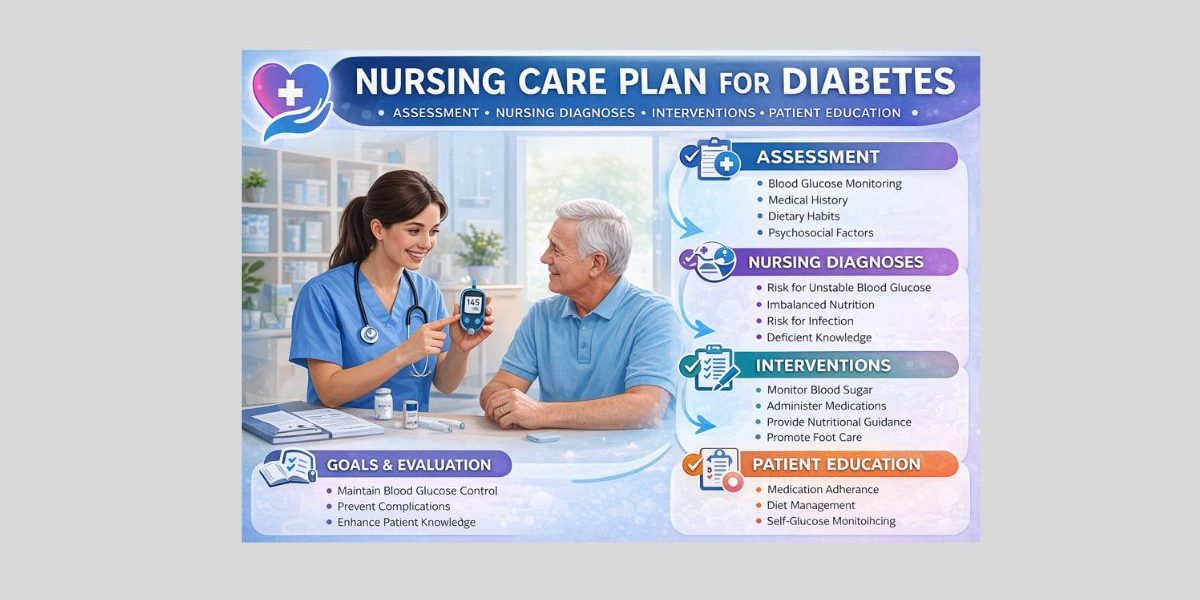
Foundations of a Nursing Care Plan for Diabetes
Nursing Care Plan for Diabetes: Concept, Scope, and Clinical Importance
A nursing care plan for diabetes is a structured, evidence-based framework that guides nurses in delivering individualized care to patients diagnosed with diabetes mellitus. This care plan integrates clinical assessment, nursing diagnoses, goal setting, targeted interventions, rationales, and evaluation criteria to ensure optimal glycemic control and prevention of both acute and chronic complications.
From the very beginning, it is important to understand that a diabetes nursing care plan is not simply a checklist of tasks. Instead, it is a dynamic and patient-centered process that evolves based on continuous monitoring and patient response. In both academic and clinical settings, the ability to develop a detailed diabetes care plan in nursing practice reflects a nurse’s competence in critical thinking, clinical reasoning, and application of evidence-based care.
Diabetes mellitus remains one of the most prevalent chronic diseases globally, with rising incidence due to lifestyle factors, aging populations, and urbanization. According to global health data, uncontrolled diabetes significantly increases the risk of cardiovascular disease, kidney failure, blindness, and lower limb amputations. Therefore, a well-structured nursing management plan for diabetes is essential not only for symptom control but also for long-term disease prevention.
Understanding Diabetes Mellitus in Nursing Practice
To develop a high-quality nursing care plan for diabetes mellitus, nurses must first understand the pathophysiology of the disease.
Diabetes mellitus is characterized by chronic hyperglycemia resulting from defects in insulin secretion, insulin action, or both. Insulin is a hormone responsible for regulating blood glucose levels by facilitating the uptake of glucose into cells. When insulin is absent or ineffective, glucose accumulates in the bloodstream, leading to metabolic imbalance.
Types of Diabetes in Nursing Care Planning
1. Type 1 Diabetes Mellitus
Type 1 diabetes is an autoimmune condition in which the body destroys pancreatic beta cells responsible for insulin production. Patients require lifelong insulin therapy.
From a nursing perspective, care focuses on:
- Insulin administration
- Monitoring for hypoglycemia
- Patient education on lifelong disease management
2. Type 2 Diabetes Mellitus
Type 2 diabetes is characterized by insulin resistance and relative insulin deficiency. It is strongly associated with lifestyle factors such as poor diet, obesity, and physical inactivity.
Nursing care in Type 2 diabetes emphasizes:
- Lifestyle modification
- Medication adherence
- Prevention of complications
3. Gestational Diabetes Mellitus
This type occurs during pregnancy and requires careful monitoring to protect both mother and fetus.
Nursing priorities include:
- Blood glucose monitoring
- Nutritional counseling
- Fetal health assessment
Clinical Significance of a Diabetes Nursing Care Plan
A comprehensive nursing care plan for diabetes patients plays a central role in achieving positive health outcomes. Without structured care, patients are at high risk of both acute and long-term complications.
1. Prevention of Acute Complications
Acute complications include:
- Hypoglycemia
- Hyperglycemia
- Diabetic ketoacidosis (DKA)
- Hyperosmolar hyperglycemic state (HHS)
Nurses must monitor patients closely and respond promptly to changes in blood glucose levels.
2. Prevention of Chronic Complications
Long-term uncontrolled diabetes can lead to:
- Neuropathy – nerve damage causing pain or loss of sensation
- Nephropathy – kidney damage leading to renal failure
- Retinopathy – vision impairment or blindness
- Cardiovascular disease – increased risk of heart attack and stroke
A well-implemented diabetes care plan nursing strategy helps reduce these risks significantly.
3. Enhancing Patient Self-Management
One of the most critical goals of a nursing care plan for diabetes mellitus is to empower patients to manage their condition independently.
This includes:
- Self-monitoring of blood glucose
- Medication adherence
- Dietary control
- Recognizing warning signs
Patient education is not optional — it is a core nursing responsibility.
Core Components of a Nursing Care Plan for Diabetes
A high-quality nursing care plan for diabetes consists of five key components:
1. Assessment
This involves collecting detailed patient information, including:
- Medical history
- Lifestyle habits
- Laboratory results
- Physical examination findings
Assessment provides the foundation for all subsequent steps.
2. Nursing Diagnosis
Based on assessment data, nurses identify patient problems that require intervention.
Examples include:
- Risk for unstable blood glucose
- Imbalanced nutrition
- Risk for infection
3. Planning (Goals and Outcomes)
Goals should be:
- Specific
- Measurable
- Achievable
- Relevant
- Time-bound
For example:
- Patient will maintain blood glucose within target range within one week
4. Implementation (Interventions)
This involves carrying out nursing actions such as:
- Administering medication
- Educating patients
- Monitoring vital signs
5. Evaluation
Evaluation determines whether the goals have been achieved and whether adjustments are needed.
Symptoms and Clinical Indicators in Diabetes Care Planning
Recognizing symptoms is essential for developing an effective nursing management of diabetes care plan.
Common Symptoms
- Polyuria (frequent urination)
- Polydipsia (excessive thirst)
- Polyphagia (increased appetite)
- Fatigue
- Blurred vision
- Slow wound healing
Advanced Clinical Indicators
- Elevated HbA1c (>6.5%)
- Persistent hyperglycemia
- Presence of ketones in urine
- Signs of dehydration
These indicators guide the nurse in determining the severity of the condition.
The Role of Nurses in Diabetes Management
Nurses play a multidimensional role in implementing a nursing care plan for diabetes.
1. Care Coordinator
Nurses coordinate between doctors, dietitians, and other healthcare professionals.
2. Educator
They teach patients how to manage their condition effectively.
3. Advocate
Nurses ensure patients receive appropriate care and resources.
4. Monitor
They continuously assess patient progress and adjust care plans.
Evidence-Based Approach in Diabetes Nursing Care
Modern nursing practice emphasizes evidence-based care. A strong diabetes nursing care plan should be grounded in:
- Clinical guidelines
- Peer-reviewed research
- Best practice recommendations
Evidence-based interventions improve outcomes and ensure safe care delivery.
Common Mistakes Students Make in Diabetes Care Plans
Understanding these mistakes helps improve academic performance:
- Writing generic interventions
- Lack of rationales
- Poor linkage between diagnosis and interventions
- Ignoring patient education
- Overlooking evaluation
A strong nursing care plan for diabetes assignment must be detailed, logical, and patient-centered.
Transition to Clinical Application
At this stage, you now understand the theoretical foundation of a nursing care plan for diabetes. However, theory alone is not sufficient. The next step involves applying this knowledge through detailed assessment, accurate nursing diagnoses, and structured clinical planning.
In the next part, we will move deeper into:
- Advanced nursing assessment for diabetes care plans
- Detailed nursing diagnoses with clinical reasoning
- SMART goal development for better outcomes
Request Quotes Now
Need a deeply detailed, high-distinction nursing care plan for diabetes tailored to your assignment? Request quotes now and get expert academic support.
Advanced Nursing Assessment, Diagnoses, and Clinical Reasoning in a Nursing Care Plan for Diabetes
Advanced Nursing Assessment for a Diabetes Care Plan
A high-quality nursing care plan for diabetes begins with a comprehensive, multi-dimensional assessment. At an advanced level, assessment is not just about collecting data — it is about interpreting patterns, identifying risks early, and linking findings to potential complications.
In clinical practice and high-scoring academic work, the strength of your diabetes nursing care plan depends heavily on how detailed and analytical your assessment is.
1. Holistic Assessment in Diabetes Nursing Care Planning
A complete diabetes care plan in nursing practice must go beyond basic vital signs. It should include:
A. Physical Assessment
Key areas to assess:
- Blood glucose levels (fasting and random)
- HbA1c levels (long-term glycemic control)
- Blood pressure (hypertension is common in diabetes)
- Weight and BMI (obesity is a major risk factor in Type 2 diabetes)
- Skin condition (ulcers, dryness, infections)
- Peripheral circulation (capillary refill, pulses)
- Neurological status (numbness, tingling, pain)
Clinical Insight:
Peripheral neuropathy often presents subtly. A skilled nurse anticipates complications even before visible symptoms worsen.
B. Nutritional and Metabolic Assessment
- Daily dietary intake
- Carbohydrate consumption patterns
- Meal timing and consistency
- Signs of malnutrition or obesity
Why it matters:
Nutrition directly influences glucose levels. Poor dietary habits are one of the strongest contributors to unstable glycemic control.
C. Medication and Treatment Adherence
- Insulin administration technique
- Timing of medication
- Missed doses
- Side effects
Clinical reasoning:
Non-adherence is one of the most common causes of uncontrolled diabetes. Nurses must assess not just whether patients take medication, but how correctly they take it.
D. Psychosocial Assessment in Diabetes Care Plans
A strong nursing care plan for diabetes patients must include psychosocial factors:
- Emotional response to diagnosis
- Stress levels
- Support systems (family, caregivers)
- Financial barriers to care
- Cultural beliefs affecting treatment
Critical Insight:
Psychological stress increases cortisol levels, which can worsen hyperglycemia. This is often overlooked in shallow care plans.
E. Lifestyle and Behavioral Assessment
- Physical activity level
- Smoking and alcohol use
- Sleep patterns
- Daily routine
Example:
Sedentary lifestyle + high carbohydrate intake = increased insulin resistance.
2. Interpreting Assessment Data (Clinical Reasoning Layer)
This is where most students fail — they list data but do not interpret it.
In a strong nursing management plan for diabetes, every finding should lead to a clinical conclusion.
Example
- Finding: HbA1c = 9.2%
- Interpretation: Poor long-term glucose control
- Implication: Increased risk of complications
- Nursing Action: Intensify monitoring + patient education
3. Priority Nursing Diagnoses in a Nursing Care Plan for Diabetes
After assessment, the next step is identifying priority nursing diagnoses. These must be:
- Patient-specific
- Evidence-based
- Clearly linked to assessment findings
A. Risk for Unstable Blood Glucose Level
Related to:
- Inconsistent medication adherence
- Poor dietary control
- Stress or illness
As evidenced by:
- Fluctuating glucose readings
- High HbA1c
Why this is priority:
Glucose instability can lead to life-threatening conditions such as hypoglycemia or DKA.
B. Imbalanced Nutrition: More Than Body Requirements
Related to:
- Excess caloric intake
- Sedentary lifestyle
As evidenced by:
- Elevated BMI
- Poor dietary habits
Clinical significance:
This directly contributes to insulin resistance.
C. Risk for Infection
Related to:
- Hyperglycemia
- Impaired immune function
Important insight:
High glucose levels create an environment favorable for bacterial growth.
D. Impaired Skin Integrity
Related to:
- Poor circulation
- Neuropathy
As evidenced by:
- Slow wound healing
- Skin breakdown
E. Deficient Knowledge (Diabetes Self-Management)
Related to:
- Lack of education
- New diagnosis
This is one of the most critical diagnoses in a diabetes nursing care plan.
4. Prioritization of Nursing Diagnoses
Not all diagnoses are equal. In a nursing care plan for diabetes, prioritization is essential.
Priority Order Example
- Risk for unstable blood glucose (life-threatening)
- Risk for infection
- Imbalanced nutrition
- Deficient knowledge
- Impaired skin integrity
Tip for exams:
Always prioritize physiological needs first (Airway, Breathing, Circulation, Metabolism).
5. Goal Setting in a Diabetes Nursing Care Plan (Advanced Level)
Goals should not be generic. They must be SMART and clinically meaningful.
Examples of Short-Term Goals
- Patient will maintain blood glucose between 4–7 mmol/L within 48 hours
- Patient will demonstrate correct insulin administration before discharge
Examples of Long-Term Goals
- Patient will achieve HbA1c below 7% within 3 months
- Patient will adhere to prescribed diet and exercise plan
6. Linking Diagnoses to Goals (Critical for High Marks)
A strong nursing care plan for diabetes assignment must show clear connections:
| Diagnosis | Goal |
|---|---|
| Unstable glucose | Maintain stable glucose levels |
| Poor nutrition | Improve dietary habits |
| Knowledge deficit | Demonstrate understanding |
Weak plans fail here because they don’t connect problems to outcomes.
7. Common Errors in Nursing Diagnoses for Diabetes
Avoid these:
- Using medical diagnoses instead of nursing diagnoses
- Writing vague statements
- Failing to include “related to” and “as evidenced by”
- Not prioritizing
8. Clinical Judgment and Critical Thinking in Diabetes Care Planning
A high-quality diabetes nursing care plan reflects strong clinical judgment.
Example Scenario
Patient:
- HbA1c = 10%
- Sedentary lifestyle
- Poor diet
Weak thinking:
“Patient has diabetes”
Strong clinical reasoning:
“Patient is at high risk for unstable blood glucose due to poor lifestyle habits and requires immediate intervention.”
9. Preparing for Interventions (Bridge to Part 3)
At this stage, you have:
- Completed a comprehensive assessment
- Identified priority nursing diagnoses
- Developed SMART goals
The next step is implementation, where the real impact of a nursing care plan for diabetes is seen.
In Part 3, we will go deeper into:
- Advanced nursing interventions with full rationales
- A high-scoring care plan table
- Patient education strategies that improve outcomes
- Evaluation methods that examiners look for
Request Quotes Now
Need a detailed, distinction-level nursing care plan for diabetes with full clinical reasoning and structure? Request quotes now and get expert academic support.
Nursing Interventions, Rationales, Patient Education, and Evaluation in a Nursing Care Plan for Diabetes
Implementing a Nursing Care Plan for Diabetes in Clinical Practice
Once assessment and diagnoses are complete, the next step in a nursing care plan for diabetes involves implementing targeted interventions. At this stage, theory is translated into action, and patient outcomes begin to improve through structured, evidence-based care.
Importantly, effective implementation requires more than simply listing tasks. Instead, each intervention must be purposeful, clearly explained, and directly linked to the patient’s condition. In addition, rationales should demonstrate why each action is necessary, thereby strengthening both clinical reasoning and academic quality.
Core Nursing Interventions in a Diabetes Care Plan (With Rationales)
Blood Glucose Monitoring in Diabetes Nursing Care
To begin with, regular monitoring of blood glucose levels is essential. Nurses should check capillary blood glucose as prescribed, often before meals and at bedtime. Furthermore, documenting trends over time helps identify patterns rather than relying on isolated readings.
As a result, early detection of abnormal levels becomes possible. Consequently, complications such as hypoglycemia or diabetic ketoacidosis can be prevented. In practice, trend analysis is especially important because it provides a clearer picture of long-term glycemic control.
Medication Administration in Diabetes Nursing Care Plan
In addition, administering insulin or oral hypoglycemic agents correctly is a core responsibility. Nurses must ensure accurate dosing, appropriate timing, and proper injection techniques. Equally important is rotating injection sites to prevent tissue damage.
This intervention is critical because medications directly regulate blood glucose levels. Moreover, correct administration reduces the risk of adverse effects such as hypoglycemia. For example, giving insulin without proper meal timing can lead to dangerous drops in glucose levels.
Nutritional Management in a Diabetes Care Plan
Another key aspect involves dietary management. Nurses should educate patients on balanced nutrition, including carbohydrate control and portion management. At the same time, collaboration with a dietitian can provide more individualized plans.
Because food intake has a direct impact on blood glucose, proper nutrition is essential for maintaining stability. Therefore, patients must understand not only what to eat but also how much and when to eat. In many cases, patients benefit more from practical examples than general advice.
Promoting Physical Activity in Diabetes Nursing Care
Equally important is encouraging regular physical activity. Moderate exercise, such as walking, should be recommended based on the patient’s condition. However, glucose levels should be monitored before and after exercise to ensure safety.
Physical activity improves insulin sensitivity and supports glucose utilization. As a result, consistent exercise contributes to better long-term control. Nevertheless, without proper monitoring, exercise may lead to hypoglycemia, especially in insulin-dependent patients.
Prevention of Complications in Diabetes Care Planning
Beyond immediate management, nurses must also focus on preventing complications. Regular assessment of cardiovascular status, vision, and nerve function is necessary. In particular, early identification of complications allows timely intervention.
For instance, detecting early signs of neuropathy can prevent further deterioration. Similarly, monitoring blood pressure helps reduce cardiovascular risks. Therefore, preventive care is just as important as active treatment.
Skin and Foot Care in Diabetes Nursing Management
Another essential intervention involves maintaining skin integrity. Daily inspection of the feet, proper hygiene, and appropriate footwear should be emphasized. Additionally, patients should be educated on reporting any wounds or infections immediately.
This is crucial because poor circulation and neuropathy increase the risk of ulcers. Consequently, untreated wounds may lead to severe complications, including amputation. By focusing on prevention, nurses significantly improve patient outcomes.
Patient Education and Self-Management in Diabetes Care
Finally, patient education remains one of the most impactful interventions. Nurses should teach patients how to monitor glucose levels, recognize warning signs, and manage their condition independently.
Since diabetes requires lifelong management, education empowers patients to take control of their health. Furthermore, informed patients are more likely to adhere to treatment plans. Therefore, education should be continuous, practical, and tailored to individual needs.
Comprehensive Nursing Care Plan Table for Diabetes
To further illustrate, the table below presents a structured diabetes nursing care plan example:
| Nursing Diagnosis | Goal | Intervention | Rationale | Evaluation |
|---|---|---|---|---|
| Risk for unstable blood glucose | Maintain stable levels | Monitor glucose regularly | Detect early changes | Levels stabilized |
| Imbalanced nutrition | Improve dietary habits | Provide nutrition education | Enhance glucose control | Diet improved |
| Risk for infection | Prevent infections | Promote hygiene | Reduce risk factors | No infection observed |
| Deficient knowledge | Increase understanding | Educate patient | Improve self-care | Patient demonstrates skills |
Notably, structured tables like this improve both readability and academic clarity.
Request Quotes Now
Need a high-quality, fully structured nursing care plan for diabetes with detailed rationales? Request quotes now for expert academic support.
Patient Education in a Diabetes Nursing Care Plan
Medication Education
First, patients must understand the importance of taking medication as prescribed. In addition, they should learn proper insulin administration techniques and recognize potential side effects.
Dietary Education
Next, education on nutrition should focus on balanced meals, portion control, and low glycemic foods. As a result, patients are better equipped to manage their glucose levels effectively.
Lifestyle Modifications
Moreover, lifestyle changes such as regular exercise, smoking cessation, and stress management are essential. These factors collectively influence overall health and glycemic control.
Blood Glucose Monitoring Skills
Patients should also be trained on how to use a glucometer, record readings, and interpret results. Consequently, they can respond appropriately to changes in their condition.
Recognizing Warning Signs
Finally, patients must be able to identify early symptoms of complications.
- Hypoglycemia: sweating, confusion, dizziness
- Hyperglycemia: thirst, fatigue, frequent urination
Early recognition allows prompt action and prevents emergencies.
Evaluation of a Nursing Care Plan for Diabetes
Evaluation is a continuous process that determines whether the care plan is effective. Typically, this involves comparing patient outcomes with the initial goals.
Key Evaluation Indicators
- Blood glucose levels within target range
- Improved patient knowledge
- Adherence to treatment plan
- Absence of complications
If goals are not achieved, adjustments must be made. For example, interventions may need to be intensified or modified based on patient response.
Common Challenges in Diabetes Care Planning
Despite careful planning, several challenges may arise. For instance, patient non-adherence is a frequent issue. Similarly, lifestyle habits, financial constraints, and psychological factors can interfere with care.
Therefore, nurses must adopt a flexible approach. By addressing these barriers, they can improve both adherence and outcomes.
Final Thoughts on Nursing Care Plan for Diabetes
In conclusion, a well-developed nursing care plan for diabetes integrates assessment, diagnosis, intervention, and evaluation into a cohesive strategy. More importantly, it ensures that care remains patient-centered, evidence-based, and outcome-driven.
By applying structured interventions and continuous evaluation, nurses play a vital role in improving patient health. Ultimately, mastering this process is essential for both academic success and professional practice.
Request Quotes Now
Need a plagiarism-free, expertly written nursing care plan for diabetes tailored to your assignment? Request quotes now and get professional support today.
