

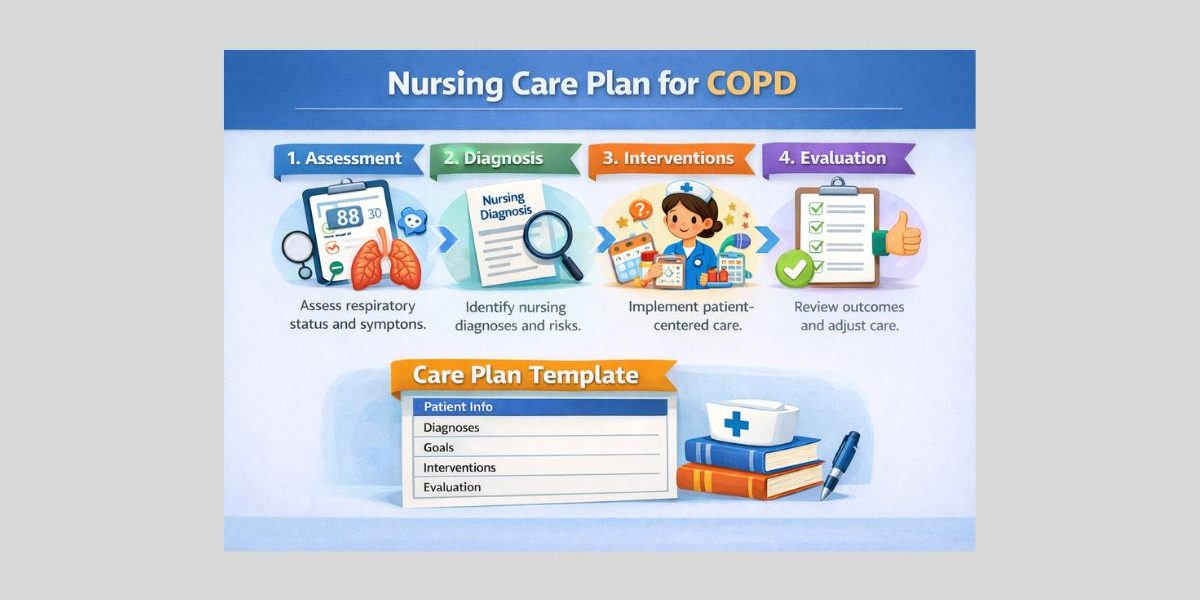
Nursing Care Plan for COPD – Advanced Foundations, Pathophysiology, Clinical Significance, and Comprehensive Patient Assessment
Nursing Care Plan for COPD: Clinical Context and Importance
A nursing care plan for COPD (Chronic Obstructive Pulmonary Disease) is a comprehensive, structured framework used by nurses to assess, diagnose, manage, and evaluate patients experiencing chronic airflow limitation. From the outset, it is important to recognize that COPD is not merely a respiratory condition defined by breathlessness. Instead, it is a progressive, systemic disease that affects gas exchange, cardiovascular function, physical endurance, and overall quality of life.
Therefore, a well-developed COPD nursing care plan must go beyond symptom management. It must integrate physiological understanding, patient-specific factors, long-term disease progression, and psychosocial considerations. In clinical settings, this means that the nurse is not only managing dyspnea but also preventing complications, supporting independence, and improving patient outcomes through coordinated care.
For nursing students, mastering a care plan for COPD patients is essential because it reflects advanced clinical reasoning. It demonstrates the ability to connect pathophysiology with assessment findings, prioritize life-threatening conditions, and implement evidence-based interventions.
Understanding COPD Beyond Definition
COPD as a Progressive Multisystem Disorder
Although COPD is primarily classified as a respiratory disease, its effects extend beyond the lungs. Chronic hypoxia, inflammation, and reduced physical activity can lead to:
- Cardiovascular complications (e.g., pulmonary hypertension)
- Skeletal muscle weakness
- Nutritional deficiencies
- Psychological conditions such as anxiety and depression
As a result, a high-quality nursing care plan for COPD must address both respiratory and systemic effects.
Key Clinical Features of COPD
Patients with COPD commonly present with:
- Chronic productive cough
- Progressive dyspnea
- Wheezing
- Fatigue
- Reduced exercise tolerance
However, these symptoms may develop gradually. Therefore, patients often adapt to limitations and may underreport severity. This makes accurate nursing assessment even more critical.
Types of COPD and Their Nursing Implications
Understanding the underlying subtype strengthens the development of a COPD care plan in nursing.
Chronic Bronchitis
This form is characterized by:
- Excess mucus production
- Airway inflammation
- Persistent cough
Nursing implication:
Airway clearance becomes a priority. Interventions focus on secretion management and preventing infection.
Emphysema
This form involves:
- Destruction of alveoli
- Loss of lung elasticity
- Air trapping
Nursing implication:
Gas exchange becomes the primary concern. Interventions focus on improving oxygenation and reducing dyspnea.
Most patients exhibit features of both conditions, requiring a combined care approach.
Advanced Pathophysiology of COPD (For Clinical Application)
A deeper understanding of COPD pathophysiology significantly improves the quality of a nursing care plan for COPD.
1. Airway Inflammation and Narrowing
Chronic exposure to irritants (e.g., cigarette smoke) causes:
- inflammation of bronchial walls
- narrowing of airways
- increased mucus secretion
This leads to airflow obstruction.
2. Alveolar Damage and Loss of Elasticity
In emphysema:
- alveolar walls break down
- surface area for gas exchange decreases
- lungs lose recoil ability
Air becomes trapped, making exhalation difficult.
3. Impaired Gas Exchange
Because of these changes:
- oxygen levels decrease (hypoxemia)
- carbon dioxide retention may occur (hypercapnia)
This directly informs nursing diagnoses such as impaired gas exchange.
4. Increased Work of Breathing
Patients compensate by:
- using accessory muscles
- increasing respiratory rate
Over time, this leads to fatigue and respiratory failure risk.
Clinical Significance of a Nursing Care Plan for COPD
Preventing Respiratory Failure
Without proper management, COPD can progress to respiratory failure. Therefore, early and continuous nursing intervention is critical.
Reducing Frequency of Exacerbations
COPD exacerbations worsen lung function and increase hospitalization rates. A structured COPD nursing care plan helps reduce these episodes.
Improving Functional Capacity
Patients often struggle with daily activities. Therefore, care planning must include strategies to improve endurance and independence.
Enhancing Quality of Life
Managing COPD is not only about survival but also about comfort, dignity, and well-being.
Comprehensive Nursing Assessment for COPD
Assessment is the most critical stage of any nursing care plan for COPD. It must be detailed, systematic, and analytical.
1. Subjective Assessment (Patient Perspective)
This involves understanding how the patient experiences the disease.
Key Areas to Explore
- Severity and triggers of dyspnea
- Frequency of coughing episodes
- Sputum characteristics (color, consistency)
- Fatigue levels
- Impact on daily activities
Clinical Insight
Patients may normalize their symptoms over time. Therefore, nurses must probe deeper rather than rely on initial responses.
2. Objective Assessment (Clinical Findings)
Objective data provides measurable evidence.
Respiratory Assessment
- Respiratory rate (tachypnea may indicate distress)
- Use of accessory muscles
- Chest expansion symmetry
Auscultation Findings
- Wheezing → airway obstruction
- Crackles → possible fluid or infection
- Diminished breath sounds → poor air entry
Oxygenation Status
- SpO₂ levels
- Arterial blood gases (ABGs)
Example of ABG Interpretation
- Low PaO₂ → hypoxemia
- High PaCO₂ → hypercapnia
- Low pH → respiratory acidosis
These findings directly influence care planning.
3. Functional Assessment
COPD significantly affects physical function.
Evaluate:
- Ability to perform ADLs
- Walking distance
- Need for rest during activities
This helps identify activity intolerance.
4. Nutritional Assessment
Many COPD patients experience:
- weight loss
- muscle wasting
This occurs due to increased energy expenditure from breathing effort.
Nutrition must be included in the care plan.
5. Psychosocial Assessment
COPD often leads to:
- anxiety (due to breathlessness)
- depression
- social isolation
Emotional health is a key component of care.
6. Risk Factor Assessment
Identify contributing factors such as:
- smoking history
- environmental exposure
- occupational hazards
These guide preventive strategies.
Linking Assessment to Clinical Problems
Strong nursing care plans connect findings to problems.
Example
- Low SpO₂ + dyspnea → impaired gas exchange
- Fatigue + limited activity → activity intolerance
- Thick sputum + cough → ineffective airway clearance
This step transitions directly into diagnosis.
Common Errors in COPD Assessment
Even strong students make mistakes.
Frequent Issues
- Failing to interpret ABGs correctly
- Ignoring subtle hypoxia
- Overlooking nutritional status
- Not assessing activity tolerance
Avoiding these improves both clinical and academic outcomes.
Evidence-Based Approach in COPD Nursing Care
Modern nursing care plans for COPD must align with current clinical evidence.
Key Practices Include
- Controlled oxygen therapy (to avoid CO₂ retention)
- Use of bronchodilators
- Pulmonary rehabilitation
- Smoking cessation support
Evidence-based care ensures better patient outcomes.
Transition to Advanced Care Planning
At this stage, you now have:
- deep understanding of COPD pathophysiology
- comprehensive patient assessment
- clinical interpretation of findings
- identification of risk factors
The next step is to translate this into:
- accurate nursing diagnoses
- prioritized patient problems
- measurable goals and outcomes
Request Quotes Now
Need a detailed, high-quality nursing care plan for COPD with advanced clinical reasoning? Request quotes now for expert academic support.
Advanced Nursing Diagnoses, Prioritization, and Goal Setting in a Nursing Care Plan for COPD (In-Depth Clinical Analysis)
Translating Assessment into Clinical Judgment in a Nursing Care Plan for COPD
After completing a comprehensive patient assessment, the development of a nursing care plan for COPD enters its most intellectually demanding stage: clinical interpretation and decision-making. At this point, the nurse must move beyond simply recording findings and begin to analyze how those findings reflect underlying physiological dysfunction and patient risk.
COPD is not a condition that presents with a single, isolated problem. Rather, it produces a cascade of interconnected complications, including impaired oxygenation, ineffective ventilation, fatigue, nutritional imbalance, and psychological distress. Therefore, the nurse must synthesize multiple data points and determine which problems are most critical at any given moment.
For example, a patient presenting with low oxygen saturation, use of accessory muscles, and restlessness is not merely “short of breath.” Instead, these findings indicate a deeper disruption in gas exchange, an increased work of breathing, and potential progression toward respiratory failure. Consequently, a strong COPD nursing care plan must interpret these signs as evidence of impaired physiological stability rather than isolated symptoms.
This analytical process is what distinguishes a high-quality care plan from a superficial one. It demonstrates that the nurse understands not only what is happening, but why it is happening and what must be addressed first.
Reframing Nursing Diagnosis in the Context of COPD
In COPD care planning, a nursing diagnosis represents the patient’s response to chronic respiratory dysfunction rather than the disease itself. This distinction is essential because it shifts the focus from labeling the condition to addressing its functional consequences.
While the medical diagnosis of COPD identifies the presence of chronic airflow limitation, the nursing diagnoses identify how this limitation affects oxygen delivery, energy expenditure, and overall functioning. Therefore, a well-developed nursing care plan for COPD should reflect the lived experience of the patient rather than the textbook definition of the disease.
For instance, two patients with COPD may have the same medical diagnosis but very different nursing priorities. One patient may be struggling with severe hypoxia and requires immediate oxygen support, while another may have stable oxygen levels but suffers from extreme fatigue and inability to perform daily activities. In such cases, the nursing diagnoses will differ, and so will the care plan.
This highlights the importance of individualized care planning. A strong care plan is not based on memorized diagnoses but on a careful interpretation of patient-specific data.
Impaired Gas Exchange as the Central Clinical Problem
Among all possible diagnoses in a nursing care plan for COPD, impaired gas exchange often emerges as the most critical. This is because COPD fundamentally disrupts the ability of the lungs to transfer oxygen into the bloodstream and remove carbon dioxide effectively.
From a physiological perspective, this impairment arises due to a mismatch between ventilation and perfusion. Damaged alveoli reduce the surface area available for gas exchange, while airway obstruction limits airflow. As a result, oxygen levels drop and carbon dioxide may accumulate. This imbalance can lead to hypoxemia, hypercapnia, and respiratory acidosis.
Clinically, this may present as low oxygen saturation, cyanosis, confusion, or increased respiratory effort. However, these signs must be interpreted carefully. For example, a patient with chronic COPD may adapt to lower oxygen levels over time, meaning that “normal-looking” values may still indicate compromised function.
Therefore, when identifying impaired gas exchange in a COPD nursing care plan, it is essential to consider both objective data (such as ABGs and SpO₂) and clinical presentation. This diagnosis often takes priority because it directly affects survival.
Ineffective Airway Clearance and Its Impact on Disease Progression
Another key diagnosis in COPD is ineffective airway clearance. Unlike impaired gas exchange, which focuses on oxygen transfer, this diagnosis addresses the physical obstruction of airways due to mucus accumulation and inflammation.
In chronic bronchitis, excessive mucus production narrows the airways and traps secretions. This not only impedes airflow but also creates an environment for bacterial growth, increasing the risk of infection. Over time, repeated infections can worsen lung damage and accelerate disease progression.
From a nursing perspective, ineffective airway clearance is not merely about coughing. It is about the patient’s ability to maintain open airways, remove secretions, and prevent further obstruction. A patient who cannot effectively clear mucus is at risk of worsening hypoxia, infection, and respiratory distress.
This diagnosis is particularly important because it interacts with impaired gas exchange. When airways are blocked, oxygen cannot reach the alveoli efficiently, further compromising gas exchange. Therefore, addressing airway clearance often becomes a priority alongside oxygenation.
Activity Intolerance as a Reflection of Systemic Impact
COPD does not only affect the lungs; it also affects the patient’s ability to function physically. Activity intolerance arises when the body cannot meet the increased oxygen demand during physical exertion.
In COPD patients, even simple activities such as walking, bathing, or dressing can lead to significant breathlessness. This occurs because the lungs are unable to supply sufficient oxygen, and the muscles become fatigued more quickly due to chronic hypoxia.
Over time, patients may begin to avoid activity altogether. While this may reduce immediate discomfort, it leads to deconditioning, muscle weakness, and further reduction in functional capacity. This creates a cycle where inactivity worsens physical ability, which in turn increases dependence.
In a nursing care plan for COPD, activity intolerance must be understood as both a symptom and a contributor to disease progression. Therefore, interventions should not only manage fatigue but also promote gradual, controlled activity to maintain function.
The Psychological Dimension: Anxiety and Breathlessness
One of the most overlooked aspects of COPD care is the psychological impact of breathlessness. Dyspnea is not only a physical sensation but also an emotional experience. Patients often describe it as a feeling of suffocation or air hunger, which can trigger intense anxiety.
This anxiety, in turn, worsens breathing. As the patient becomes anxious, respiratory rate increases, leading to inefficient breathing patterns and increased oxygen demand. This creates a vicious cycle where anxiety and dyspnea reinforce each other.
In this context, anxiety is not a secondary concern but a central component of the patient’s condition. A comprehensive COPD nursing care plan must address this interplay between physical and psychological factors. Failure to do so may result in poor outcomes even if physiological interventions are effective.
Prioritization: Determining What Matters Most
Once multiple diagnoses are identified, the nurse must determine which problems require immediate attention. This process is not arbitrary; it is guided by clinical reasoning and established frameworks.
In COPD, prioritization often revolves around oxygenation. Problems that directly affect airway patency and gas exchange are typically addressed first because they have the greatest impact on survival. For example, impaired gas exchange and ineffective airway clearance are usually prioritized over activity intolerance or anxiety.
However, prioritization is not static. It may change depending on the patient’s condition. A patient in acute respiratory distress requires immediate intervention, while a stable patient may benefit more from long-term management strategies.
This dynamic nature of prioritization highlights the importance of continuous assessment. A strong nursing care plan for COPD is not fixed; it evolves as the patient’s condition changes.
Constructing Goals That Reflect Clinical Reality
Goal setting in COPD care planning requires a balance between ambition and realism. Unlike acute conditions, COPD is chronic and often progressive. Therefore, the goal is not to “cure” the disease but to manage it effectively.
Short-term goals typically focus on stabilizing the patient. These may include improving oxygen saturation, reducing dyspnea, or achieving effective airway clearance. Such goals are measurable and can be evaluated within a short time frame.
Long-term goals, on the other hand, focus on maintaining function and preventing deterioration. These may include improving exercise tolerance, promoting smoking cessation, or ensuring adherence to treatment.
Importantly, goals must always be linked to the identified diagnoses. A goal that does not address a specific problem weakens the care plan. For example, if the diagnosis is impaired gas exchange, the goal must focus on improving oxygenation rather than unrelated outcomes.
Avoiding Common Pitfalls in COPD Care Planning
Even advanced students can make errors when developing a nursing care plan for COPD. One common mistake is writing diagnoses that are not supported by assessment data. Another is setting goals that are too vague or unrealistic.
Additionally, some care plans fail to prioritize effectively, treating all problems as equally important. This can lead to scattered interventions and reduced effectiveness.
Another critical error is failing to consider the chronic nature of COPD. Goals that focus only on immediate improvement without addressing long-term management are incomplete.
Avoiding these pitfalls requires careful analysis, attention to detail, and a clear understanding of the disease process.
Request Quotes Now
Need a high-level nursing care plan for COPD with deep clinical reasoning and academic precision? Request quotes now for expert support tailored to your needs.
Advanced Nursing Interventions, Rationales, Full Examples, Template, Evaluation, and Patient-Centered Care in a Nursing Care Plan for COPD
From Clinical Planning to Therapeutic Action in COPD Care
Once nursing diagnoses have been established and goals clearly defined, the next stage in a nursing care plan for COPD is implementation. This phase represents the translation of clinical reasoning into targeted nursing actions that directly influence patient outcomes.
However, implementation in COPD care is not simply task-oriented. It requires a nuanced understanding of respiratory physiology, patient tolerance, and disease progression. Each intervention must be purposeful, evidence-based, and carefully adapted to the patient’s current condition.
COPD is a dynamic condition. A patient who is stable today may deteriorate rapidly during an exacerbation. Therefore, nursing interventions must be both responsive and anticipatory, addressing current symptoms while preventing future complications.
Reframing Nursing Interventions in COPD Care
In many care plans, interventions are written as isolated actions. However, in a high-quality COPD nursing care plan, interventions should reflect a broader therapeutic strategy.
For example, administering oxygen is not simply about increasing oxygen levels. It must be carefully controlled because excessive oxygen can suppress respiratory drive in some COPD patients. Similarly, encouraging activity is not just about movement; it is about balancing oxygen demand and energy conservation.
Thus, interventions must always be understood in context. The nurse is not merely performing actions but actively managing a complex physiological system.
Improving Oxygenation: The Core Priority
The central objective in most COPD care plans is to improve oxygenation while avoiding complications such as carbon dioxide retention.
Clinical Approach
Oxygen therapy must be administered cautiously. Unlike in other conditions, COPD patients—especially those with chronic hypercapnia—may rely on hypoxic drive for breathing. Delivering high concentrations of oxygen can reduce respiratory effort and lead to carbon dioxide retention.
Therefore, controlled oxygen delivery using devices such as nasal cannula or Venturi masks is preferred.
Rationale
The goal is not to normalize oxygen levels completely but to maintain adequate tissue oxygenation while preserving respiratory function. This delicate balance is a defining feature of COPD care.
Enhancing Airway Clearance and Secretion Management
Airway obstruction is a major contributor to respiratory distress in COPD. Thick mucus and inflammation narrow the airways, making it difficult for air to flow freely.
Clinical Approach
Interventions focus on facilitating mucus clearance through techniques such as:
- encouraging effective coughing
- positioning (e.g., high Fowler’s position)
- hydration to thin secretions
In some cases, chest physiotherapy or suctioning may be required.
Rationale
Clearing the airway improves ventilation, reduces infection risk, and enhances gas exchange. Without effective airway clearance, even well-oxygenated air cannot reach the alveoli efficiently.
Optimizing Breathing Patterns and Reducing Work of Breathing
COPD patients often develop inefficient breathing patterns due to airway obstruction and air trapping.
Clinical Approach
One of the most effective techniques is pursed-lip breathing, which helps prolong exhalation and prevent airway collapse. Additionally, diaphragmatic breathing can improve ventilation efficiency.
Rationale
These techniques reduce air trapping, improve gas exchange, and decrease the work of breathing. Over time, they also help patients gain a sense of control over their breathing, which can reduce anxiety.
Managing Activity Intolerance Through Energy Conservation
Activity intolerance is not simply a result of fatigue but a consequence of limited oxygen availability.
Clinical Approach
Nurses should guide patients in:
- pacing activities
- taking frequent rest periods
- prioritizing essential tasks
Gradual, supervised activity can help improve endurance without overwhelming the patient.
Rationale
Balancing activity and rest prevents excessive oxygen demand while maintaining muscle strength and functional independence.
Addressing the Psychological Impact of COPD
The relationship between dyspnea and anxiety is particularly significant in COPD patients. Breathlessness can create a sense of panic, which in turn worsens respiratory distress.
Clinical Approach
Interventions include:
- providing reassurance
- creating a calm environment
- teaching relaxation techniques
In some cases, referral for psychological support may be beneficial.
Rationale
Reducing anxiety helps stabilize breathing patterns and improves overall patient cooperation with treatment.
Nutritional Support as a Critical Component of Care
Many COPD patients experience weight loss due to increased energy expenditure and reduced appetite.
Clinical Approach
Nurses should encourage:
- small, frequent meals
- high-calorie, high-protein diets
- adequate hydration
Rationale
Proper nutrition supports respiratory muscle function and overall recovery. Malnutrition can significantly worsen outcomes.
Patient Education and Long-Term Disease Management
COPD management extends beyond the hospital setting. Therefore, education is a key component of any nursing care plan for COPD.
Key Areas of Education
- proper use of inhalers
- importance of medication adherence
- smoking cessation
- recognizing early signs of exacerbation
Rationale
Educated patients are more likely to manage their condition effectively, reducing hospital readmissions and improving quality of life.
Full Nursing Care Plan Example for COPD
Patient Profile
A 65-year-old patient with a history of smoking presents with severe dyspnea, productive cough, and oxygen saturation of 88%.
Assessment
The patient uses accessory muscles for breathing, reports fatigue, and demonstrates reduced exercise tolerance. ABG analysis shows mild hypoxemia.
Nursing Diagnosis
Impaired gas exchange related to alveolar damage and airway obstruction as evidenced by low oxygen saturation and dyspnea.
Goal
The patient will maintain oxygen saturation above 92% and demonstrate improved breathing patterns within 48 hours.
Interventions and Rationales
Controlled oxygen therapy is initiated to improve oxygenation while preventing carbon dioxide retention. The patient is positioned in high Fowler’s position to maximize lung expansion. Breathing exercises, including pursed-lip breathing, are introduced to reduce air trapping. Hydration is encouraged to facilitate mucus clearance, and the patient is monitored closely for changes in respiratory status.
Evaluation
The patient demonstrates improved oxygen saturation, reduced dyspnea, and more effective breathing patterns.
Second Example: Activity Intolerance
Diagnosis
Activity intolerance related to imbalance between oxygen supply and demand.
Goal
The patient will perform basic activities with minimal shortness of breath.
Intervention
Activity is gradually increased with adequate rest periods, and the patient is educated on energy conservation techniques.
Evaluation
The patient reports improved tolerance to activity and reduced fatigue.
Comprehensive COPD Nursing Care Plan Template
To ensure consistency and clarity, the following template can be used:
Patient Information
Age, diagnosis, medical history
Assessment
Subjective and objective data
Nursing Diagnoses
Clearly stated problems
Goals
Short-term and long-term
Interventions
Detailed actions with rationales
Evaluation
Outcome and necessary adjustments
Request Quotes Now
Need a complete, high-quality nursing care plan for COPD with examples and expert-level depth? Request quotes now for tailored academic support.
Evaluation in a Nursing Care Plan for COPD
Evaluation is not a final step but an ongoing process. It determines whether interventions are effective and whether adjustments are needed.
Key Indicators
- improved oxygen saturation
- reduced dyspnea
- increased activity tolerance
- stable respiratory status
Clinical Insight
If goals are not met, the care plan must be revised. This iterative process is essential in managing chronic conditions like COPD.
Common Mistakes in COPD Care Plans
Many students weaken their care plans by:
- writing generic interventions
- failing to include rationales
- ignoring patient individuality
- focusing only on symptoms rather than underlying causes
Avoiding these errors significantly improves both academic performance and clinical relevance.
Final Thoughts on Nursing Care Plan for COPD
A well-developed nursing care plan for COPD integrates deep clinical understanding with practical, patient-centered interventions. It reflects not only knowledge of the disease but also the ability to manage its complex and evolving nature.
Ultimately, COPD care is about more than treating symptoms. It is about supporting patients in maintaining function, dignity, and quality of life despite chronic illness.
Request Quotes Now
Struggling with your COPD nursing care plan? Request quotes now and get expertly crafted, plagiarism-free academic support.
FAQ Section
What is a nursing care plan for COPD?
It is a structured approach used to manage COPD through assessment, interventions, and evaluation.
What are the main nursing diagnoses for COPD?
Impaired gas exchange, ineffective airway clearance, and activity intolerance.
Why is oxygen therapy carefully controlled in COPD?
Because excessive oxygen can suppress respiratory drive and cause carbon dioxide retention.
What interventions improve breathing in COPD patients?
Pursed-lip breathing, positioning, and airway clearance techniques.
Can I get help writing a nursing care plan?
Yes, professional services can assist with structured, high-quality care plans.
