
Diuretics for Edema: Uses, Risks & Nursing Care
Edema means swelling caused by excess fluid in body tissues. It may appear in the feet, ankles, legs, hands, abdomen, face, or…
Read More →
Edema means swelling caused by excess fluid in body tissues. It may appear in the feet, ankles, legs, hands, abdomen, face, or…
Read More →
Common Types, Examples, and Nursing Considerations Diuretic drugs are medications that increase urine output by affecting how the kidneys handle water, sodium,…
Read More →
Uses, Examples, Side Effects, and Nursing Considerations Osmotic diuretics are a special class of diuretic medications that increase urine output by creating…
Read More →
Uses, Examples, Side Effects, and Nursing Considerations Potassium-sparing diuretics are a class of diuretic medications that help the body remove sodium and…
Read More →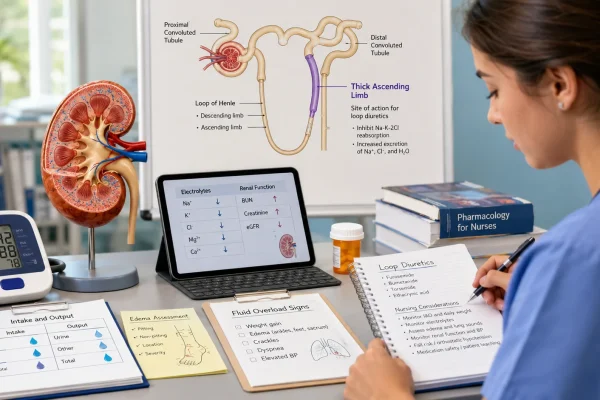
Loop diuretics are a major class of diuretic medications commonly associated with strong fluid removal. They increase urine output by acting in…
Read More →
Thiazide diuretics are a major class of diuretic medications commonly associated with hypertension management and mild fluid retention. They help the kidneys…
Read More →
Diuretics are medications that increase urine production and help the body remove excess fluid through the kidneys. They are commonly called water…
Read More →
Clear findings presentation helps readers understand what your study discovered without forcing them to work through raw data, scattered statistics, or disconnected…
Read More →
A Comprehensive Guide for Students and Researchers Introduction Whether you are writing a dissertation, preparing a journal article or working on a…
Read More →
Disclaimer – This article is for nursing education and general information. It does not replace clinical judgment, provider orders, medication labels, institutional…
Read More →Join thousands of nursing students who trust us with their academic success. Get matched with an expert writer today.