Thiazide Diuretics: Uses, Side Effects & Nursing Care
Thiazide diuretics are a major class of diuretic medications commonly associated with hypertension management and mild fluid retention. They help…
Read More →
Thiazide diuretics are a major class of diuretic medications commonly associated with hypertension management and mild fluid retention. They help…
Read More →Diuretics are medications that increase urine production and help the body remove excess fluid through the kidneys. They are commonly…
Read More →Disclaimer – This article is for nursing education and general information. It does not replace clinical judgment, provider orders, medication…
Read More →Digoxin is a cardiac glycoside used in selected patients to manage certain cardiac conditions, including heart failure and atrial fibrillation.…
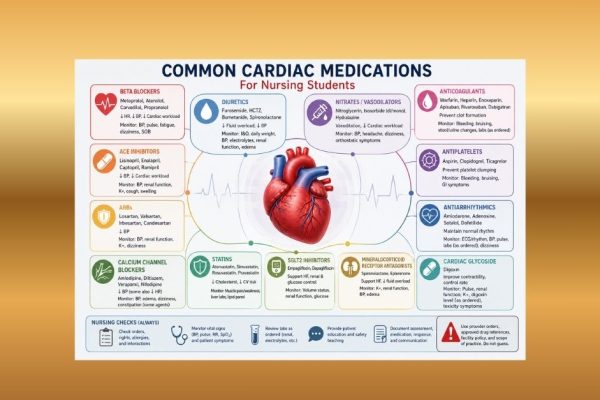
Read More →Common cardiac medications are easier to understand when nursing students recognize the medication name, class, monitoring priorities, adverse-effect concerns, patient…
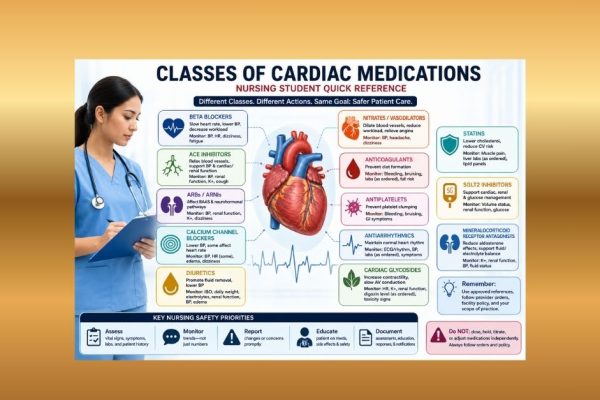
Read More →Classes of cardiac medications help nursing students organize drug names, expected effects, monitoring priorities, adverse effects, patient education, and safety…
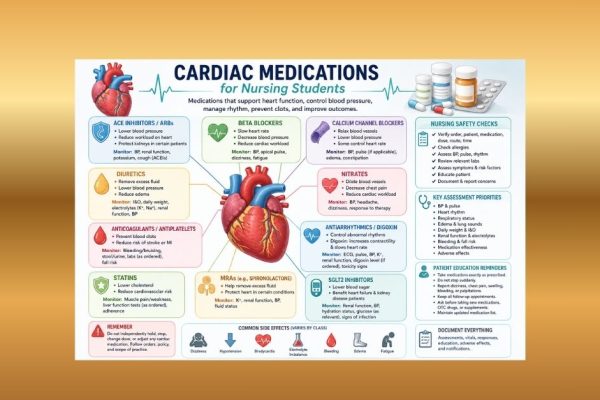
Read More →Cardiac medications are drugs used to support heart and blood vessel conditions, but nursing students must understand more than medication…
Read More →Vancomycin trough monitoring can confuse nursing students because it combines pharmacology, lab timing, renal function, medication safety, and interprofessional communication.…
Read More →Empiric antibiotic therapy helps nurses understand why antibiotics may be started before the exact organism or susceptibility result is confirmed.…
Read More →Antibiotic therapy is a core nursing pharmacology topic because students must understand more than antibiotic names, routes, and schedules. Many…
Read More →Join thousands of nursing students who trust us with their academic success. Get matched with an expert writer today.