Newborn Vital Signs
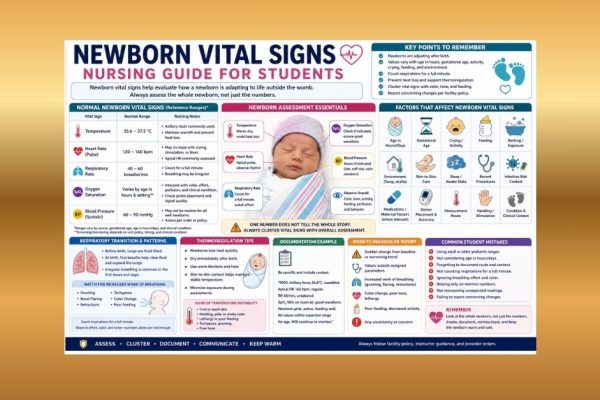
Newborn vital signs require newborn-specific interpretation because early newborn assessment involves transition after birth, thermoregulation, respiratory adaptation, color, feeding, and…
Read More →
Newborn vital signs require newborn-specific interpretation because early newborn assessment involves transition after birth, thermoregulation, respiratory adaptation, color, feeding, and…
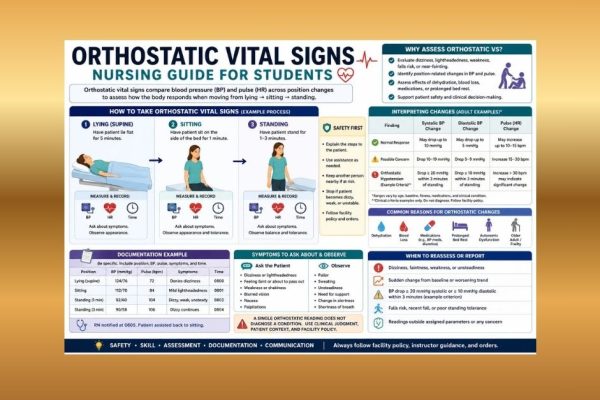
Read More →Orthostatic vital signs help nursing students compare blood pressure and pulse across position changes, usually lying, sitting, and standing, while…
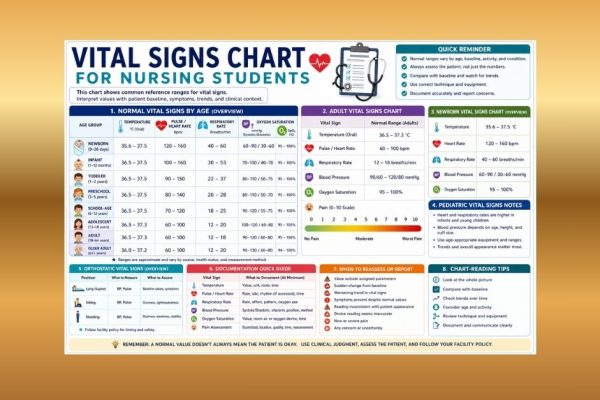
Read More →Vital signs chart references help nursing students compare readings quickly, but normal ranges must never replace patient assessment, clinical judgment,…
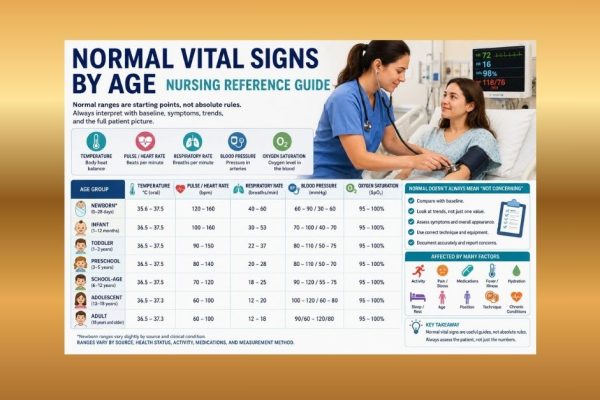
Read More →Normal vital signs are essential for nursing assessment, but many students memorize ranges without knowing how to interpret them by…
Read More →Pediatric vital signs help nursing students assess a child’s physiological status, but they are not interpreted the same way as…
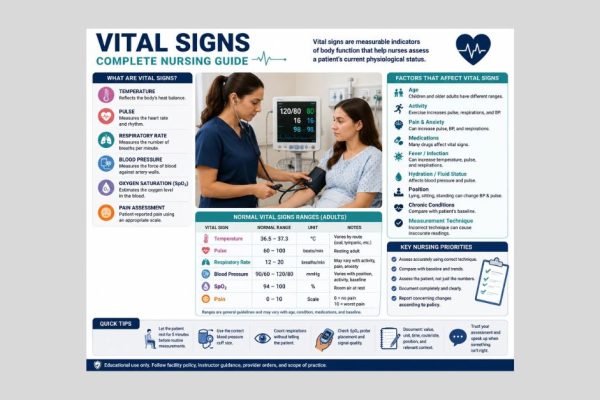
Read More →Vital signs are essential nursing assessment data, but many students struggle to move beyond memorizing “normal” numbers. In clinical practice,…
Read More →Nursing assessment is the first step of the nursing process and the foundation for safe, organized, patient-centered care. Many nursing…
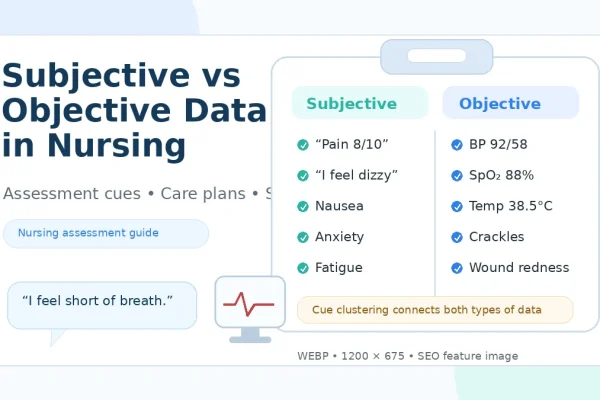
Read More →Subjective vs objective data nursing can confuse students because patient-reported symptoms often appear beside measurable assessment findings. In nursing assessment,…
Read More →Join thousands of nursing students who trust us with their academic success. Get matched with an expert writer today.